
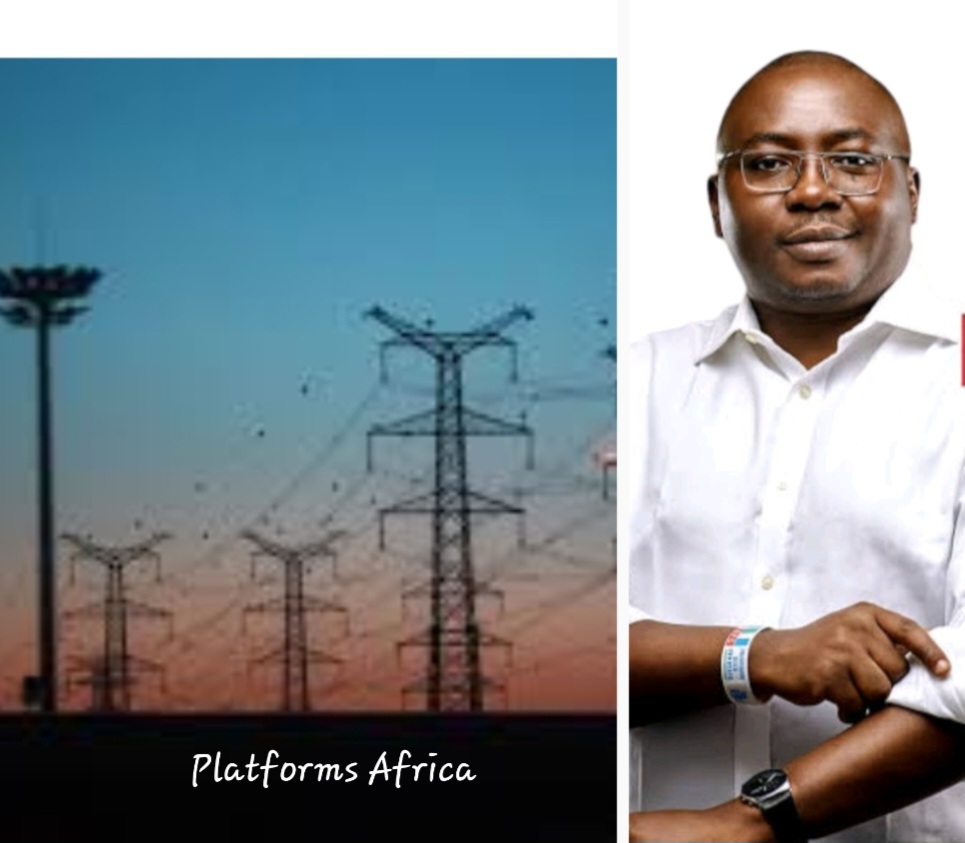
Adebayo Adelabu was recently appointed as Minister of Power by President Bola Tinubu, along with 44 other individuals who were cleared by the Senate for the position.
Adelabu previously served as the Deputy Governor of the Central Bank of Nigeria (CBN) in charge of operations, after being appointed by former President Goodluck Jonathan in February 2014.
However, in May 2018, he resigned from the CBN to run for the 2019 governorship election in Oyo State but was unsuccessful. Adelabu received professional training from PricewaterhouseCoopers (PwC) and managed various audit and consultancy engagements for large banks and non-bank financial institutions both in Nigeria and internationally.
In 1999, he spent a year on secondment to the CBN where he headed the Finance team on the CBN re-engineering and corporate renewal project. After leaving the firm in 2000, he joined First Atlantic Bank as the Financial Controller and Group Head of Risk Management and Controls, where he held various positions, including Chief Inspector of the Bank in 2002 and Group Head of National Public Sector Business in 2003.
As he took up his new position, Mr Adelabu promised that the federal government would work towards providing stable and accessible electricity to empower Nigerians. To achieve this goal, he plans to leverage the Nigerian Electricity Act 2023 to enhance power supply in the country. However, there are various challenges that the minister needs to address in the sector, as highlighted by Newslodge in this report.
Former President Muhammadu Buhari appointed Babatunde Fashola, former Lagos State governor, as Minister of Power, Works and Housing in 2015.
Mr Fashola promised improved power supply and came up with an incremental, stable and uninterrupted electricity roadmap, but there was no remarkable shift from the usual power experience Nigerians are used to.
In 2019, Mr Buhari appointed Saleh Mamman, who holds a higher national diploma in electrical electronics from Kaduna Polytechnic, as minister. But in September 2021, Mr Buhari sacked Mr Mamman and appointed Abubakar Aliyu as the power minister. This newspaper reported at the time that Mr Mamman’s time in office was marked by poor power supply.
In his address upon assuming official duties as Minister, Mr Aliyu said his mandate was to ensure that a “steady power supply is delivered to Nigeria”. Mr Aliyu’s reign as minister, however, recorded little or no improvement in the power sector as the power situation in the country remained without any significant improvement.
Challenges
In recent years, the sector has experienced many broad challenges related to electricity policy enforcement, regulatory uncertainty, gas supply, transmission system constraints, and major power sector planning shortfalls.
According to statistics provided by GET.invest, a European programme focused on renewable energy projects, only 3,500 MW to 5,000 MW is typically available for onward transmission to the final consumers in Nigeria.
This is essentially because of the country’s poor transmission network and incessant collapse of the national grid amongst other factors.
This is happening despite the privatisation of 11 electricity distribution companies (DISCOs) and six generating companies (GENCOs) with the federal government retaining 100 per cent ownership of the Transmission Company of Nigeria (TCN). Despite the poor supply, electricity tariff has also continued to be on the rise in the country.
Poor supply
Nigeria has struggled with poor power supply for decades, a challenge that is estimated to cost businesses about $29 billion yearly, according to the World Bank.
The country has the lowest access to electricity globally, with about 92 million persons out of the country’s 200 million population lacking access to power, according to the Energy Progress Report 2022 released by Tracking SDG 7.
A World Bank report in 2021 also explained that a total of 74 per cent of power users in the country are dissatisfied with the supply of electricity across the country while 93 per cent of metered power users paid their bills regularly, 78 per cent of electricity consumers in the country received less than 12 hours of power supply daily.
Also, the lack of power supply has increased production costs for many businesses forced to provide their electricity, mostly using diesel-run generators as alternative sources of electricity.
In June 2015, Nigerian manufacturers said they spent as much as N3.5 trillion annually to generate alternative power for their production operations due to the collapse of the public electricity supply.
In 2018, former President Muhammadu Buhari claimed Nigerians depend less on generators in their homes and businesses. However, analysts disagreed with the position as many Nigerians continue to suffer from the ripple effect of poor power supply.
Former President Muhammadu Buhari [PHOTO: Presidency]In March, the Abuja Electricity Distribution Company (AEDC) said insufficient power allocation to the company by generation stations was responsible for the unstable electricity supply in the region.