
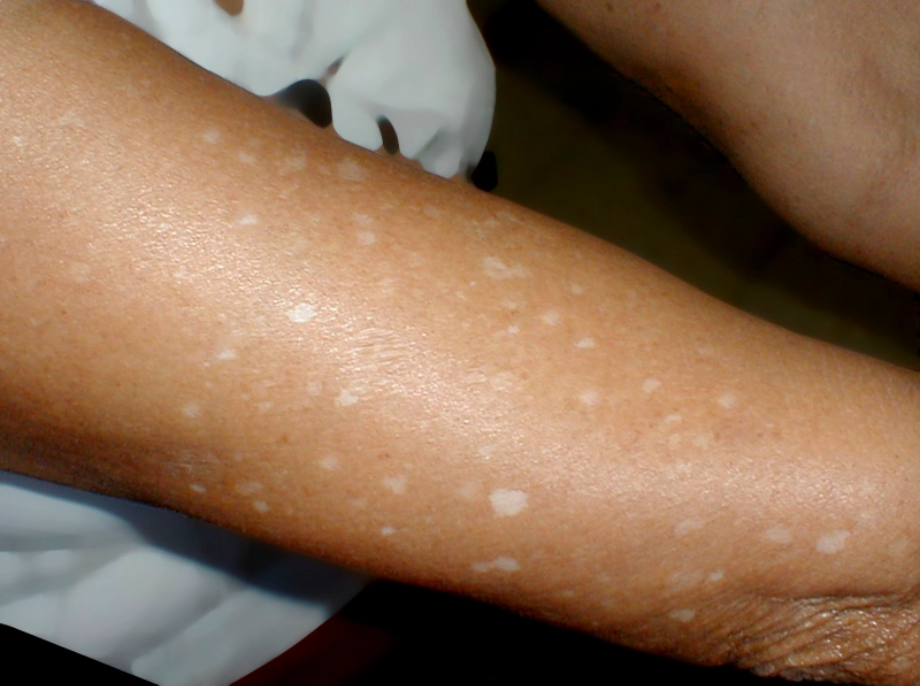
White spots on the skin can happen for a variety of reasons. From sun exposure to a fungal infection to a skin condition, there are many things that can cause areas of your skin to become lighter.
White spots on the skin can develop as a result of sun exposure, a fungal infection, or a steroid that was injected or applied topically. The white spots may also be from an underlying skin condition, such as pityriasis alba, vitiligo, or milia.
Causes White Spots on Skin
Here are causes of white spots on the skin;
Milia are white, tiny, harmless bumps that develop when dead skin cells (keratin) get caught under the surface of the skin.Most commonly, milia appear on the face—like across the cheeks, nose, and chin—but they can also occur on parts of the body that have been injured. Adults can get them, but they’re pretty common in newborn babies.
Vitiligo is an autoimmune condition that causes patches of the skin to lose color, resulting in white spots. This condition develops when the immune system mistakenly attacks pigmentation cells in the body.Vitiligo spots and patches typically start on the face, arms, hands, and feet. From there, the spots and patches can grow or more patches can develop on other places on your body. At first, the patches may be pink. The affected skin turns white once the vitiligo is no longer active.
Sunspots While the term sunspots may conjure up the image of darker spots or freckle-like marks, it’s also possible for sunspots to appear as white or lighter spots on the skin.Medically known as idiopathic guttate hypomelanosis, these harmless white spots develop when there’s a decrease in melanin (the pigment cells that give your skin, eyes, and hair their color) in the skin. Experts think this happens as a result of repeated sun exposure rather than another factor like aging.
How to Get Rid of White Spots on Skin
Milia do not need to be treated in children or babies and commonly go away on their own within weeks without treatment. But in adults, stubborn milia can be removed by a healthcare provider, if that’s preferred by the patient.
There’s currently no cure for vitiligo, but there are a variety of treatments available that can help restore skin color—and potentially reduce the chances of white spots spreading to other parts of the body. Treatment options for vitligo often include topical medications, lasers, phototherapy (light therapy), and cosmetic cover-ups. Skin grafting procedures may be used in severe cases.
Sunspots don’t necessarily need to be treated, but if their appearance is bothersome for you, a healthcare provider may recommend a topical cream like tretinoin (a retinoid). A dermabrasion procedure might be able to help smooth out the area, too.