
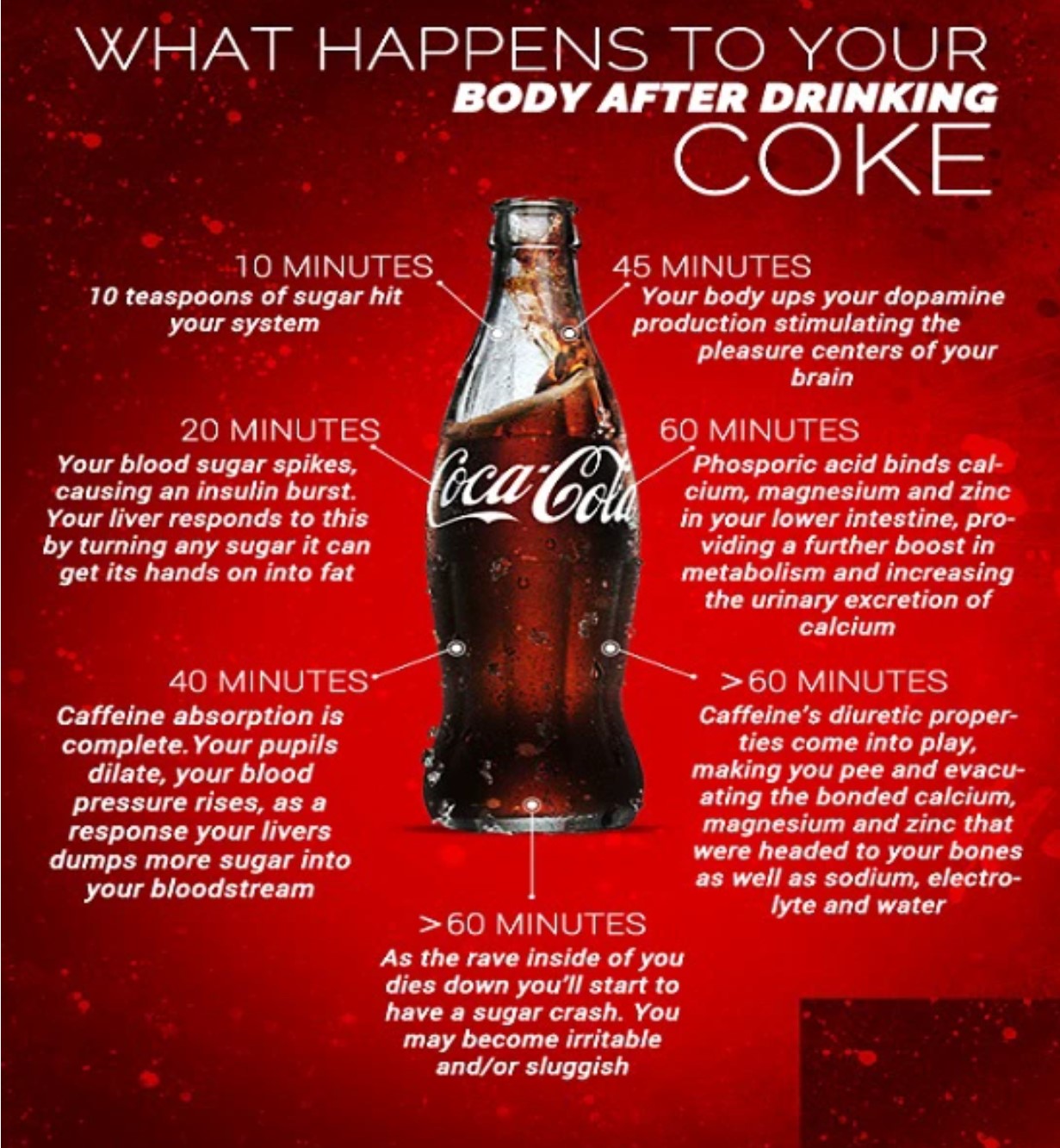
For many people, enjoying a can of Coca-Cola is a common indulgence. The sweet, carbonated beverage has been a part of our lives for over a century, and it’s readily available worldwide. However, what happens to your body after drinking just one Coke may surprise you. While the immediate effects might be delightful, the long-term consequences on your health can be cause for concern. In this article, we’ll delve into the journey of a single sip of Coke and its impact on your body.
The First Sip: Sugar Surge
As you take that first refreshing sip of Coca-Cola, you’re bombarding your body with sugar. A typical 12-ounce can of Coke contains about 39 grams of sugar, which is equivalent to approximately 9.75 teaspoons. This sudden sugar surge can lead to an immediate spike in blood glucose levels, providing a quick burst of energy. However, this energy boost is fleeting and is usually followed by a crash, leaving you feeling tired and sluggish.
The 15-Minute Mark: Caffeine Kick
Coca-Cola contains caffeine, which can be addictive and leads to increased alertness. At the 15-minute mark, the caffeine begins to take effect, stimulating your central nervous system and causing a temporary increase in heart rate and blood pressure. You might feel more awake and alert, but this can also lead to restlessness and difficulty falling asleep later.
30 Minutes In: Sugar Crash
After about 30 minutes, you may start to experience a sugar crash. Your body’s insulin response has kicked in to manage the high sugar levels in your bloodstream. This rapid release of insulin causes a drop in blood sugar levels, leaving you feeling tired, irritable, and hungry. You might even crave more sugar to counteract the crash, creating a cycle of sugar consumption.
One Hour Later: Caffeine and Phosphoric Acid Effects
One hour after drinking a Coke, the caffeine’s diuretic effect might lead to increased urine production. This can contribute to dehydration. The phosphoric acid in Coke can also impact your body’s calcium levels. It binds to calcium, potentially leading to a decrease in bone density over time. Moreover, it can affect your stomach’s acidity, potentially leading to digestive issues.
Acidic Aftertaste: Dental Damage
The acidity in Coca-Cola can erode tooth enamel, leading to dental damage over time. The acid can weaken your tooth structure, making it more susceptible to cavities and decay. Frequent consumption of Coke can significantly impact your oral health.
Long-Term Effects
While the immediate effects of drinking one Coke can include sugar surges, caffeine kicks, and a sugar crash, it’s crucial to understand the long-term consequences of regular consumption.
Weight Gain: Regular consumption of sugary drinks like Coca-Cola is a significant contributor to weight gain and obesity. The excess calories from sugary beverages can accumulate and lead to unhealthy weight gain over time.
Increased Risk of Chronic Diseases: High sugar intake is associated with an increased risk of chronic diseases such as type 2 diabetes, heart disease, and non-alcoholic fatty liver disease.
Tooth Decay: The acid and sugar in Coke contribute to tooth decay and cavities. This can lead to oral health issues and the need for dental procedures.
Bone Health: The phosphoric acid in Coca-Cola can impact bone health, potentially leading to decreased bone density and an increased risk of fractures.
Digestive Problems: The acidity of Coke can contribute to digestive problems such as acid reflux and indigestion, making it an unhealthy choice for those with gastrointestinal issues.
Addictive Properties: The caffeine in Coca-Cola can be addictive, leading to dependency and withdrawal symptoms when consumption is reduced.
While enjoying a Coke occasionally is unlikely to cause immediate harm, the long-term effects of regular consumption can be concerning. The surge of sugar, caffeine kick, and subsequent sugar crash can affect your immediate well-being, while long-term consequences include weight gain, increased risk of chronic diseases, dental damage, and more.
It’s essential to be mindful of your soda consumption and consider healthier alternatives to satisfy your thirst. Water, herbal teas, and natural fruit juices can be refreshing and hydrating options that don’t come with the detrimental effects of sugary, carbonated drinks. Ultimately, moderation is key when it comes to enjoying a Coke or any other sugary beverage, as being aware of the potential impact on your body is the first step toward making healthier choices for your overall well-being.