
We build our future health even now, through our lifestyle and our food choices. In particular, increasing the intake of certain foods now, even by a few grams a day, can help reduce body weight over the years to come, thus counteracting overweight, obesity, and their consequences such as inflammation and an increased risk of cardiovascular diseases. On the contrary, eating other foods in greater quantities can lead to weight gain.
This emerges from a very recent scientific research published in the BMJ magazine and published by an American team from the Harvard T.H. Chan School of Public Health (Wan et al, BMJ, Sep 2023). But what foods are we talking about? Let’s delve deeper into this very interesting research.
Foods that increase body weight and those that stimulate weight lossThe scientists based themselves on the data provided by three large studies, which began in the 80s of the last century and continued, on average, for 24 years, recruiting as many as 238 129 women and 51 529 men. The volunteers were called back every 2-4 years to provide information on lifestyle, nutrition and health status. In this way it was possible for scientists to correlate food choices with body weight over a long period of time.
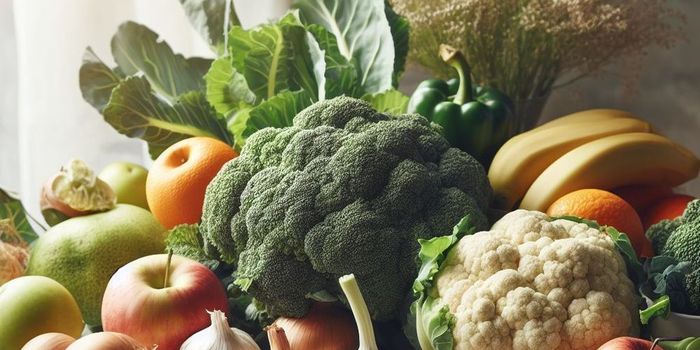
What emerged was that any increase in the intake of foods containing added sugars, sugary drinks, refined grains, starches and starchy vegetables, such as potatoes and corn, is associated with increased body weight. Instead, any increase, compared to habit, in the intake of foods with a high fiber content, whole grains, fruit and non-starchy vegetables, such as green leafy vegetables, cruciferous vegetables such as broccoli, cabbage and cauliflower, garlic and onion, led to a reduction in body weight.
These associations were stronger in the case of people who were already overweight or obese. To give a few examples, the increase of 100 grams per day of refined cereals led to an increase of almost 1 kg in body weight within 4 years, which means an increase of almost 6 kg in 24 years. Instead, an increase of 10 grams per day of fiber reduced just under 1 kg of body weight in 4 years.
Even more surprising is the result observed with the increase of 100 grams per day of non-starchy vegetables, which led to a reduction of 3 kg in 4 years. While increasing by 100 grams per day the intake of starchy vegetables led to an increase of 2.6 kg in body weight in 4 years.ConclusionsThe study shows obvious and noteworthy results.
To keep body weight under control and combat overweight and obesity it is useful to limit sugary drinks, foods with added sugars, refined cereals such as white bread or refined pasta, and starchy vegetables, such as potatoes and corn. Instead, encouraging intake of whole grains, non-starchy vegetables, such as lettuce, spinach, broccoli, cabbage, onion and garlic, and fruit has been shown to support weight control efforts.