
On Monday, the Federal Government refuted claims that it had reintroduced the subsidy on Premium Motor Spirit (PMS), commonly known as petrol. The closure of many filling stations across the country is due to challenges in the downstream oil sector, and there is no lack of supply.
The Nigerian National Petroleum Company Limited also stated that it would have gone bankrupt in June this year had President Bola Tinubu not ended the PMS subsidy in May. Efforts to revamp refineries are being made, and NNPCL predicts that Nigeria will become a net exporter of refined petroleum products by next year.
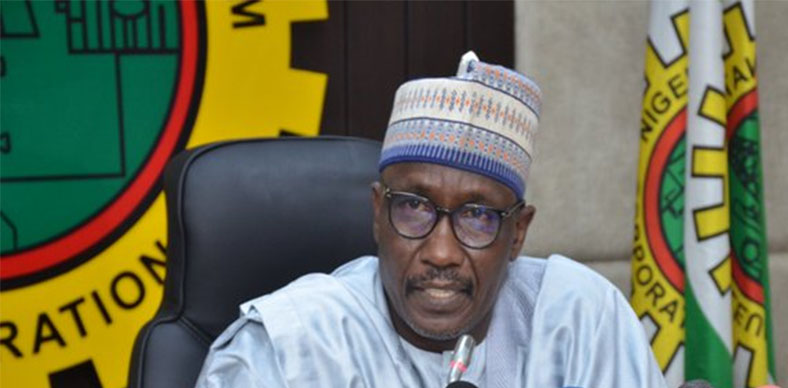
NNPCL currently imports PMS and other refined petroleum products consumed across the country. The company’s Group Chief Executive Officer, Mele Kyari, clarified that there is no fuel subsidy and that they are recovering their full cost from the products they import. They sell to the market and understand why marketers are unable to import. The government is making interventions to resolve these issues, and they hope that marketers can import the products quickly.
Kyari’s assertion came barely 48 hours after the Petroleum and Natural Gas Senior Staff Association of Nigeria confirmed the return of fuel subsidy.
Oil marketers have reported that fuel subsidy has returned, with the landing cost of petrol as of last week being N720/liter. Petrol is currently sold at between N580/liter and N617/liter, depending on the area of purchase. PENGASSAN’s National President, Festus Osifo, has stated that the government is still subsidizing petrol due to the cost of crude oil in the international market and the exchange rate.
Osifo explained that the government is paying a subsidy today because the price of crude oil in the international market has increased to about $93/94 per barrel for Brent crude, up from around $80 per barrel when the earlier price was determined. He added that the only way the price will not move is if the exchange rate is effectively managed and supply is pumped in to bring down the exchange rate. The gradual return of fuel queues in some states was attributed by the NNPCL boss to road situations and blockades that have made it difficult for trucks to reach their destinations.
However, the supply has remained robust, and price variations across gas stations have been minuscule due to competition in the deregulated downstream sector. President Tinubu announced the end of petrol subsidies during his inaugural address after taking the oath of office on May 29, 2023. He stated that subsidy can no longer justify its ever-increasing costs given the drying resources and that the funds will be re-channeled into better investments in public infrastructure, education, healthcare, and jobs to improve the lives of millions. The President’s announcement sparked the increase in fuel price from N197 to between N480 and N570, and the pump price was subsequently reviewed upward to N617/liter.
“You must have noticed some fuel stations will reduce prices by two Naira and three Naira, so customers will naturally run to the places where you have that price reduction.
“That creates panic because those who don’t know why they are doing it will think something wrong is happening.
“Supply is robust. We have over 1.4 billion liters of product, both marine and land. Also, there are no issues around delivering those products onto the land. So, there is no fear, nothing to bother about,” Kyari argued.
The NNPC chief revealed that the firm was liaising with other oil marketers to address the forex challenges.
He clarified, “We’re engaging them to resolve alongside other agencies of government and critical issues around access to foreign exchange.
“Government is doing so much to ensure supply of FX into the market. We know this FX market will stabilize the current I&E window at around 770.
“And we know that those inputs are already happening. The inputs of the government today will crystallize and also, they will come to an equilibrium position in the FX market and this is a dream of this country.”
Kyari, speaking at a different function in Abuja on Monday, noted that the NNPCL would have gone bankrupt in June this year if Tinubu had not removed the subsidy on petrol.
He also revealed that about 25 licenses that were meant for the construction of refineries in Nigeria had remained idle due to subsidies on refined petroleum products, particularly PMS.
He further stated that Nigeria would become a net exporter of refined petroleum products by 2024 based on concerted, ongoing efforts to get the country’s refineries running.
This came as oil marketers raised concern about the continuous closure of filling stations nationwide due to the crisis around foreign exchange and their inability to import petrol into Nigeria.
Speaking at the Energy and Labour Summit organised by the Petroleum and Natural Gas Senior Staff Association of Nigeria in Abuja, Kyari stated that NNPCL was spending over N400bn on PMS subsidy monthly.
He said the immediate halt of the scheme by Tinubu on the assumption of office on May 29, 2023, was a life-saver for the oil firm.
He noted that previous governments had attempted to remove subsidies on petroleum products until May 29, 2023, when Tinubu announced the end of the scheme.
“There were several attempts to do this in the past, spanning about 20 years, but it didn’t happen because there was a communication gap, by the wrong assumptions that when you take out subsidies, enormous pain will come. And that was a very difficult historical conversation.
“If there is one thing that stifles growth in the downstream sector of the petroleum industry, it is the existence of subsidies, and that is the reality. There are today close to 25 licenses to create, build and operate refineries, (but) nobody will take the next step.
“Because as long as you do not have certainty around pricing and who will pay for that difference, no one will put his money.”
Kyari said people would always cut corners as long as the market was not determining the price of petroleum products, adding that subsidy should have gone since February 2022 based on the provisions of the Petroleum Industry Bill.
The NNPCL boss stated that the National Assembly intervened and requested that the subsidy be sustained until June 30, 2023.
“Obviously, budget is one thing; funding is a different thing. And I can tell you that since 2022, when that provision was made until May 29, 2023, not a single naira was paid to the NNPC Ltd as a cost of the subsidy. That means we are carrying it entirely on the balance sheet of NNPCL.
“We hold back fiscal revenues, taxes, royalties, including profit, and yet because we were seeing values exceeding N400bn in a month as subsidy, there is no way even these fiscal obligations would cover for the subsidy.
“So we were heading towards what we can technically call bankruptcy of the NNPCL because you will go into negative cash flow. By the end of June 2023, we would have been in a negative cash flow. What it simply means is that NNPC would have been bankrupt if that bold decision was not taken by Mr President,” Kyari stated.
The NNPCL boss also noted that though there was no credible petrol consumption figure in Nigeria, subsidy removal on PMS caused a drop in the volume of PMS evacuated from depots by over 30 percent.
“The evacuation from the depots declined by 30 percent since the removal of the subsidy,” he stated.
He said this was another reason why the Federal Government and NNPCL were making efforts to provide Compressed Natural Gas as an alternative to PMS, adding that this would bring down the pressure on petrol.
“CNG as an automobile fuel is very effective, cheaper, and cleaner. That is why we are putting enormous effort both as NNPC Ltd and as the government to scale up access to CNG. That will bring down the pressure on PMS and the reason is very simple.
“Today the way gas is priced, it doesn’t escalate as you see for PMS. And therefore in today’s market, you will probably see N200 or N230 equivalent to a litre of PMS. That means instead of N617/liter in Abuja, you can actually buy gas at about a third of the price,” Kyari stated.
He further stated that Nigeria was on the right path to become a net exporter of refined petroleum products in 2024, but stressed that the cost of the products would not drop sharply as speculated in some quarters.
The NNPCL helmsman also pointed out that the oil company was the only importer of petrol into the country at the moment, as he noted that other marketers were not bringing petrol due to concerns around assessing foreign exchange.
He said, “We are the only downstream company importing PMS into the country, none of them (marketers) can do it today. That means we can manage the market situation without creating any subsidy environment. But for them, access to foreign exchange is difficult. We have access to fx (forex). We create fx.
“Therefore we have access to forex but their access to forex is limited. That means they have to put any price and hedge for the future so that they don’t lose money tomorrow, and that is why you are seeing the N900 AGO (diesel) pricing.”
Kyari’s position on forex constraints was buttressed by oil dealers, as the National President of the Natural Oil and Gas Suppliers Association of Nigeria, Benneth Korie, stated that marketers had stopped importing PMS.
“Owners of filling stations find it extremely difficult to secure funds to procure products for their retail outlets. Both independent and major marketers are terribly affected.
“As of today, filling stations are shutting down in great numbers on a daily basis and dealers are going out of business with many more on the verge of bankruptcy because of their inability to secure funds to facilitate orders for their stations.”
Korie said he could not put a number on the filling stations that had shut down, but stressed that if the situation persists, “Nigerians will have money to buy petrol and will not see the product to buy in coming months.”
Meanwhile, in his speech at the summit, the President of PENGASSAN, Festus Osifo, said the recent policy direction of the government had “placed untold hardship on Nigerians.
“Chief of which is the PMS subsidy removal and the floating of the naira-dollar exchange rate.”