
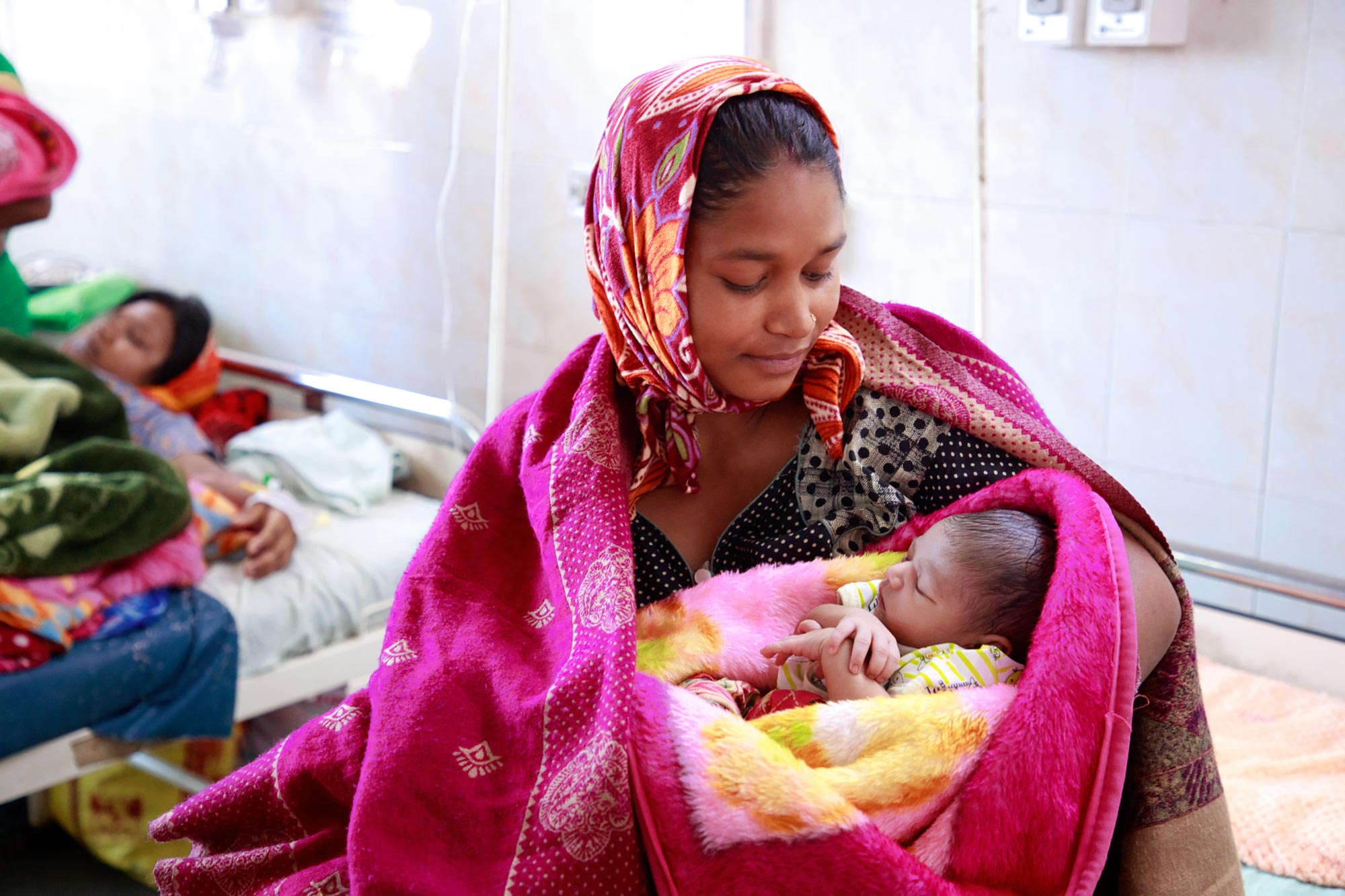
In its seventh annual goalkeeper reportThe Bill and Melinda Gates Foundation (BMGF) has established that low-cost innovations can prevent millions of stillbirths and infant deaths in low- and middle-income countries (LMICs)
The report, co-authored by Melinda French Gates and Bill Gates, which was released Tuesday, highlights the relevance of innovations in reducing maternal and infant mortality.
The Goalkeepers report annually tracks progress on the development goals agreed by 193 world leaders in 2015.
According to the report, approximately five million children die each year before their fifth birthday, and almost two million babies never take their first breath: they are stillborn.
Decades of research
The report noted that a decade of research into why children die in the poorest places “now opens up ways to save millions.”
In his essay, Bill Gates acknowledged the difficulty of obtaining information about why babies died.
Gates said: “Back then, any record of a child’s death usually listed one of the four most common causes: diarrhea, malnutrition, pneumonia or premature birth.
“But each one was a vast ocean of different diseases, with dozens of different causes and cures. Pneumonia, for example, is related to more than 200 types of pathogens.”

He added that the medical field has begun to understand precisely when and why some babies are dying, citing studies such as the Child Health and Mortality Prevention Surveillance (CHAMPS), the Pneumonia Etiology Research Child Health Study (PERCH) and the Global Enteric Multicenter Study (GEMS). .
Gate noted that the main “novel method” that doctors are using to “accelerate” the lung growth of premature babies is prenatal corticosteroids (ACS).
“Our foundation estimates that SCA could save the lives of 144,000 children in sub-Saharan Africa and South Asia by 2030 and almost 400,000 by 2040,” he said.
Development goal
According to the porters report that reviews 18 indicators (from poverty to gender equality, education to food security, health and climate) the world is out of place.
It underlines the urgent need for action, as well as a renewed global commitment to ensure a more equitable and secure future for all by 2030.
According to the report, the global maternal mortality rate is estimated to have fallen from 156 per 100,000 live births in 2021 to 151 in 2022.
In addition, he noted that the mortality rate for children under 5 years of age has decreased from 37 child deaths per 1,000 live births in 2021 to 36 child deaths per 1,000 live births in 2022.
“If we continue at the current pace, the projected infant mortality rate will be 29 per 1,000, without reaching the goal of 25 infant deaths per 1,000 live births. If progress accelerates, the 2030 target is within reach,” the report reads.
The report also calls for immediate action to help put the world back on track towards the global goal of reducing the maternal mortality rate to less than 70 per 100,000 births and neonatal mortality to 12 deaths per 1,000 live births by 2030.
Innovations that save lives
The report also highlighted seven life-saving innovations that they said midwives could easily implement to reduce maternal mortality.
These innovations, according to the Gates Foundation, could save two million more mothers and babies by 2030, and 6.4 million lives by 2040.
These include interventions that can reduce postpartum hemorrhage, the leading cause of maternal death, by 60 percent; supplements that combat malnutrition in pregnant and lactating women; treatments for anemia, which affects nearly 37 percent of pregnant women; and antibiotics that reduce infections during pregnancy.
The report indicates that portable ultrasound with AI could be easily implemented to monitor high-risk pregnancies in low-resource regions, ensuring that potential problems during pregnancy are diagnosed and addressed early.
In her essay, Melinda Gates said that existing life-saving innovations are not reaching the women who need them most.
He said improving maternal health also means improving child health and survival, which means stronger families, more vibrant communities and more prosperous societies.