
Muhammadu Ibrahim, a resident of a border community in Jigawa, never envisioned a diplomatic dispute between Niger and the Republic of Niger.
Ibrahim, president of Maigatari International Market, told Newslodge that the situation has brought untold difficulties to the market’s traders and their customers in Niger.
Painting a bleak picture of the effects of the sanctions imposed on Niger by Economic Community of West African States (ECOWAS) on business activities in the market that is close to Nigeria’s border with Niger, Mr. Ibrahim said that the sanctions have paralyzed businesses in the market.
Market leader Muhammadu Ibrahim.
Thmie ECOWAS imposed sanctions on the Republic of Niger as part of measures to restore constitutional democracy after Abdourahamane Tchiani, Niger’s presidential guard commander, overthrew the country’s constitutionally elected government on 26 July.
The country’s democratically elected president, Mohammed Bazoum, is still being held by the junta.
The sanctions include the closure of land and air borders between ECOWAS countries and Niger; the suspension of all commercial and financial transactions between ECOWAS member states and Niger. Nigeria also cut off electricity supply to the country.
The sanctions were intended to increase pressure on the junta to return Bazoum to power.
“The volume of trade between the two countries cannot be quantified, this situation requires several years to rectify. I can’t even imagine Nigeria going to war with the Republic of Niger because of our longstanding ties, especially on the road in this area (Maigatari).
“Going to war with the Republic of Niger is something we cannot even think about or pray about because we are one people. Some of our wives and children live in Niger, while some of their own wives and children (people from the Republic of Niger) also live and earn a living in Nigeria (Maigatari). All we can say is to call on our leaders, especially our president (Bola Tinubu), to consider resolving this crisis immediately so that business activities can return to their normal routines,” said the market leader.
Mohammed Danduwa
Maigatari hosts a weekly cattle market that attracts traders from Nigeria, the Republic of Niger, the Central African Republic, Mali and other West and Central African countries.
When Newslodge visited it was almost deserted.
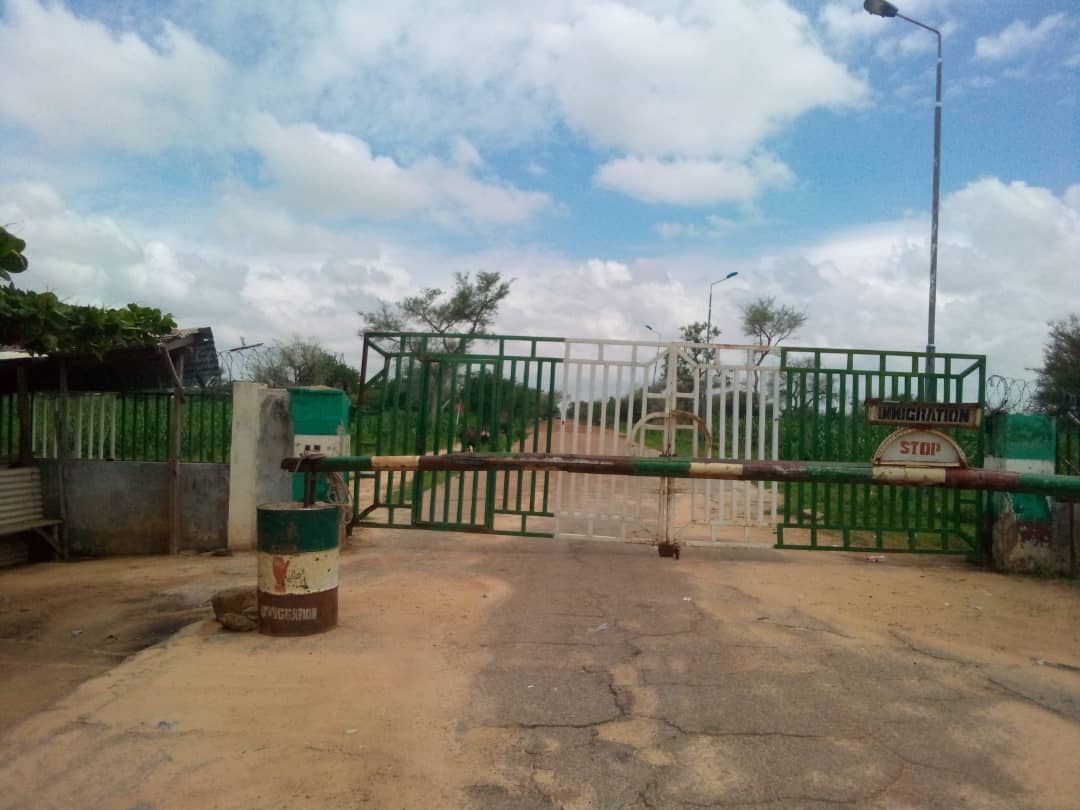
At the Maigatari border crossing all the gates remained closed.
Adverse effect on companies
Muhammadu Danduwa, a cattle trader at Maigatari market who spoke on behalf of the cattle traders, said the effect of the sanctions on the cattle trade is huge because it is the main business that thrives between the two countries and the government. Maigatari local acts as host. for Nigerian.
Danduwa said the border community has yet to recover from the economic difficulties following the removal of the fuel subsidy by the Nigerian government when ECOWAS imposed sanctions on the Republic of Niger.
“Look at this place, if it wasn’t for the sanction, you couldn’t come on a day like this (Friday), a day after the official market day, and there would be room to go through because you would have seen traders from different parts of Nigeria and beyond, who have come here to buy cattle.
“Before now, I couldn’t count the number of cattle I would get from the market. But today there is no one to talk to because they have been prevented from coming to this city.
“Apart from the cattle trade, the people who farm for us come from the Republic of Niger and that has stopped; For this reason, if you visit our farms you will discover how the crops have been invaded by weeds.
Riders from Okada were stranded in the border community of Maitagari without passengers.
“We in the border community have faced two sanctions in the last three months. First it was the ‘sanction’ to eliminate the fuel subsidy and now the sanctions. Since the removal of the fuel subsidy we have been facing difficulties,” said Mr. Danduwa.
The businessman also called on ECOWAS and the Nigerian government to reconsider the intended use of force to overthrow the junta.
“If the war starts now, we will be on the receiving end, we will be in the border city. Where do we run to? We will be the first victims because our farmlands are in the same place as them, and in some cases, our cemeteries. So the best thing is for the government to find a way to resolve this conflict before it escalates into open hostility,” Danduwa said.
Lawali Muhammadu, who also sells cattle, said his freedom as a businessman has been restricted since the sanctions were imposed because he is unable to travel to Niger.
Muhammadu called on the federal government to persuade ECOWAS to reconsider sanctions and the use of force against the Republic of Niger.
“As you can see, the economy is paralyzed, cows and other products are not being brought in or out of this country, and I can tell you that this is a major source of concern for all well-meaning people because they depend on this type of trade between the two. countries to survive.
“This is even more serious, since the common people of the two countries have nothing to do with this conflict. We have no problem with the ordinary people of the Niger village, nor they with us, we have been coexisting peacefully with them for decades and we want to continue living peacefully with them,” Mr. Muhammadu said.
Jigawa State is one of the seven Nigerian states that share land borders with the Republic of Niger.
We are committed to a peaceful resolution, not war – Presidency
Meanwhile, Nigerian President Tinubu, who is ECOWAS President, said he is committed to a peaceful restoration of constitutional democracy in the Republic of Niger rather than using force.
One of the president’s press aides, Abdulaziz Abdulaziz, said the president is aware of the long-standing link between Niger and Nigeria in his commitment as ECOWAS president to mediate the crisis.
“The use of Nigerian military force in Niger is just propaganda and fake news pushed by some people, but the truth of the matter is that the issue in Niger is being mediated through diplomacy,” he said.
Editing: Nicholas Ibekwe, Tosin Omoniyi
Read More Related News Here
Let hear it in the comment below if you do have an opinion on this; Why we are facing the end of the sanctions, lament the inhabitants of the border community of Jigawa