
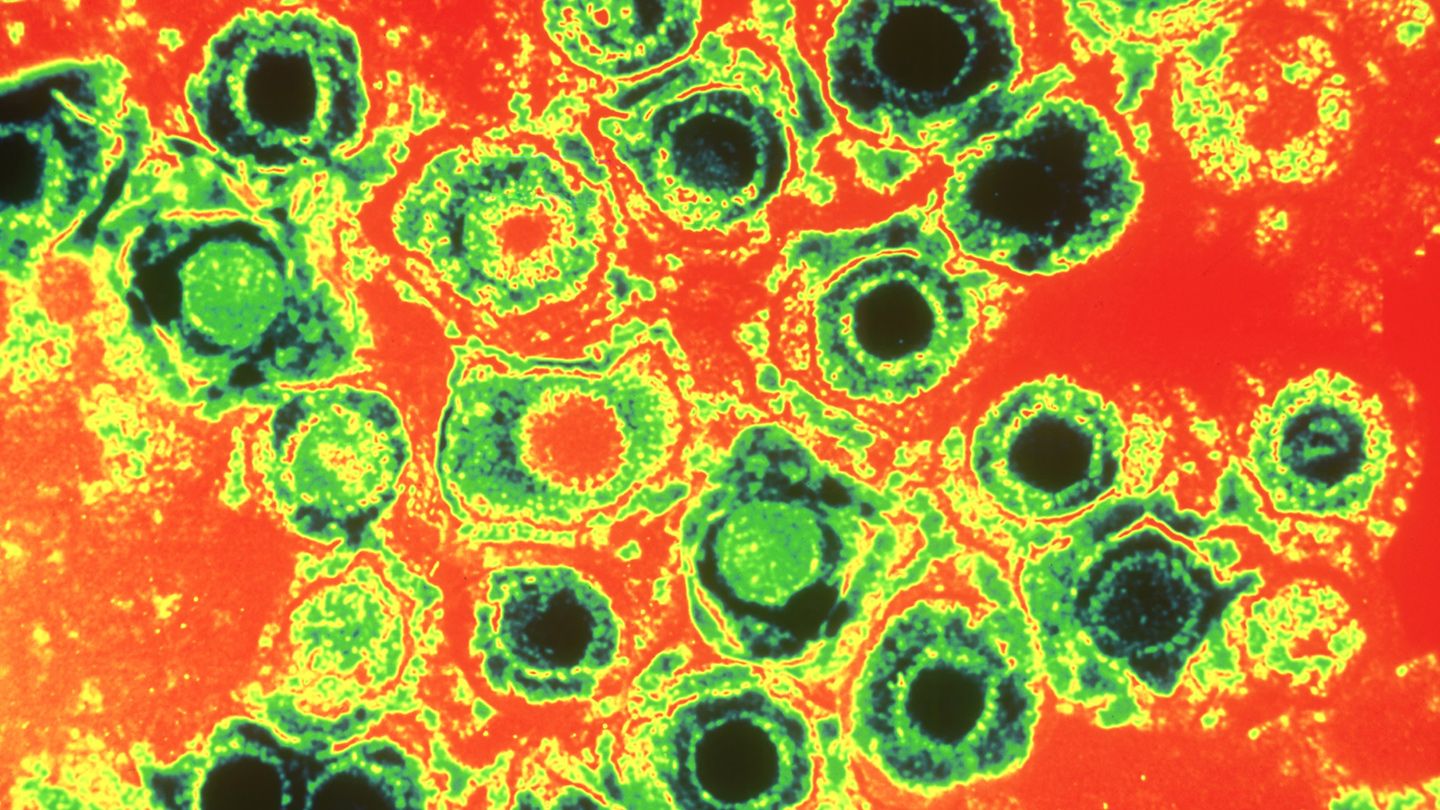
Herpes simplex virus type 1 (HSV-1) spreads easily from person to person through direct contact with skin or contact with saliva. HSV-1 causes blistering sores around the mouth and lips. These sores are called cold sores, fever blisters, or oral herpes. HSV-1 can also cause genital herpes, but most cases of genital herpes are caused by a second type of herpes simplex virus, HSV-2, according to MedlinePlus . HSV-1 stays in your body, permanently, in an inactive state once you’re infected. Certain triggers — such as stress, sun exposure, an injury to the affected area, having another infection such as cold, or hormonal changes (like a period) — may periodically reactivate the virus and lead to recurrent symptoms and outbreaks. HSV-1 Prevalence HSV-1 infection is very common. The World Health Organization estimates that 67 percent of all people in the world younger than 50 have HSV-1. An estimated 50 to 90 percent of Americans have HSV-1, according to Johns Hopkins Medicine . Most people with HSV-1 become infected during childhood or adolescence. Not everyone with HSV-1 gets cold sores or has symptoms. Many people with the virus don’t even know they’re infected. How Do You Get Cold Sores? Cold sores are very contagious. HSV-1 is transmitted mainly through mouth-to-mouth contact with an infected person. HSV-1 can be spread by: Kissing Sharing a cup or eating utensils Sharing lip balm or lipstick Sharing a toothbrush, razor, towel, or any other object that may have come into contact with the herpes virus Touching an open cold sore Oral sex (it’s possible to get cold sores from giving oral sex to someone with herpes in the genital area) It’s important to keep your hands clean if you have a cold sore, because cold sores can spread to other parts of the body from the mouth area. If you have a cold sore, wash your hands carefully before touching yourself or other people. Try not to touch your cold sore too much. In some people, an HSV-1 infection can spread to: Fingertips (especially in children who suck their thumbs) Eyes Other areas of the skin (people with eczema have a higher risk of spreading cold sores to areas of their body already affected by the skin condition) When you have a cold sore, avoid the following activities to protect other people from catching the infection: Kissing Sharing drinks, utensils, or other items that may have touched your lips or saliva Giving oral sex HSV-1 is most contagious when a cold sore is present, but it’s still possible to spread HSV-1 to another person even if cold sores aren’t present.