
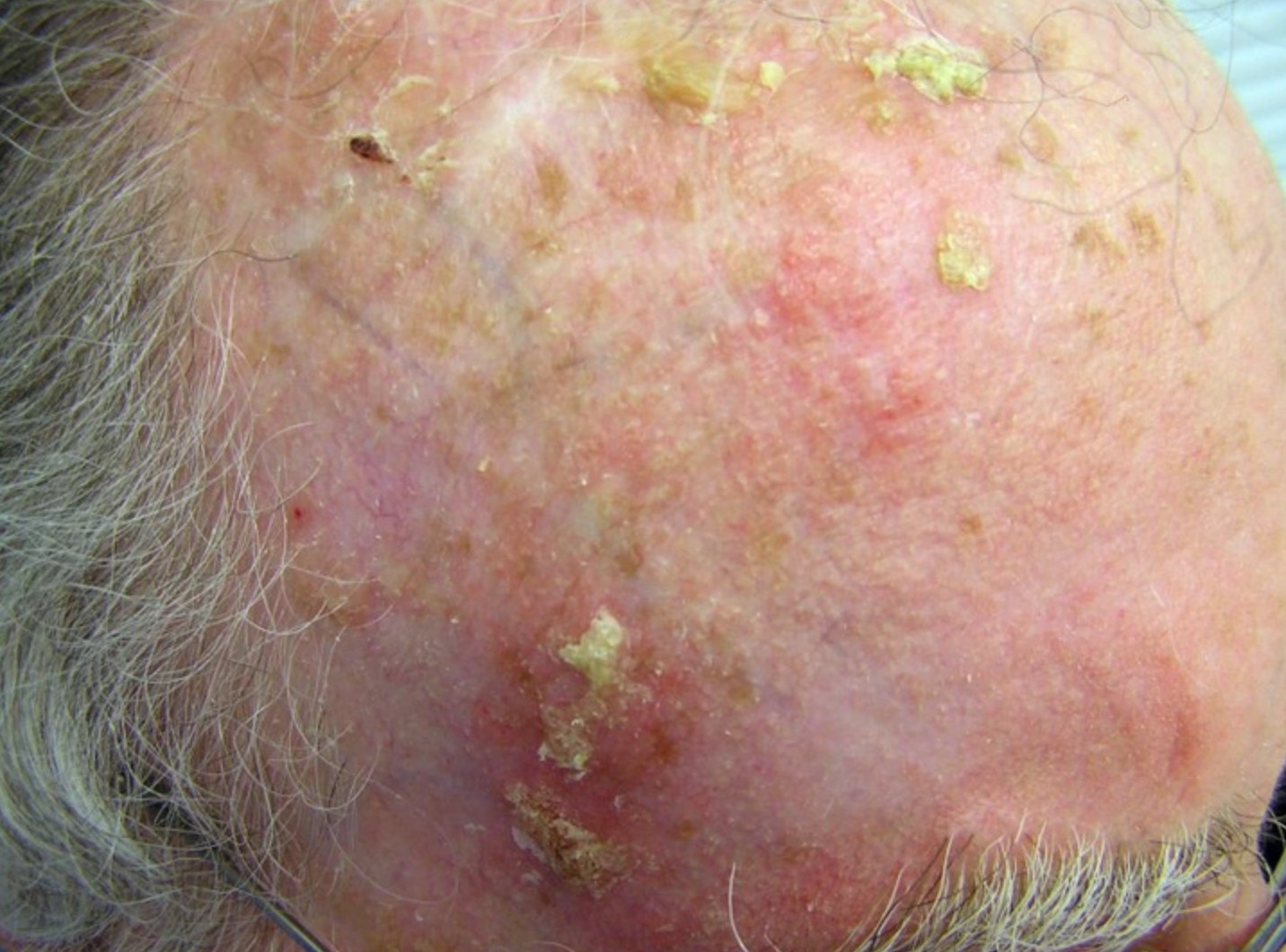
You would typically find an area of skin cancer where the skin is exposed to the sun. These areas are the arms, hands, legs, face, earlobes, neck, and chest. There are rare cases of skin cancer showing up in covered areas like genitals, toenails, and fingernails. It is also a myth that people with dark skin cannot get skin cancer, they can!
There are a few types of skin cancer listed below. Let’s take a look at what does skin cancer look like, according to each type:
1. Melanoma
This type of skin cancer can appear anywhere on the body on regular skin or in a mole. In women, it happens more often on the legs and in men on the trunk or face areas. The skin does not need to have sun exposure to develop. This cancer happens to people of any color and looks like this:
- Skin lesions on the toes, fingers, soles, and palms. It can also appear on the mouth, vagina, inside of the nose or anus.
- Lesions tend to have irregular borders and the colors range from blue/black, to red/white.
- You may see a brown spot with dark spots inside.
- You may notice a mole changes, starts bleeding, or gets bigger over time
2. Basal Cell Carcinoma
Basal cell carcinoma is a type of cancer that happens in the parts of your body that are exposed to the sun. It is most often seen on the face and neck. It looks like:
- Pearly waxy bumps
- Lesions that look like scars and are flat. They are usually brown or flesh-colored.
3. Squamous Cell Carcinoma
This is another type of cancer that comes from sun exposure. It usually appears on the ears, hands, and face. In people that have dark-colored skin, they can get this cancer on areas that don’t get sun exposure such as the soles of the feet and palms. You may notice:
- Nodules that are red and firm
- Flat lesions, but have a crusty surface with scales
4. Kaposi Sarcoma
What does skin cancer look like? This type of skin cancer is rarer and only happens to those who have weak immune systems. It is most common in people with AIDS. People who have transplanted organs are susceptible due to drugs that suppress the immune system. It has also been found in Jewish and African young men.
They are described as:patches on the skin that appear red or purple because it develops in the skin’s blood vessels.
5. Sebaceous Gland Carcinoma
Sebaceous gland carcinoma is a rare but aggressive type of cancer. It starts in the glands that produce skin oils. They usually appear on the lids of the eyes, but can happen anywhere on the body.
They look like: nodules that are pain-free and hard. They are often mistaken for “styes”
6. Actinic Keratosis
This usually happens from multiple years of sun exposure and appears on the arms, hands, face, lips and ears. It can even appear on the scalp. The lesions slowly get larger over a course of years and appear later in adulthood. Only a few of these lesions actually become cancerous so it is important to use sunscreen and keep these areas covered. They appear as:
- Rough patches of skin that are scaly. These are usually less than an inch in size.
- Patches of discolorations that are flat
- Raised bumps that are hard like warts
- The bumps may itch or burn
- They appear as red, brown, pink or the color of the skin
Watch Your Skin for Changes
What does skin cancer look like? The telltale way to know if you need to have skin lesions evaluated is to watch them closely for changes. Regardless of the skin cancer types, you should watch any lesion for changes. Skin lesions or moles that might be cancerous grow in size, change shapes, develop irregular borders and change colors. Learn the ABCDE rule that docs use:
1. Asymmetry
Moles that are not likely cancerous tend to match up on all sides. Meaning one side looks the same on the other side. In suspicious moles, they tend to be different on each side because the cells are dividing more quickly than normal. Cells that divide more quickly can be cancerous.
2. Borders
Non-cancerous moles have regular borders that are very round and clear. If a mole tends to grow outside of its original shape it needs to be checked. The edges may start to look blurry and the coloring spreads across the skin away from the mole and this is often a telltale sign of a cancerous mole.
3. Color
Moles are usually dark in color and range from brown, to black, tan or flesh tones. This is fine as long as you have one color in the mole. When you start to see flecks of darker or lighter colors, time to get it checked out. Melanoma tends to give moles different shading such as dark brown with light brown flecks, tan with red specks or even blue specks of color.
4. Diameter
Smaller moles are usually benign, but if a mole grows larger than 6 mm it may be a problem. A pencil eraser is around 6 mm and makes a good tool to judge the size.
5. Evolving
Moles that change could be a sign of skin cancer. If you have an unusual mole, watch for evolving changes like new colors or moving borders. Also watch for changes like leaking fluids, bleeding, or flaking skin cells.