
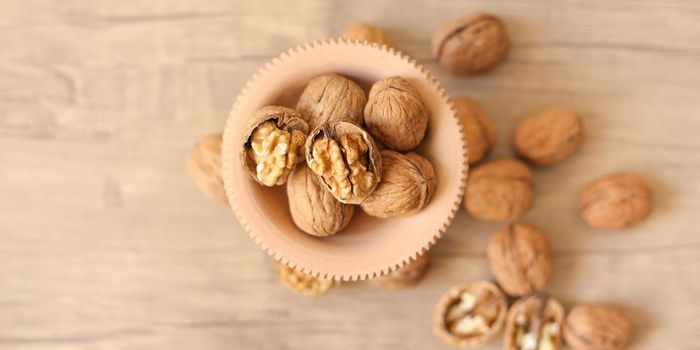
Walnuts have always been considered a healthy food, important to include in the daily diet of adults and children, at breakfast, or as a mid-morning snack. The fact that walnuts are beneficial is further supported by the countless scientific studies dedicated to their properties and published in recent months. Today we are talking about the most recent studies and their results, which add important information on what walnuts can do for our physical and mental well-being. Walnuts for a more balanced diet according to studies, it is easy to not reach the recommended needs for several nutrients, such as potassium, magnesium, and folate.
The cause is to be found in an unbalanced and poorly varied diet, without complete meals but often with snacks eaten quickly between one commitment and another. Well, research has shown that the daily intake of 28 grams of walnuts made it possible to increase magnesium levels by 17%, a value that even reaches 20% in children. ‘
A sufficient dose of magnesium is necessary for energy metabolism and bone remodeling, which is the process by which old bone tissue is replaced by new tissue. Then, 28 grams of walnuts made it possible to increase the values of folate and potassium, to completely eliminate the copper deficiency, which would cause defects in the blood vessels, anemia, brain disorders, but also loss of pigment in the hair, and to eliminate almost all the lack of zinc, a mineral that plays a key role in the immune response, in wound healing and in the synthesis of proteins and DNA. Provided it is important to ensure a varied diet, in any case, the intake of walnuts brings essential substances for biological processes and in many cases allows the recommended nutrient values to be reached (Spence et al, Nutrients, 2023).
Walnuts against inflammation and cellular degenerationWalnuts are a true superfood, rich in fiber, minerals, tocopherol, unsaturated fatty acids and antioxidants. Not only that, based on the latest evidence, it has emerged that walnuts are prebiotic, that is, capable of protecting the diversity of the gut microbiota and supporting the proliferation of good intestinal bacteria.
It was also possible to demonstrate that ellagitannins, which are antioxidant substances contained in walnuts, once ingested are subjected to a series of transformations that, through the intervention of the bacteria of the gut microbiota, lead to the formation of anti-inflammatory substances, useful for counteracting chronic inflammation and cellular degeneration.
Studies have shown that regularly consuming walnuts but also peanuts helps reduce the risk of developing cellular degeneration (Fan et al, Antioxidants, 2023). Walnuts, stress, and mental well-being are rich in omega-3 fatty acids, vitamin E, and tryptophan and protect the gut microbiota. Thanks to these characteristics, walnuts are considered protective of mental health and cognitive function. It has been shown that taking a portion of walnuts, 50 grams, every day for 4 months helps in times of great stress, reducing the risk of sadness, depression, and mood swings. Walnuts reduce levels of salivary alpha-amylase, an enzyme that increases in stress conditions (Herselman et al, Nutrients, 2022). Then, the consumption of walnuts also helps, in the long term, to improve the quality of sleep (Herselman et al, Nutrients, 2022).
Consuming 30 grams of walnuts a day for 6 months has shown, in adolescents, to improve attention and the ability to solve problems in new situations, while a breakfast rich in walnuts has effects throughout the day, with an improvement in response times in performing functions such as planning, organizing, and processing information (Pinar Marti et al, clinical medicine, 2023). Walnuts and the heartIncluding walnuts in your diet helps protect the heart.
Studies have observed that 30 grams of walnuts per day reduces inflammation and counteracts atherosclerosis, even when palm oil is consumed, which instead stimulates inflammation and atherosclerosis (Lazaro et al, Front Nutr, 2023). Finally, 30 grams of walnuts have been shown, in the long term, to reduce bad LDL cholesterol (Gil Zamorano et al, Nutrients, 2022).
Walnuts do not make you fatWe often tend to avoid walnuts thinking that, being caloric, they could cause weight gain. In reality, the daily and moderate consumption of walnuts does not influence body weight, as demonstrated by research, as walnuts provide fiber and proteins that increase the sense of satiety, thus reducing the desire to eat unhealthy snacks between meals (Spence et al, Nutrients, 2023).