
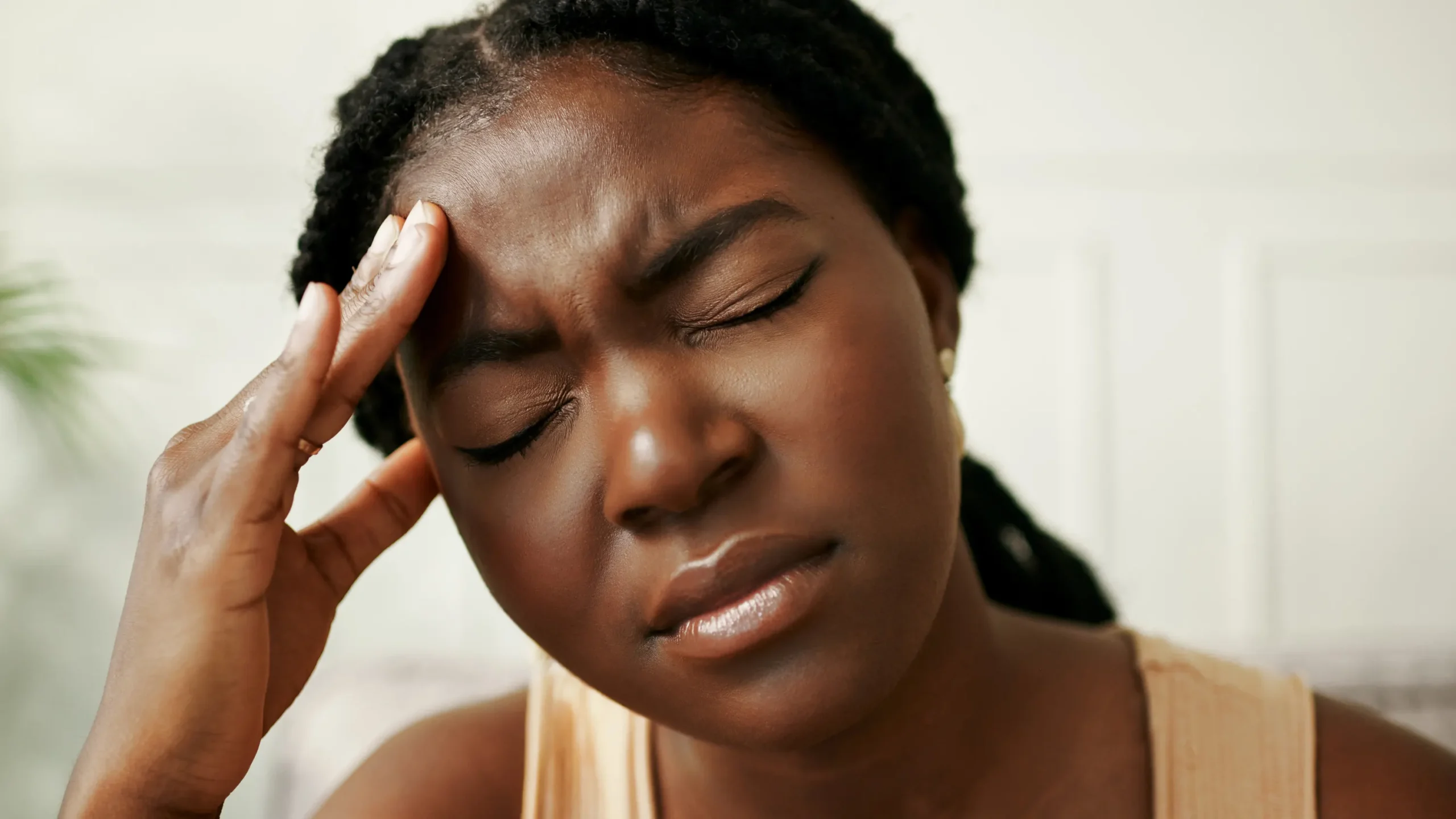
Studies have revealed that women are more susceptible to experiencing headaches compared to men. This is primarily due to the hormonal changes in their bodies, which can affect certain chemicals in the brain.
However, it is important to note that headaches are not exclusively caused by hormones and can affect anyone. External factors such as stress and economic conditions can also play a role.
It is also worth noting that there are different types of headaches, and understanding which type you are prone to can help identify the triggers and treatment options.
1. Tension Headaches
Tension headaches cause a dull ache on both sides of the head, triggered by stress, fatigue, or hunger. A tension headache is different from a migraine because it doesn’t cause nausea, or sensitivity to light, sound, or smells, and it doesn’t get worse with regular activities like walking. Its triggers are often unavoidable but can be treated with over-the-counter pills.
2. Migraines
It is believed that women are more prone to migraines than men because hormonal changes are one of the triggers for migraines, so they can occur more frequently during menstruation. The wide range of other triggers includes certain types of food and drink (for example, aged cheeses, red wine, and coffee), nicotine and cigarette smoke, sudden changes in weather, sleeping too much, strong odors, and for some, even sex.
The pain from a migraine is usually felt on one side of the head. To treat migraine headaches, it’s best to visit your doctor for a prescription, as it can be an indicator of a more serious health problem.
3. Sinus headaches

The sinuses are air-filled cavities in the skull that help insulate the skull. A sinus infection can cause a headache or pressure in the eyes, nose, cheek area, or on one side of the head. It is very similar to a migraine but differs in that you also feel symptoms of a fever or see thick greenish or yellow mucus. Sinus headaches are treated with decongestants that contain pain relievers. Sometimes your doctor may prescribe antibiotics if an infection is present.
4. Exercise headaches
Some women experience headaches immediately after physical activity, particularly strenuous exercise. They are actually called exertion headaches, which are a group of headaches associated with some kind of physical exertion, such as exercise or even sex.
This type of headache is closely related to migraines, as it usually occurs in those who have inherited a tendency to migraines. Most exercise or exertional headaches are harmless and can be treated with simple pain relievers.
5. Rebound Headaches

This is usually triggered when you use pain relievers or even nasal decongestants too often. Constant use of painkillers can eventually backfire and cause constant headaches. What happens is that your pain threshold is lowered as your body’s pain receptors become overly sensitive when the dose of the pain reliever wears off. More importantly, you shouldn’t try to treat a rebound headache on your own.