
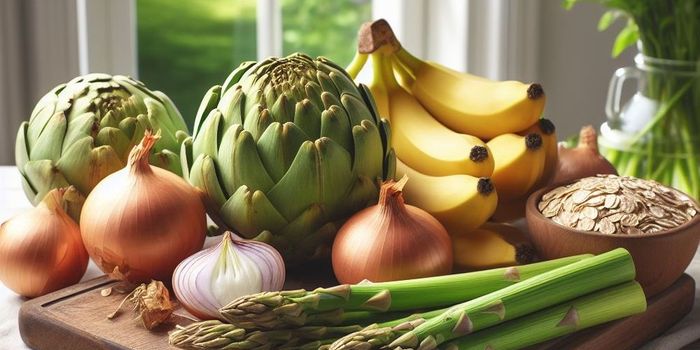
Has it ever happened to you? Just seeing a certain food, very caloric, perhaps unhealthy but delicious, made you want to taste it… and at that point you gave up, of course. What if instead, the intake of certain foods could reduce the desire to consume high-calorie and unhealthy foods? This is the message of very recent scientific research that appeared in the BMJ magazine thanks to the work of a German team from the University of Leipzig Medical Center (Medawar et al, BMJ, 2023).
Prebiotics can help scientists recruit 59 adults, all aged between 18 and 42, overweight and with the habit of following a Western-style omnivorous diet. The study participants were divided into two groups. The first group was asked to take, every day for 14 days, together with their usual diet, 30 grams of inulin, which is a prebiotic substance contained in chicory. Prebiotics are indigestible fibers that nourish the gut microbiota and stimulate the proliferation of good intestinal bacteria.
The second group instead took a placebo. Before and after the two-week experiment, the volunteers underwent laboratory analyses to evaluate the circulating pro-inflammatory substances and the composition of the microbiota. Not only that, all the volunteers, both before and after the test, underwent a diagnostic investigation aimed at understanding the activation of brain areas in response to a displayed image. In particular, the volunteers were shown images of very high-calorie foods.
Before the experiment, the reward-related areas of the brain, namely those neuron structures responsible for positive emotions associated with behaviors such as food intake, were activated in all volunteers when they saw certain foods. After the two weeks of the experiment, those who had taken inulin had less activation of the reward areas of the brain, triggering less desire for that particular food.
This behavior change was associated with the ability of inulin to act on the gut microbiota, promoting the proliferation of good and anti-inflammatory bacteria. A healthier intestinal microbiota has thus become a precious ally to counteract the desire to eat, especially high-calorie foods, and to reduce the risk of overweight and obesity.ConclusionsThe experiment showed that the regular intake of a prebiotic substance, such as inulin, allows the proliferation of good intestinal bacteria, with benefits in terms of brain functioning and the ability to choose the foods to consume, making foods with high-calorie content less palatable.
The study is still in its infancy and more research will need to be conducted to delve deeper into the findings. In particular, at present, the same research group is verifying the effects of taking prebiotics in the long term. In the meantime, it is certainly a healthy choice to include foods containing prebiotics in your diet, which also reduce chronic inflammation. In addition to chicory, foods of this type include onion, garlic, artichoke, banana, wheat, asparagus, Jerusalem artichokes, oats, and leeks.