
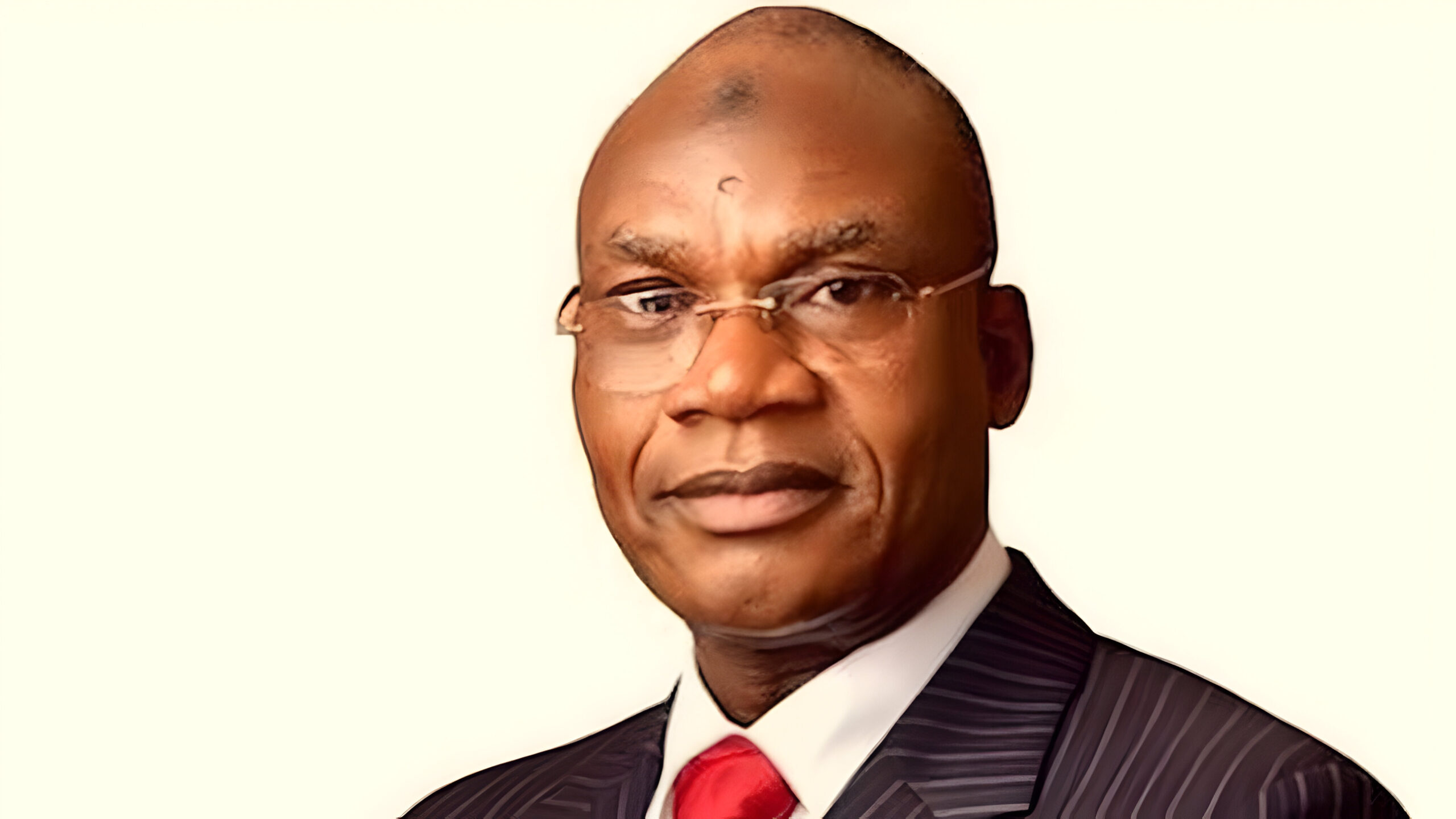
Nigeria’s new Minister of Education, Tahir Mamman, you should already know your most important tasks and how they will test your political leadership skills.
Mr. Mamman, a professor and Chief Advocate for Nigeria (SAN), was among the 45 ministers sworn in by President Bola Tinubu on Monday.
Mr. Mamman will be assisted in the ministry by the Minister of State, Yusuf Sununu.
As both men resume their work, the events of recent years have established some of their most pressing responsibilities.
From the deteriorating facilities in schools, the wave of brain drain in tertiary institutions, the poor welfare conditions of teachers and students, as well as formulating and supervising the implementation of important educational policies, ministers will have a little time before the existing calm turns into a storm if they don’t “get down to business.”
Industrial action
Perhaps the most frequently asked question among observers of Nigeria’s tertiary institutions is when the workers would embark on the next industrial action. This is because industrial actions in Nigeria’s universities, polytechnics and colleges of education seem to have become a ritual. Workers are always arguing with the government about issues related to the financing of their institutions and welfare.
The situation is worse in the universities where the Union of Academic Staff of Universities (ASUU) constantly finds itself only with the option of strike in disputes with successive government administrations over issues of poor welfare conditions for its members, lack of financing of public universities and the autonomy of the institutions.
ASUU logo
During ASUU’s last industrial action, which lasted eight months in 2022, the government invoked and stuck to its ‘No Work, No Pay’ policy, which means teachers were not paid during the period they were in strike.
Despite interventions by prominent Nigerians and institutions, former President Muhammadu Buhari refused to pay the teachers for the eight months and there is still no indication that his successor Mr Tinubu is willing to bend the rule.
Meanwhile, the union’s demands have not been met to the satisfaction of its members, its president, Emmanuel Osodeke, said when he called off the strike in October last year.
Other workers’ unions at universities, polytechnics and colleges of education also have unresolved demands before the government. They include the Senior Staff Association of Nigerian Universities (SSANU), the Non-Academic Staff Union of Educational and Associated Institutions (NASU), the National Association of Academic Technologists (NAAT), and the Congress of University Academics of Nigeria (CONUA).
Others include the Union of Academic Personnel of Polytechnics (ASUP) and the Union of Academic Personnel of Faculties of Education (COEASU).
With the rising cost of living accelerated by the removal of the gasoline subsidy and the high cost of basic goods, it is only a matter of time before these unions join their counterparts in the health sector in presenting their issues. before the goberment. When they do, Mamman’s handling of their demands could determine how the sector fare under his watch.
Financing, infrastructure
Another challenge facing the Nigerian education sector is the decrepit facilities in schools.
Despite an increase in year-over-year allocations to the education sector since 2016, stakeholders continue to lament that the sector is underfunded and facilities remain dilapidated.
COEASU General Secretary Lawan Bazza insists that the necessary facilities for Nigerian schools, from basic to tertiary level, are non-existent.
“The facilities are not there,” he told Newslodge. “From kindergarten to high schools, there are no facilities. Very few of them can have something. We don’t even have modern teaching facilities… For example, we have a whiteboard marker. I bought a marker because it is not available (not provided by school authorities)”.
In 2013, a needs assessment of Nigerian public universities conducted by the federal government and ASUU representatives, among others, revealed that approximately 1.3 trillion naira was needed to revitalize and make Nigerian public universities competitive at world level. But as of December 2021, despite continued ASUU agitations and strikes, the government only provided 19 percent of the sum.
ASUU said the 19 percent paid was at the 2013 valuation, and that the current exchange rate in the country has upped the ante.
Therefore, these revitalization funding issues will be very important in achieving sustainable development on campuses.
Brain drain in the face of hiring embargo
Like the nation’s health sector, the education sector has also been hit hard by the brain drain phenomenon. This is particularly exacerbated by an embargo on recruitment to academic institutions imposed by the administration of former President Muhammadu Buhari. The embargo is still in effect.
In its attempt to retain and attract teachers at the basic education level, the administration approved a new salary structure and raised the retirement age for teachers by five years.
“The brain drain in the academic sector is more than in the health sector,” Bazza said. “Perhaps that of the academic sector is not well pronounced, but it is more so (in the educational sector).”
children out of school
There are currently no universally acceptable data on out-of-school children in Nigeria. The previous administration did not agree with the figures presented by the United Nations Educational, Scientific and Cultural Organization (UNESCO) and the United Nations Children’s Fund (UNICEF) which put the figure at 20 million. and 18 million respectively. The Nigerian government put the figure at 6.95 million.
children out of school
ASUP National President Anderson Ezeibe said the minister has a huge job to do to reduce the number of out-of-school children in the country.
He said: “The current problems at the basic education level border on the issue of children out of school in the country. The numbers are not going to improve with the worsening of the country’s economic situation. In fact, he has a lot of work to do there.”
Corruption
Nigeria’s tertiary institutions have continued to be rocked by scandals of financial, moral and academic corruption, including sex for grade, contract scams, plagiarism, and labor and admission extortion, among others.
Last week, the Dean of the University of Calabar Law School, Cyril Ndifon, was suspended following a protest by law students who accused him of sexually abusing female students.
Mr. Ndifon had previously been suspended by university management on the same charge, but was reinstated in circumstances described as grim.
At least 18 university teachers were fired in 2021 for sexual harassment of female students.
Ministers must crack down on the malaise that has become endemic in tertiary institutions across the country.
Safe School Initiative
Nine years after the first mass abduction of school-age girls in Chibok in 2014, the Nigerian government’s Safe Schools Initiative has yet to fully take off. Following the 2014 incident in which 276 schoolchildren were kidnapped in Chibok, Borno State, the federal government announced the initiative to protect students and teachers across the country.
Since then, some 1,680 more students have been abducted from Nigerian schools, according to Save the Children, a charity.
Some stakeholders have blamed the initiative’s failure on their organization and operating system. For example, many question the logic behind the decision to house the initiative’s secretariat and its technical working committee in the Federal Ministry of Finance instead of the Ministry of Education.
For effective operation, Mr. Mamman may need to ensure the transfer of the Safe School Secretariat and Technical Working Committee to his ministry.
Transparency
The Joint Admissions and Matriculation Board (JAMB), which publishes its weekly earnings, has been praised by many Nigerians as perhaps the most transparent agency in the Ministry of Education.
ALSO READ: Tahir Mamman: The Academic Luminary as Minister of Tinubu, By Gidado Shuaib
The education minister may need to order all agencies under his supervision, including universities, polytechnics and colleges of education, to publish their income and expenditure at regular intervals to encourage transparency in the sector.
Optimistic experts
In separate interviews with our reporter, ASUP National President Anderson Ezeibe and COEASU Secretary General Lawan Bazza expressed optimism that Mr. Mamman, being an educator, will do a good job running the sector.
“The new minister is eminently qualified to head the Federal Ministry of Education,” Ezeibe said. “We see from his profile that he has significant experience at the highest level of tertiary education management.”
Speaking about the tasks before the minister, Mr Ezeibe said it was important that the minister take ‘verifiable steps’ to address discrimination against Higher National Diploma (HND) holders and their potential replacement with a Bachelor of Technology certificate.
“This will put an end to the problem of the HND/BSc dichotomy…while retaining OND certification for skills and craft certification in the sector,” he said.
Mr. Ezeibe added that solutions to the challenges in the education sector require that different layers of stakeholders commit to restoring values that are right for the sector.
He said: “At the tertiary level, issues bordering on sustainable financing, acceptable salary structure for staff, infrastructure deficit, violations of existing laws and regulations are all issues of urgent concern.
“Prudent management of scarce resources, appropriate and decent salary structures, and improved funding, respect for laws, statutes and regulations are the path to restore the education sector to its lost glory.”
Qosim Suleiman is a reporter at Premium Times in partnership with Report for the World, which connects local newsrooms with talented emerging journalists to report on hidden issues around the world.
Read More Related News Here
Let hear it in the comment below if you do have an opinion on this; Seven important tasks before the new Minister of Education of Nigeria, Tahir Mamman