
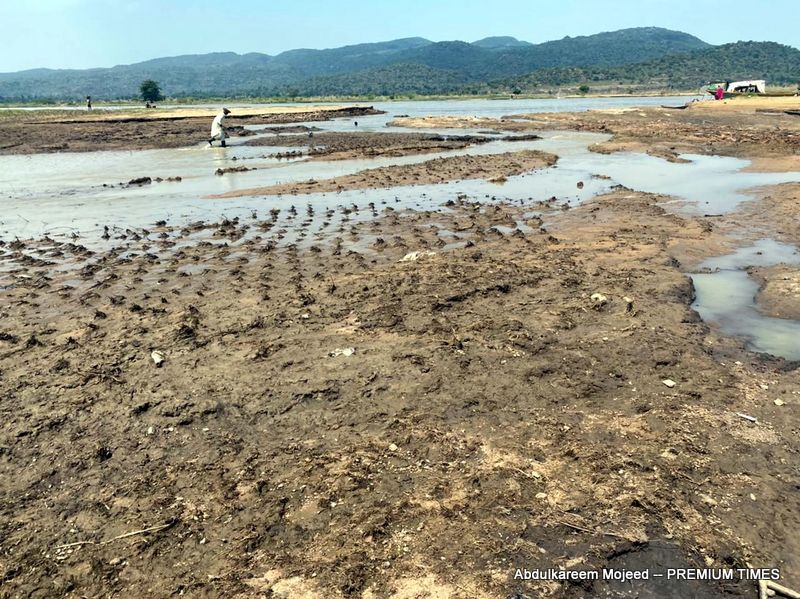
New research has recommended four major policy interventions within the agricultural sector that the Nigerian government could adopt to address the pain of rising food inflation in the country.
The new body of work, which has been published in the latest issue of Ecological Economics by ScienceDirect, a repository of peer-reviewed articles, journals, and books, is titled; “Climate change, income sources, crop mix and input use decisions: evidence from Nigeria”.
The authors- Mulunbrhan Amare and Bedru Balanaare research fellows at the Development and Governance Unit of the International Institute for Food Policy Research (IFPRI)- a research center for CGIARa global research partnership for a “food secure future dedicated to transforming food, land and water systems in a climate crisis”.
These recommendations come at a time when Nigerians are struggling to cope with the difficult economic situation, especially with food inflation rising to 25.25% in June last 26.98 percent announced during the week by the National Bureau of Statistics (NBS), Nigeria’s agency in charge of development data.
Caused in large part by the impacts of climate change, insecurity and the currency crisis, Nigerians have recently faced a food crisis that has been exacerbated by the removal of oil subsidies by the administration headed by the current president Bola Tinubu.
To cushion the effect of rising food prices, President Tinubu had announced in July the assignment 500,000 hectares of land to farmers for cultivation. However, there is still no sign from the government of any effort to make its promise on the initiative come true.
But Tinubu announced on Wednesday night the appointment of a stalwart of the ruling All Progressives Congress (APC), Abubakar Kyari, as Minister of Agriculture and Food Security, and Aliyu Abdullahi as Minister of State from the ministry.
recommendations
The researchers said the recommendations became necessary after empirical findings indicated “negative impacts of climatic factors on agricultural productivity.”
They said that for smallholder farmers in sub-Saharan Africa, the existing challenge of low agricultural productivity is already being exacerbated by climate change, as evidenced by floods, drought and irregular rainfall patterns in certain parts of the country.
According to the findings, food insecurity and scarcity of energy and nutrient-dense food remain Nigeria’s main challenges, citing World Bank statistics that about 40 percent of the country’s estimated 2017 population of 2017 million is below the poverty line. below the poverty line of $1.90 per day.
“Agricultural productivity remains low due to factors such as inappropriate use of inputs and yield-enhancing agricultural technologies. Yields of staple grains and tubers in Nigeria are less than half the world average; for example, average yield gaps for Nigeria’s three main staple crops (rice, maize and cassava) are >75 percent; 84 percent; and 25 percent respectively (World Bank, 2018). Adverse climate changes exacerbate challenges in the agricultural sector, which is already performing well below its potential,” the report says.
recommendations
The researchers said that such climate-resilient agricultural interventions should include water storage infrastructure and small-scale irrigation systems; improve access to use of agricultural inputs and crop mix solutions; development of the livestock sector and micro or small enterprises, and “pro-poor interventions that specifically target disadvantaged households”.
The investigation states; “Therefore, targeted interventions that promote climate-resilient agricultural practices, for example investment in water storage infrastructure and small-scale irrigation systems, are imperative to mitigate the effects of climate change on the poorest smallholder farmers. . In the Nigerian context, such measures focused on agricultural water management align well with the country’s National Agricultural Resilience Framework (NARF), which outlines sector-specific climate adaptation and innovative agricultural production strategies to enhance resilience in the agricultural sector.
“Second, our results suggest that changes in crop mix and agricultural input use are potential adaptation methods in response to climatic factors. However, smallholder farmers often lack access to weather-resistant varieties and yield-enhancing agricultural inputs. Policy interventions that improve access to these inputs are justified to ensure that crop diversification is a viable strategy to deal with climate anomalies.”
Meanwhile, the research paper said it found that the income share of livestock and non-farm activities improved during weather shocks and therefore advised that Nigeria should, as a policy, “consider the development of the livestock sector and micro/small enterprises as a potential strategy to mitigate the impacts of climate change on farming communities”.
“And finally, our analysis shows that climate change has heterogeneous effects on poor households compared to the relatively non-poor, measured in terms of differences in the endowment of productive assets and livestock holdings. Consequently, in conjunction with national and regional climate-related policies, we suggest pro-poor interventions that specifically target disadvantaged households. These interventions should include low-cost financing options for climate-resilient agricultural technologies and measures to reduce inequality of access to livelihood capital, including land and other productive assets,” he concluded.
About the research
The inquiry acknowledges its sponsors and states that the intervention was carried out as part of the Nigerian Strategy Support Programme, “which has been administered by the International Food Policy Research Institute (IFPRI) and has been made financially possible thanks to support from the United States Agency for International Development (USAID) through the Feed the Future Nigeria Agricultural Policy Activity; CGIAR Research Initiative on National Policies and Strategies (NPS); and Fragility, Conflict and Migration (FCM).
Read More Related News Here
Let hear it in the comment below if you do have an opinion on this; Research recommends four climate resilient policy interventions for Nigeria