
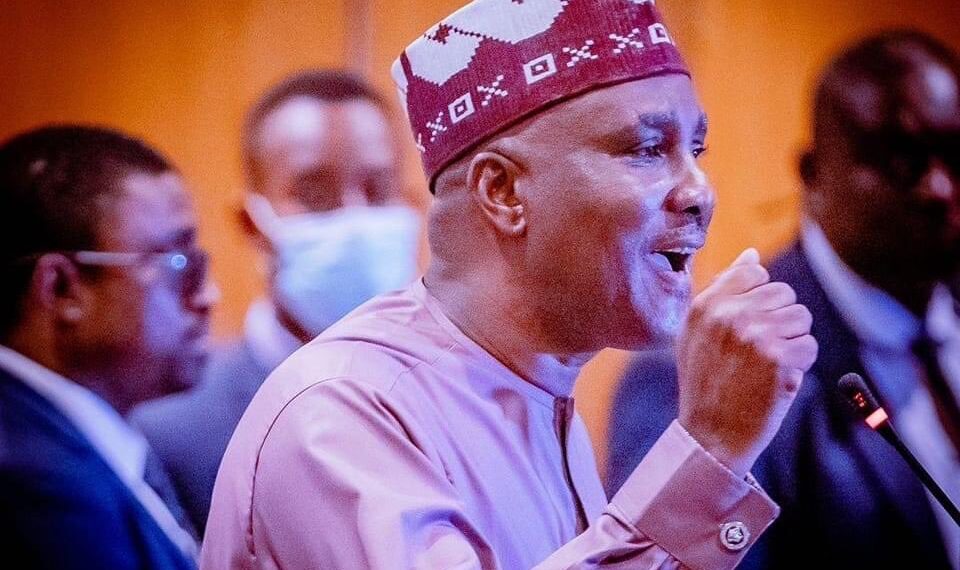
Speaker of the House of Representatives, Tajudeen Abbassays lawmakers will ensure Nigerians get a living wage that can take them home in the ongoing minimum wage review.
Mr. Abbas, who was represented by Oluwole-Oke, representing the Obokun/Oriade federal constituency of Osun state, made the pledge on Tuesday in Abuja at the National Policy Dialogue on Corruption, Social Norms and Behavior Change in nigeria.
The event was organized by the Independent Commission on Corrupt Practices and Other Related Crimes (ICPC) in collaboration with the Nigerian Anti-Corruption Academy, with support from the MacArthur Foundation.
However, the speaker, who pledged legislators’ support for ICPC in its fight against corruption, said factors that encourage or promote the threat must be addressed.
“We must recognize that there are different factors that influence the attitude or action of citizens to fall into corruption.
“For example, the question about a survival wage system is an important factor.
“A situation where the take-home pay of a large segment of the population cannot take it home is a recipe for all kinds of corruption.
“That is why the House of Representatives is particularly interested in the ongoing review of the country’s minimum wage. This time the House will make sure Nigerians get a living wage that could take them home,” he said.
He said that in many societies, where corruption is low-scale, there are social safety nets that ensure people are protected and Nigeria has the capacity to do the same.
“As legislators, there is often significant societal pressure and expectation on us to provide various services, assistance and functions that may fall outside the scope of legislative responsibilities.
“I’m sure we are familiar with the level of pressure legislators are under due to a deluge of requests for financial assistance and corollary from our constituents.
“Make no mistake about it, this pressure is a consequence of the prevailing poverty rate, precipitated by the factors mentioned above,” he said.
According to him, while changing social norms is essential to combat corruption effectively, we must also address the circumstances that inform these behaviors.
“Behavior change interventions aim to challenge existing norms and promote ethical behaviour.
“These interventions can take various forms, including awareness campaigns, educational programs, values reorientation, community engagement initiatives, and legal reforms.
“By focusing on social norms and promoting ethical behaviour, it is possible to create an environment in which corruption is less tolerated and more strongly condemned,” he said.
The speaker said that it was not enough to advocate for a change in attitude or behaviour, there must be a deliberate government policy in this regard.
Abbas said the policy had to address a living wage for citizens and close the gap created by governance failure.
“Let me say that curbing corruption in Nigeria through social norms and behavior change requires a comprehensive and multi-faceted approach.
“By focusing on social norms, raising awareness, strengthening institutions, promoting ethical leadership and implementing effective legal measures, social security policy, it is possible to create a society where corruption is less tolerated and more actively combated,” he said.
In the same vein, the President of the Senate, Godswill Akpabio, represented by his Deputy Chief of Staff, Savior Enyiekere, said that fighting corruption is a complex and multifaceted challenge.
“However, we must continue to insist on the need to fight corruption and also point out strategies that help our country to give the fight all the push it deserves.
“For me, fighting corruption implies transparency and accountability; it is also about strengthening legal frameworks.
“Nigeria is not without such legal frameworks and the 10th Senate under my leadership is positioned to close any existing legislative gaps in the fight against corruption.
“However, institutions like ICPC must enforce comprehensive anti-corruption laws that criminalize corrupt activities and set clear guidelines for ethical behavior,” he said.
According to him, existing Nigerian laws have provided for an independent judiciary and effective law enforcement agencies to investigate and prosecute corruption cases.
He also stressed the need to develop the courage to promote a culture of ethics and integrity in our schools.
“This is because fostering a culture of ethics and integrity in society through education and awareness campaigns will help promote values such as honesty, transparency and responsibility from an early age.
“We must make deliberate efforts to encourage civil society organizations, the media and educational institutions to also play an active role in promoting ethical behaviour.
“We must also look for new ways to foster an active and engaged civil society that can hold governments to account at all levels,” he said.
He said that “if we are to win the war against corruption, we must also improve our financial transparency rating by promoting responsible business practices and strict enforcement of anti-corruption procedures in both the public and private sectors.”
(YAYA)
Read More Related News Here
Let hear it in the comment below if you do have an opinion on this; Representatives will ensure Nigerians get survival package: speaker