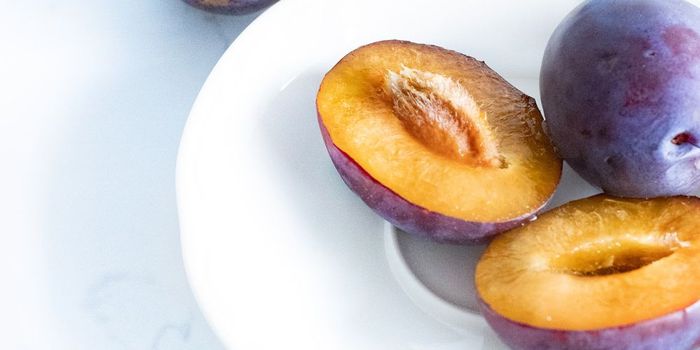
Vitamins, minerals, fiber and antioxidants, a valid aid for bone health, protect the brain and heart, in dried form and as juice they relieve constipationPlums are starting to appear on the shelves of supermarkets and greengrocers. These delicious fruits, however, can also be enjoyed all year round, in the form of dried plums, jam and juice. Let’s see the properties, benefits and warnings of plums in all their forms, to understand why it is important to include plums in our diet.
Plums, nutrientsPlums provide antioxidants, such as phenolic compounds and carotenoids, vitamins, such as vitamin C, E, A, K and group B, and minerals, among which potassium, magnesium, calcium and phosphorus stand out. The dried version of plums, the prunes, very tasty and available all year round, sees the calcium, magnesium, phosphorus and potassium content increase by up to 6 times for the same quantity of fruit analyzed. In dried plums, the presence of vitamin A and vitamin K increases while the intake of vitamin C is reduced (Igwe et al, Phytotherapy Research, 2016).Plums against free radicals and cellular degenerationPlums, both fresh and dried, are a concentrate of phenolic compounds, which are precious antioxidants that counteract free radical damage and aging processes (Bahrin et al, Biomedicine and Pharmacotherapy, 2022). Although most of the studies on the subject have been conducted in the laboratory on animal populations, it is also possible to detect a neuroprotective action of plums, which have been found useful to counteract the damage of free radicals and neuroinflammation, to decrease the formation of amyloid beta protein aggregates, a characteristic of Alzheimer’s disease, and to improve memory and learning (Igwe et al, Phytotherapy Research, 2016). The antioxidant action of plums is also associated with the anti-tumor properties shown by these fruits (Bahrin et al, Biomedicine and Pharmacotherapy, 2022).
Bone-friendly dried plumsPrunes increase bone density, helping to combat osteoporosis, which is especially useful for post-menopausal women (Igwe et al, Phytotherapy Research, 2016). Studies have shown that 50 grams per day of dried plums are able to protect bones and prevent and counteract bone loss (Smith et al, Nutrients, 2022).Plums and heartPrunes contain a high percentage of pectin, a fiber with an antioxidant action. Well, thanks to this characteristic, including prunes in your diet helps reduce cholesterol, the accumulation of fat in the liver and the risk of arteriosclerosis (Gallaher et al, Br J Nutr, 2009).
Constipation? Help from plums…Plums, particularly in their dried version, have laxative properties that help in case of constipation (Igwe et al, Phytotherapy Research, 2016 – Attaluri et al, Aliment Pharmacol Ther, 2011). The laxative properties can be traced back to the presence of fiber, sorbitol and antioxidants, including chlorogenic acid (Igwe et al, Phytotherapy Research, 2016). Alternatively, plum juice has also been shown to improve intestinal transit and counteract constipation (Igwe et al, Phytotherapy Research, 2016).Antioxidant plum jamPlum jam is a delight that we can savor on a slice of brown bread for breakfast. But this jam is also a precious source of energy to face the day and preserves a high quantity of polyphenols, which also give plum jam an interesting antioxidant power (Constantin et al, Journal of Food Protection, 2018).
Plums, warningsPlums, if consumed in moderation as part of a healthy and varied diet, do not cause unwanted effects and are well tolerated. However, you shouldn’t overdo it, especially with the fruit in dried form and with the juice, which are more suited to being consumed in large quantities. In fact, an excessive dose of prunes and juice can cause gastrointestinal disorders, bloating and diarrhea.
Plums, fresh, dried, jam and juice, here are the benefits, properties and warnings

ByAllNigeria
Sep 24, 2023