
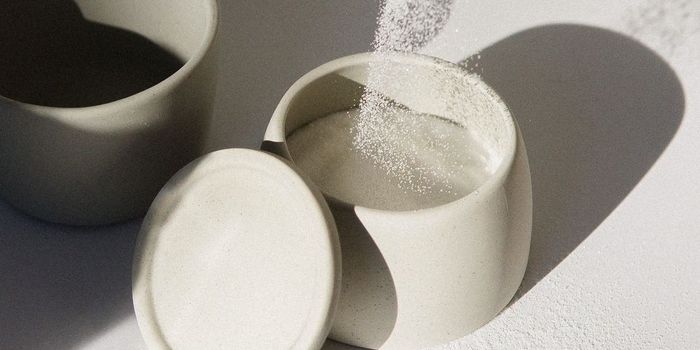
The news came a few weeks ago and that is that the IARC, the international agency for cancer research, has classified the well-known sweetener aspartame as a possibly carcinogenic substance for human beings. However, no withdrawal from the market of products containing aspartame has been requested, nor has the acceptable daily intake of aspartame been changed. What does this mean? And how should we behave to preserve our health?
Aspartame has always at the center of debates at the center of great debates and discussions on its safety since its use was approved in 1981 as a sweetener and alternative to sugar, aspartame has however conquered a large share of the market by finding itself as an ingredient in various products, such as ice cream, candy, diet drinks, yogurt, breakfast cereals, toothpaste, some supplements and even medicines, such as cough syrups, effervescent tablets and chewable vitamins.
Previous studies have already shown that aspartame is not inert in the body, but that it can increase inflammation, free radicals, and the accumulation of abdominal fat, as well as, as suspected, promote the onset of headaches, depression, anxiety, and irritability. For this reason, a daily limit has been set, beyond which the consumption of aspartame is no longer considered safe.
This limit is 40 mg per kg of body weight. This means that an adult weighing approximately 70 kg would have to drink 9 cans of a soft drink containing 300 mg of aspartame to reach this amount. However, it must be said that aspartame is contained in various products and the risk is not controlling the actual daily intake. Things changed a few weeks ago due to news destined to have important repercussions in the scientific and industrial world.
Aspartame is a possible carcinogen according to The News was made official with a report published in the journal The Lancet Oncology (Riboli et al, The Lancet Oncology, 13 July 2023). Aspartame is now considered to be a possible human carcinogen. This means that IARC believes that aspartame can cause cancer in humans, although data is limited at this time.
In particular, it seems that aspartame acts on the liver with a possible, but not yet certain, increase in the risk of developing liver cancer. However, as mentioned, it was not deemed necessary to lower the acceptable daily limits or to withdraw products containing aspartame from the market. This is because, at present, there is no absolute certainty of its carcinogenicity and because aspartame levels below the threshold of 40 mg per kg of body weight should be safe.
ConclusionsAs underlined by IARC, other independent research groups will now be called to provide a certain answer regarding the effects of aspartame on human health. While waiting for science to clarify, it is a good choice to limit products containing aspartame as much as possible. Since aspartame is present in various products it can be difficult to calculate exactly the amount taken daily, so the advice of experts is to simply limit the intake of these products as much as possible.
Don’t exclude them completely, because sometimes it’s impossible, especially when it comes to medicines, but limit them. Perhaps, as suggested by Dr Branca, director of the WHO Department of Nutrition and Food Safety, if we find ourselves choosing between a drink containing sugar and one containing aspartame, a solution could be to avoid both and drink other drinks, such as water. Or, we would add, even herbal teas, green tea, homemade juices or smoothies, without added sugar.