
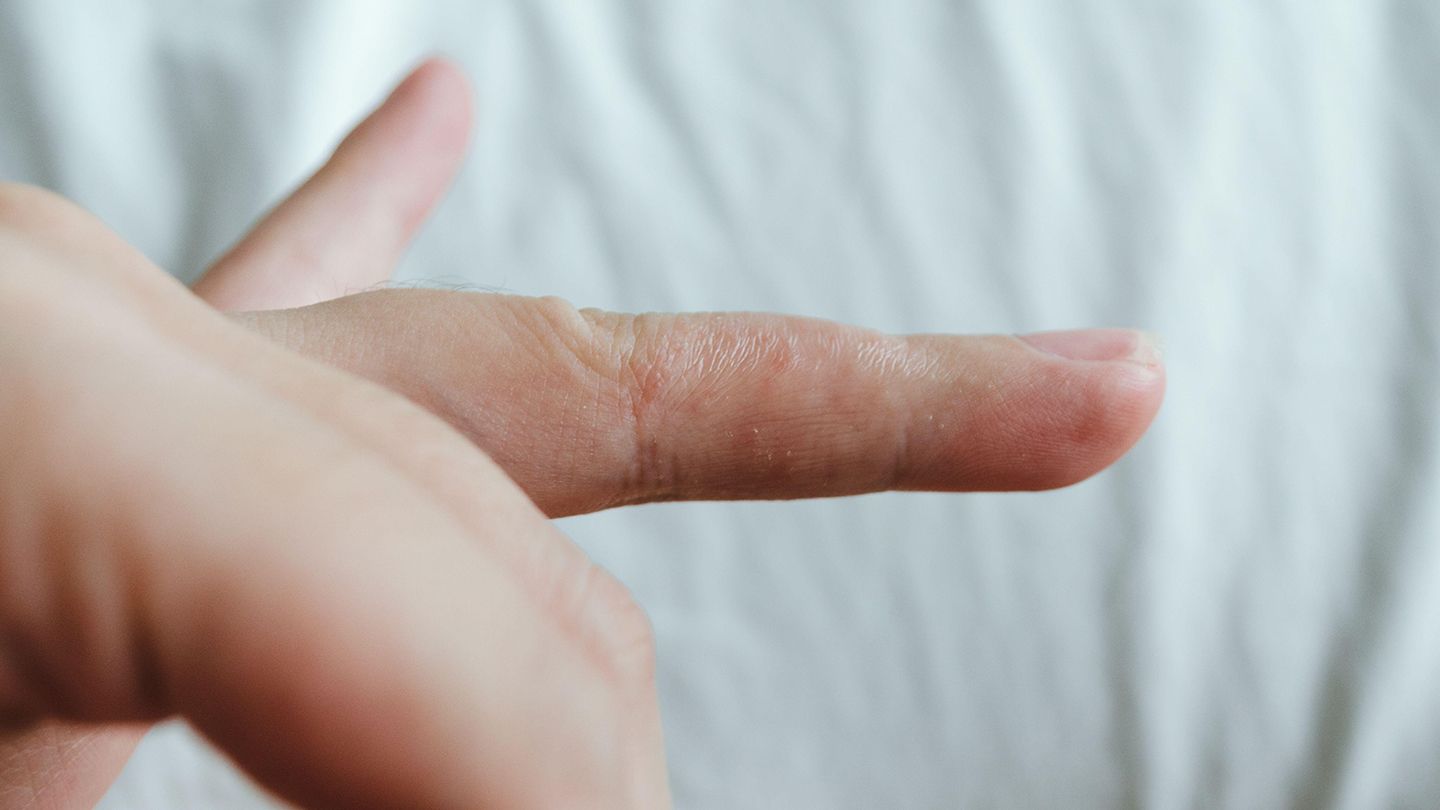
RELATED: What Are the Signs and Symptoms of Eczema?Types of Eczema Commonly Associated With BlistersEczema blisters are associated with multiple types of eczema, and they can show up differently depending on the cause.Dyshidrotic EczemaThis form of eczema, also called pompholyx, foot-and-hand eczema, palmoplantar eczema and vesicular eczema, is seen on the hands and feet, and is more common in women, according to the NEA. Usually, small deep blisters, called vesicles, form on the palms of the hands, soles of the feet, and sides of the fingers, the NEA reports. The blisters are extremely itchy and cause scaly skin patches that flake constantly. As a result, dry skin and painful fissures can form.Common triggers for dyshidrotic eczema include stress, seasonal allergies, or humid weather that makes the palms sweat, says Evan Rieder, MD, a dermatologist practicing in New York City. Metals, especially nickel, as well as jobs that involve getting the hands wet frequently, such as hairstyling, can also trigger the rash and accompanying blisters, according to the NEA.First-line eczema treatments for dyshidrotic eczema include cool compresses and corticosteroid creams or ointments. “Usually we do need to use a more powerful topical corticosteroid, because the skin on the hands and feet — where we usually find this type of eczema — is very thick and can impede penetration of the medications,” Lio says. “We often use soaks such as Burow’s solution to help soothe and dry out the blisters, and then have the patients apply the topical corticosteroid twice daily to the area.” Dermatologists may gently drain larger blisters with a sterile needle to relieve pain, says the National Eczema Society. Other medications, like antihistamines, may be prescribed to relieve itchiness especially at night, according to the American Academy of Dermatology (AAD).Allergic Contact DermatitisIf you’ve ever brushed up against poison ivy, poison oak, or poison sumac and broken out in a blistery, itchy rash, you’ve experienced allergic contact dermatitis. Usually, people develop small lines of eczema blisters where the leaves rubbed against them a day or two after the skin is exposed, according to the NEA. Other common culprits are metals (especially nickel) and fragrances. These blisters may break open and dry up as a small crust.Treatment for eczema due to allergens involves thoroughly washing the skin to remove any trace of the substance that is irritating you. Also, try to avoid anything that you know causes a rash or eczema blisters to break out, the NEA recommends.Sometimes, the best treatment for contact dermatitis is simply leaving the area alone. But with more severe reactions, doctors may prescribe either steroid creams or lotions, or oral medications to reduce inflammation and other symptoms, according to the Cleveland Clinic. In some cases, simply applying ice or cooling the skin can help as well.Irritant Contact DermatitisAcids, solvents, harsh soaps, or detergents can aggravate the skin and cause irritant contact dermatitis. Irritant contact dermatitis is treated the same way as allergic contact dermatitis.As for prevention, Lio notes that even washing your hands frequently can lead to irritant contact dermatitis. “During the COVID-19 pandemic, it was an incredibly common complaint in our office,” he says. The reaction usually resembles a burn, but eczema blisters may also bubble up immediately, especially if the irritant is strong. The rash is typically more painful than itchy, according to the Cleveland Clinic.As mentioned, try to avoid any known irritants to help prevent eczema blisters. Also, use lukewarm water and moisturize after washing your hands to help reduce potential discomfort, according to the AAD.RELATED: 7 Types of Eczema and What They Look Like