
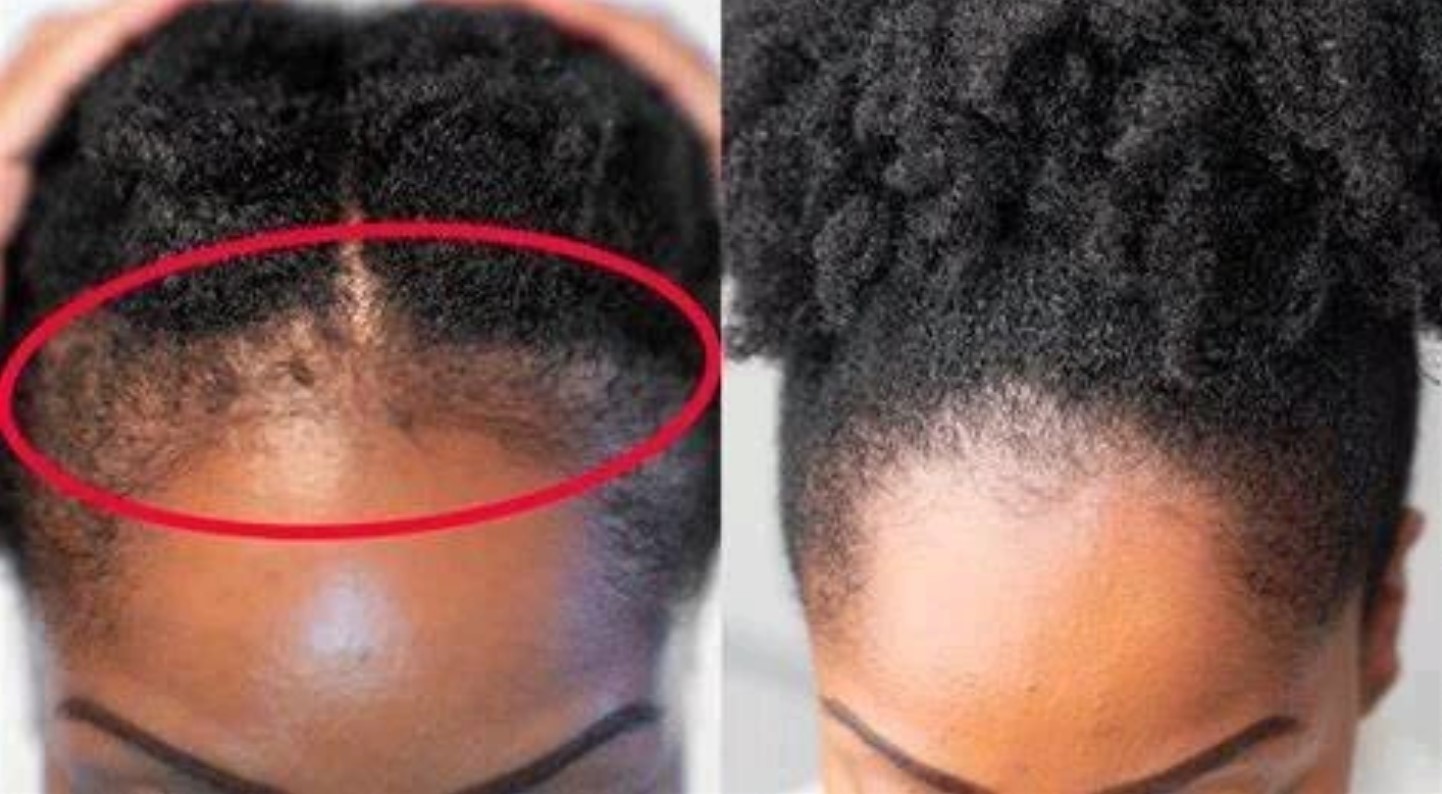
50% of women worldwide have hairline loss.
Most were born with these difficulties, while others erroneously believed that protective hairstyles were healthy for their hair but ended up being detrimental.
Today, I will assist you in resolving that issue with these simple steps:
They worked for me, and they will work for you, too.
am going to begin by discussing the causes and provide a remedy
Know Your hair type
You must know the type of your hair to know what you should and should not do to it.
The majority of hair accepts oil products, while some do not. This could be because your scalp is extremely sensitive or quickly dries up, causing dandruff or itchiness; however, try not to panic.
The items listed below are appropriate for all hair types.
Know The Cause Of Your Hair Loss
The initial step is to determine the cause of hairline loss. “There are numerous causes of hairline loss in women.
Changes in hormones are a normal cause of receding hairlines, but your doctor can typically correct them.
The good news is that if you have recently given birth, you may simply be engaged in a waiting game. Maldonado noted that most women lose hair around their hairline six to nine months after giving birth. Normal though it may be, there’s no disputing that you’ll need to address it. The remedy is to continue taking prenatal vitamins for a while after giving birth to maintain healthier hair and reduce hair loss.
Remove Your Semi-Permanent Hair Extensions
A receding hairline can also be caused by constant pulling and weighting down of hair strands. According to Maldonado, “glue-in and tape-in extensions applied excessively close to the hairline” might be a major cause of hair loss. Such circumstances may induce hair loss as a result of excessive tension on the skin, which eventually gives up and stops generating hair as a result of constant pulling.
Relax your updos; if you tie your hair too tightly, you are preventing your scalp from breathing.
Try relaxing the ponytail or abandoning the style altogether to ease the tension.
Utilize Nourishment Oils On Your Scalp
African Shea butter Butter
Shea butter hydrates the scalp, hence preventing hair breakage and reducing hair loss.
Black ricinoleic acid
Jamaican black castor oil can stimulate hair development, hydrate dry hair, fortify thinning hair, reduce hair breakage, and promote healing and prevention of split ends.
Chebe
Chebe Powder Moisturizes Hair. Chebe powder conditions and hydrates the hair. Additionally, it reinforces the hair and…
use these ingredients for a scalp massage
Incorporating healthy items into your scalp massage might aid in the renewal process. Simply avoid those that are notoriously prone to clogging.