
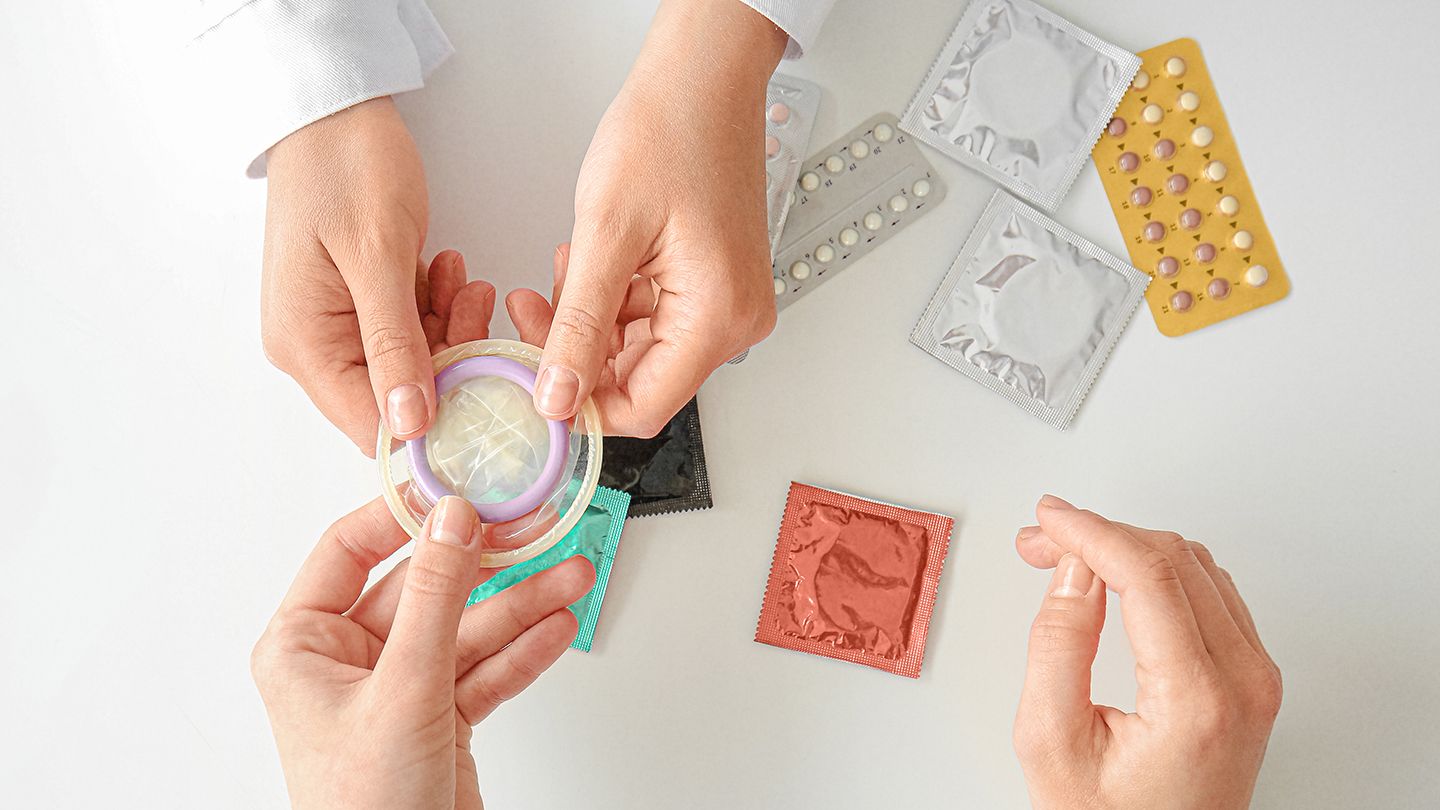
Hormonal Contraception Option: The Shot, Depo, or Depo-ProveraAn injection of medroxyprogesterone (Depo-Provera) (also known as the birth control shot) can prevent pregnancy for three months. The shot contains high-dose progestin to prevent ovulation, and it also makes cervical mucus thicker to prevent sperm from reaching the egg.In most cases, your doctor or nurse will give you the shot every quarter, but in some cases, you may be able to bring the shot home to give it to yourself.How effective is the shot? Injectables are more than 99 percent effective with perfect use and 96 percent effective with typical use.How much does it cost? It can cost nothing or up to $150, and it can be free or low-cost with many health insurance plans, Medicaid, and some government programs.Hormonal Contraception Option: Birth Control Implant, or NexplanonThe birth control implant, also called Nexplanon, is a small rod about the size of a matchstick that is placed into the upper arm. It releases progestin to prevent pregnancy for up to three years.The implant must be inserted by a trained healthcare provider and can be removed at any time if you want to get pregnant.How effective is the implant? The implant is more than 99 percent effective.How much does it cost? It can cost anywhere between $0 and $1,300, but it’s totally free with most health insurance plans, Medicaid, and some government programs.Hormonal Birth Control Option: Vaginal Ring (NuvaRing or Annovera)Like combination birth control pills, the vaginal ring contains both progestin and estrogen. It’s a small ring that a woman wears inside her vagina, and the hormones work to prevent ovulation and pregnancy.There are two types of vaginal rings: ethinyl estradiol and etonogestrel (NuvaRing) and ethinyl estradiol and segesterone (Annovera). Each NuvaRing lasts for up to five weeks. You take the old one out and put in a new one about once a month, and it can be used to safely skip your period. Each Annovera ring lasts for one year, but you must put it in your vagina for three weeks, then take it out for one week every month, during which time you’ll typically have a period.How effective is the vaginal ring? Vaginal rings are more than 99 percent effective if used perfectly and 93 percent effective if used typically.How much does it cost? You need a prescription to get the vaginal ring. NuvaRing can cost anywhere from $0 to $200, and Annovera can cost anywhere from $0 to $2,200. But vaginal rings can be free or low-cost with most health insurance plans, Medicaid, and some government programs.Hormonal Birth Control Option: The Patch (Xulane or Twirla)Like the vaginal ring, the patch (brand names Xulane or Twirla) also releases estrogen and progestin, but through a patch worn on your stomach, buttocks, or back.The patch must be changed once a week for three weeks, and then you skip a week and have your period. Xulane can also be used to prevent your period if you add a new patch on the fourth week instead of skipping a week.How effective is the patch? The patch is more than 99 percent effective if used perfectly and 93 percent effective if used typically.How much does it cost? You need a prescription to get the patch. One pack of three patches lasts for up to one month and can cost from $0 to $150. It is free with most health insurance plans, Medicaid, and some government programs.Type of Contraception: Intrauterine Devices (IUDs)Intrauterine devices (IUDs) are one of the most effective forms of birth control. IUDs are inserted into the uterus by a trained healthcare professional and can work for up to 10 years, depending on which type you choose. They can also be removed any time if you want to get pregnant.Copper (Nonhormonal) IUDThe Paragard copper IUD (also called the copper IUD) is the only nonhormonal IUD on the market. It’s a small piece of flexible plastic shaped like a T that has copper wrapped around it, which prevents sperm from reaching an egg because sperm are repelled by copper.The copper IUD can be used as a regular form of birth control or as a form of emergency contraception (see more information about emergency contraception below). Paragard IUDs are the most effective form of emergency contraception. If you have one inserted within five days after having unprotected sex, it’s more than 99.9 percent effective against pregnancy and then provides very reliable contraception for up to 10 years.Hormonal IUDsLike the nonhormonal IUD, hormonal IUDs are a small piece of flexible plastic shaped like a T. They release a tiny amount of progestin into your body over several years, which helps prevent pregnancy.There are four brands of hormonal IUDs available in the United States: Mirena, Kyleena, Liletta, and Skyla. Different brands last for different lengths of time. Whichever you choose, you can have your IUD removed whenever you want.An IUD must be inserted and removed by a doctor, nurse, or another trained healthcare provider.How effective is the IUD? All IUDs are more than 99 percent effective both for perfect and typical use.How much do they cost? Anywhere from $0 to $1,300; they are free or low-cost with many health insurance plans, Medicaid, and other government programs.Type of Contraception: Barrier MethodsOther than condoms, these older methods of contraception typically aren’t as effective. “Sponges or a diaphragm? I don’t want to say they are outdated, but they aren’t talked about as much today by healthcare providers,” says Bond. Most barrier methods need to be inserted into the vagina before sex, so “they take away from the romance aspect of engaging in sex,” she adds.Similarly, “a diaphragm doesn’t work that great,” says Greves. “It’s better than nothing, but I don’t remember the last time I recommended it to someone.”On the other hand, male condoms and internal condoms remain effective forms of contraception that can also help prevent sexually transmitted infections (STIs).Barrier Method Option: DiaphragmA diaphragm is a shallow, flexible cup made of silicone that you put inside your vagina. It covers the cervix and acts as a barrier so sperm can’t reach an egg.Diaphragms are most effective when they’re used with spermicide (a cream or gel that kills sperm).Your doctor must fit you for a diaphragm and give you a prescription, and then you can get one at a pharmacy, drugstore, or health center. After that, you can insert it and remove it yourself.How effective is the diaphragm? If used perfectly with spermicide, the diaphragm is 84 percent effective. With typical use, it’s 83 percent effective.How much does it cost? Anywhere from $0 to $250. You can probably get a free or inexpensive diaphragm with most types of health insurance, Medicaid, and some government programs. Spermicide, which is available over-the-counter at the drugstore, costs about $5 to $15 per kit.Barrier Method Option: Sponge The sponge is small and round and made of soft, squishy plastic.You insert it deep inside your vagina up to 24 hours before you have sex. It covers your cervix and contains spermicide to help prevent pregnancy. The Today sponge — the only brand of sponge available in the United States — is sold at pharmacies, drugstores, and some supermarkets.How effective is the sponge? With perfect use, the sponge is 80 to 91 percent effective (it’s more effective if you’ve never given birth); with typical use, it’s 73 to 86 percent effective.How much does it cost? It costs about $15 for a pack of three. You may be able to get low-cost or free sponges at Planned Parenthood or another health center.Barrier Method Option: Cervical Cap Like the diaphragm, the cervical cap is a silicone cup, but it’s smaller. You insert the cap deep in your vagina to cover the cervix and prevent sperm from reaching an egg. It’s also more effective when used with spermicide. FemCap is the only type of cervical cap available in the United States.Cervical caps are sold in pharmacies, drugstores, and health centers, but you need a prescription. A nurse or doctor will need to examine you to determine which size cervical cap is best for you.How effective is the cervical cap? Like the sponge, the cervical cap is more effective if you’ve never given birth. If you’ve never given birth, the cervical cap is 86 percent effective. If you have given birth, the cap is 71 percent effective.How much does it cost? The cap costs between $0 and $275, not including spermicide. You can probably get a cervical cap for free or low-cost with most types of health insurance, Medicaid, and other government programs.Barrier Method Option: Male CondomsMale condoms are worn as a sheath over the penis during sex. They prevent pregnancy by stopping sperm from getting into the vagina, so it can’t reach and fertilize an egg.Male condoms are used to avoid pregnancy, and they can also reduce the transmission of STIs. Most male condoms are made of latex, but some are made of plastics like polyurethane, polyisoprene, and nitrile for those who are allergic to latex. Lambskin and other animal membrane condoms also prevent pregnancy, but they don’t protect you from STIs.How effective are condoms? If used perfectly, male condoms are 98 percent effective, or 87 percent effective if used typically.How much do they cost? Male condoms are available in most drugstores, grocery stores, convenience stores, health clinics, online, and vending machines. A box of three usually costs between $2 and $6. Lower-cost or free condoms are available at various health centers.Barrier Method Option: Internal CondomsInternal condoms are soft plastic pouches that you put inside your vagina or anus before you have sex. They prevent pregnancy by covering the inside of your vagina, creating a barrier that stops sperm from reaching an egg. They also help prevent transmission of STIs if worn in the vagina or anus.Internal condoms were once known as “female” condoms, but they can be used by people of any gender. The only brand of internal condom that’s available in the United States is the FC2 Female Condom. It’s available online, at many health centers, and by prescription in drugstores.How effective are internal condoms? If used perfectly, internal condoms are 95 percent effective. If used typically, they are 79 percent effective.How much do they cost? They usually cost about $2 or $3 each, but they are covered by most types of health insurance if you have a prescription. Some health centers may offer them for free.