
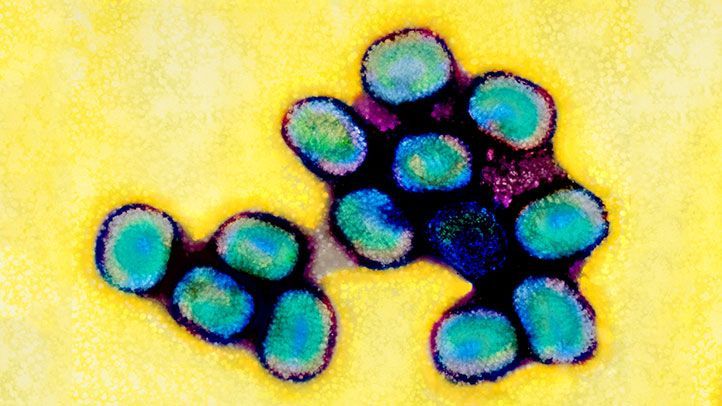
People with atopic dermatitis are at risk for a type of infection from the herpes simplex virus, the virus behind cold sores. This infection is called eczema herpeticum.RELATED: Eczema (Atopic Dermatitis): A Glossary of Formal and Informal Terms Eczema herpeticum starts as a cluster of itchy, painful blisters filled with fluid or pus. The infection also causes fever and swollen lymph nodes around the affected skin areas.Over time, the blisters will weep or ooze, then break open, creating lesions with a hole-punched look. The lesions usually heal within six weeks.In severe cases, the infection may affect multiple organs, including the eyes, brain, lung, and liver. (9,11,12)If a person with atopic dermatitis receives the live-virus smallpox vaccine, a potentially serious infection called eczema vaccinatum may develop. It causes similar symptoms to eczema herpeticum and may be indistinguishable from it in some cases. Usually, however, the blisters and pustules are more pronounced. (13)Children with atopic dermatitis are also at higher risk of developing a common viral skin infection called Molluscum contagiosum. Caused by a poxvirus, Molluscum contagiosum causes localized clusters of papules (small raised bumps on the skin) with navel-like depressions. The papules contain white, cheesy material (pus).Doctors typically treat Molluscum contagiosum by removing the contents of the papules and applying antiseptics. Strong chemical treatments like liquid nitrogen or cantharidin (most commonly used for warts) may also be used. (13,14)