
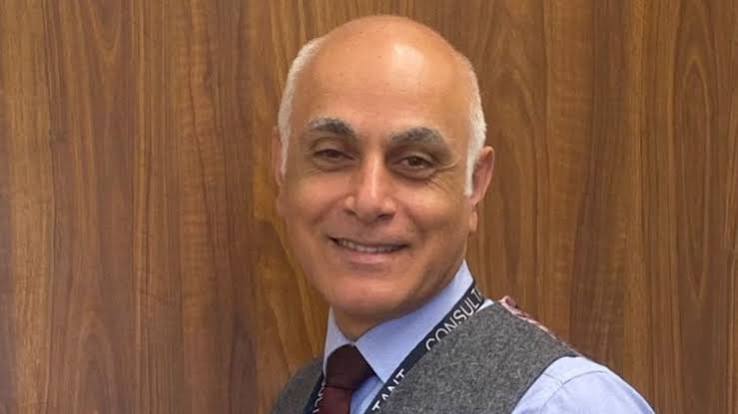
(Dr Ali Shokouh-Amiri. Photo by ITVX)
A doctor who admitted removing two women’s ovaries without their consent will face a new hearing over his competence to practise following a High Court challenge by his regulator.
The Medical Practitioners Tribunal found Dr Ali Shokouh-Amiri guilty of misconduct in February 2025 and issued a warning, but the panel determined that his competence to practise was not damaged.
It was claimed that while working at the Princess Elizabeth Hospital in Guernsey, Dr. Shokouh-Amiri acted inappropriately or sexually against four patients.
He was also accused of dishonesty and failing to have a chaperone present.
The gynecologist admitted to removing two women’s ovaries without their consent, including one example where there was no medical reason, but rejected other charges.
The Medical Practitioners Tribunal determined that charges that Dr Shokouh-Amiri hugged and kissed a patient were true, but this did not constitute misconduct.
It also determined that other charges of inappropriate and sexually motivated behavior were not proven.
The panel determined that additional proven charges, such as the ovary removal and suggesting to a patient that they join him at the gym, constituted misconduct.
However, it determined that Dr Shokouh-Amiri’s fitness to practise was not compromised and that there was a low danger of his causing unnecessary harm to patients.
In late 2025, the General Medical Council (GMC) filed an appeal with the High Court challenging the tribunal’s ruling.
In a ruling issued on Friday, Mr Justice Morris ruled in favor of the GMC, finding that the panel had reached “wrong or unjust” conclusions on five sets of complaints.
The judge provisionally ordered that the matter be sent to the Medical Practitioners Tribunal to reconsider the charges and decide if Dr Shokouh-Amiri’s eligibility to practise is compromised.
In the 70-page verdict, Mr Justice Morris stated that the tribunal’s reasoning was “at times very brief and at other times makes little sense”.
The court subsequently stated: “The tribunal, at various points, made clear errors of fact, failed to consider important evidence, did not explain why it did not believe Patient F’s evidence, and made statements which contradicted the evidence, and at times statements which did not make sense.”
Mr Justice Morris dismissed a portion of the GMC’s appeal to how the tribunal addressed propensity in Dr Shokouh-Amiri’s case.
He stated, “Even if the allegations against Patient F are proven, I do not believe they alone could have tipped the balance in relation to Patient A and Patient D.”
“Any propensity arising from findings in relation to Patient F should not be permitted to bolster those weak, and unchallenged, cases.”
A spokesperson for the GMC expressed satisfaction with the High Court’s decision to allow their appeal.
The court found that the tribunal made errors in considering the serious allegations against Dr. Ali Shokouh-Amiri, including clear errors of fact and failure to consider important evidence.
“We will continue to challenge tribunal decisions where we believe the outcome is insufficient to protect the public.”