
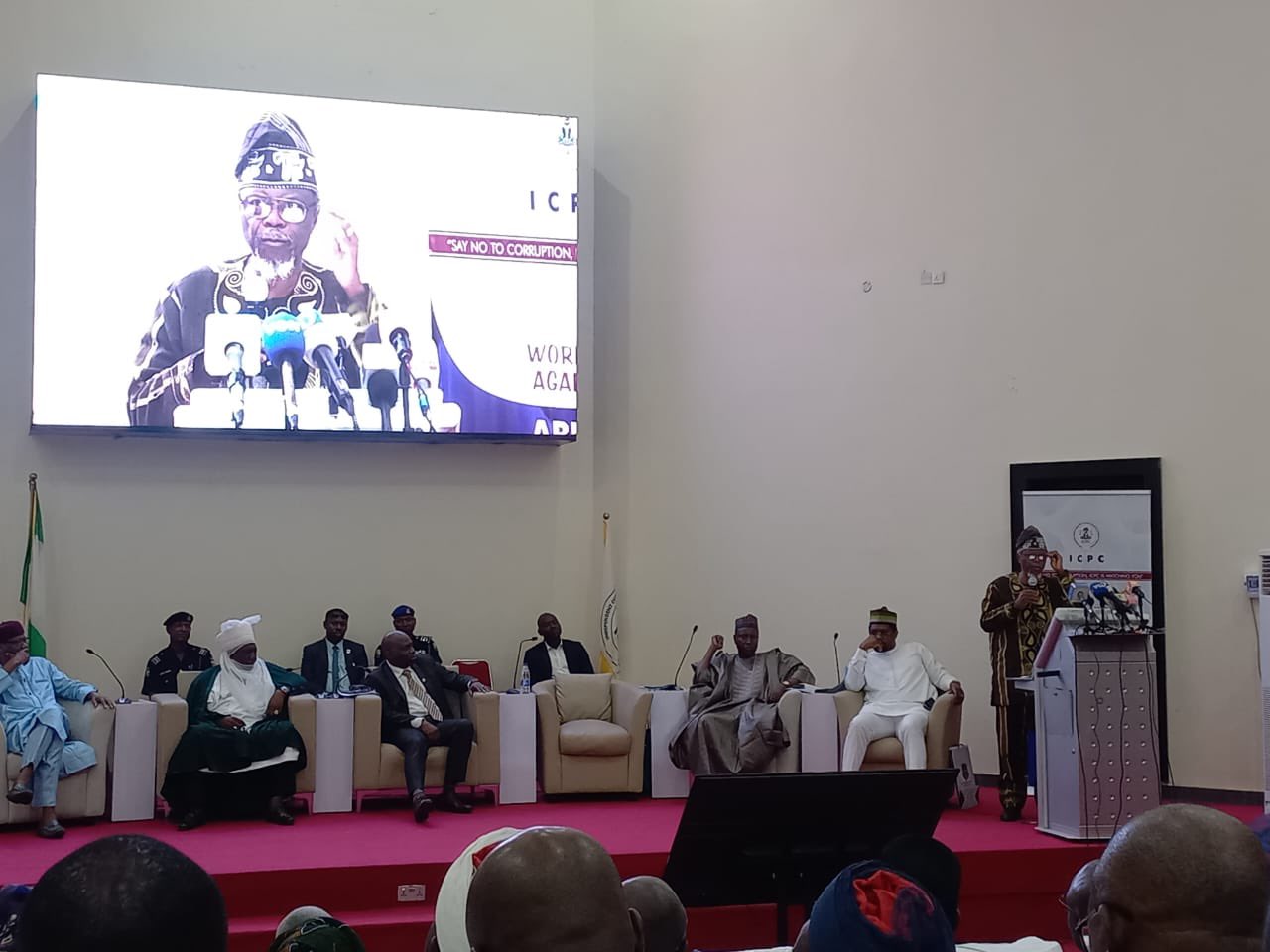
A US-based Nigerian academic, Toyin Falola, says Nigeria’s political elite must reform the country’s governance to bring socio-economic prosperity to its citizens.
Falola, a renowned history professor at the University of Texas at Austin, USA, said the consequences of the government’s failure to combat corruption would be uncontrollable.
He spoke Tuesday as a keynote speaker at a national policy dialogue on corruption organized by the Independent Commission on Corrupt Practices and Other Related Crimes (CIPC) in Abuja.
Speaking on the theme ‘Corruption, Social Norms and Behavior Change in Nigeria’, the academic recalled the transformative journey of the Chinese, Malaysian and Japanese in tackling corruption and providing social services to their population.
“If politicians and political parties are not ready to reform, they will not be able to control the consequences.
“If they want a jihad (holy war), the citizens will give them one,” Falola said, adding that “problems related to the rise of poverty” must be addressed by creating a middle class.
He slammed Western countries for ignoring the undemocratic governance structures of global bodies like the UN and IMF, but labeling Africans “corrupt and bad.”
“The majority of our population is not corrupt,” said the historian, wondering why the majority of the masses tolerate corruption.
“How can we ask the silent majority to radicalize their objection to corruption? It is feasible ”, she assured, drawing applause from the audience in the packed CIPC auditorium.
Mr. Falola explained that “corruption in Nigeria is a complex issue deeply rooted in social norms and cultural factors”.
“These influential forces play an important role in shaping the prevalence of corruption within the country. The practices of “clientelism” and “sponsorship” play an important role in promoting corruption within societies.
tackling corruption
Avoiding what the effects of corruption are, Falola said that simply raising workers’ wages would not combat endemic corruption in the public service.
Offering solutions to the problem of misconduct, the famous historian said that “we have to reduce the monetary attraction of public office holders.”
“In the fight against corruption, it is crucial to focus on transforming behaviors and fostering a culture of integrity and accountability. This requires the active participation of people from different sectors.”
He urged the government to build strong institutions and provide social safety nets for citizens. He suggested that “in order to effectively combat corruption, it is crucial to have ethical leaders who prioritize integrity and international cooperation.”
Corruption fueled by community expectations
ICPC President Bolaji Owasanoye said there is a link between rampant corruption in Nigeria and community expectations of public office holders.
Mr. Owasanoye, a law professor and Senior Advocate for Nigeria (SAN), pointed to one of the social norms that expects government officials to donate large sums of money at public gatherings without regard to the legitimate earnings of such officials.
He noted that people pay little attention to the consequences of such expectations that breed malfeasance and nepotism.
ALSO READ: Minister candidate Fagbemi proposes how Nigeria should fight corruption
In fighting corruption through the criminal justice system, the ICPC chief said it was imperative to adopt “anti-corruption social norms.”
It recommended that “all stakeholders should lead by example to inspire their members and constituents” against corruption.
He called for “a reward system for those who demonstrate good behavior or who oppose corruption in their constituents.”
“Federal and state education ministries should develop and implement behavior change programs in primary and secondary schools for youth.”
Owasanoye said Tuesday’s event was the sixth in a series of political dialogues on anti-corruption that began in 2019.
In a goodwill message, the Speaker of the House of Representatives, Tajudeen Abbas, said that “addressing corruption requires not only legal and institutional reforms, but also a transformation of social norms and behaviors.”
Represented by a member of the Osun State House of Representatives, Busayo Oluwole-Oke, the Speaker called for improving the welfare of workers.
Senate President Godswill Akpabio was represented on the occasion.
Other dignitaries who graced the event included the Emir of Keffi, His Royal Highness Shehu Yamusa; Kole Shettima of the MacArthur Foundation; Is-haq Oloyede, JAMB Registrar; George Ehusani, Catholic priest and executive director of the Lux Terra Leadership Foundation; Etannibi Alemika, Professor at the University of Jos and Yakubu Maikyau, President of the Nigerian Bar Association (NBA).
Read More Related News Here
Let hear it in the comment below if you do have an opinion on this; Corruption: Nigerian leaders must reform or face dire consequences