
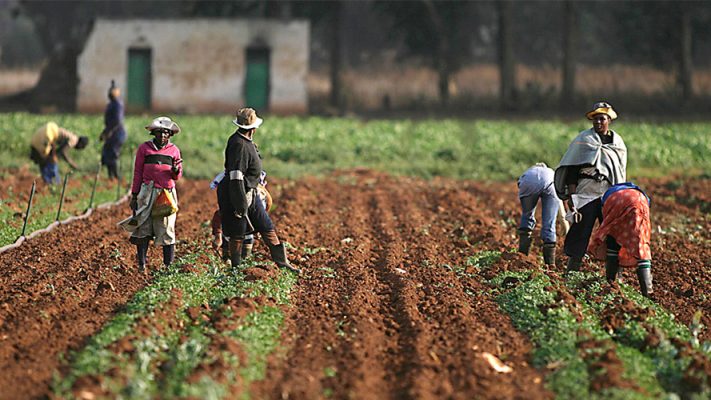
He Central Bank of Nigeria (CBN) says its loans through the Anchor Borrowers Program (ABP) amounted to N629 billion in 2022.
The main bank made this disclosure in its 2022 financial report just released last week. According to the report, the 2022 figure is less than the N949.2 billion earmarked for the initiative in 2021.
However, the CBN report did not provide further details on the pattern of lending and farmers’ compliance with loan repayments under the PBL initiative within the year under review.
According to the report, the bank spent approximately N160.1 billion under its Agricultural Credit Scheme against N201.9 billion in 2021. The sum of N9.6 billion was also spent on Accelerated Agricultural Development in 2022 against N19.6 billion under the last year.
PAA
The ABP is an initiative of the administration of former President Muhammadu Buhari, launched in November 2015 in an effort to boost agricultural production, improve foreign exchange and reverse Nigeria’s negative food trade balance.
Under the programme, loans are disbursed to beneficiary farmers through Deposit Money Banks (DMBs), Development Finance Institutions (DFIs) and Microfinance Banks (MFBs), all recognized as participating financial institutions. (IPF).
According to the program guidelines published on the CBN website, the farmers included in the initiative are small farmers who grow cereals (rice, maize, wheat, etc.), cotton, roots and tubers, sugarcane, tree crops, legumes , tomato and cattle.
Farmers who benefited from the loans are expected to repay their loans by taking their harvest to ‘anchors’ who pay the cash equivalent to the farmer’s account, the program guidelines state.
In January last year, while paddy rice pyramids were being produced by rice farmers under the PBL initiative across the country in Abuja, Mr Buhari said that more than 4.8 million smallholder farmers in Nigeria had received financial support in the program framework.
Following the implementation of the initiative, data also shows that Nigeria’s annual domestic maize production (an important staple food among Nigerians and a key raw material for livestock feed production) increased significantly between 2014 and 2022.
The country’s production figures increased from 10.1 mmt in 2014 to 10.6 mmt in 2015 and 11.6 mmt (9.34% increase) in 2016.
In 2017, the figure fell to 10.4 mmt but jumped in 2018 to 11.0 mmt. The country’s maize production increased further to 12.7 mmt in 2019, but slightly depreciated to 12.4 mmt in 2020 due to the impacts of COVID-19 on food systems.
Production eventually rebounded in 2021 to 12.75mmt and settled at 12.20mmt last year, US Department of Agriculture data showed.
Production recorded between 2015 and 2022 upgraded Nigeria’s rankings in the region and globally with Nigeria now ranked 14th and 13th among global producers of milled rice and maize respectively.
Nigeria is also the largest rice producer in Africa, ahead of Egypt, and is the second largest maize producer in Africa.
However, the ABP was marred by a series of irregularities that affected production and loan repayment.
For example, a 2018 Newslodge and Buharimeter investigation in five states (Lagos, Ekiti, Kebbi, Kaduna and Ebonyi) and in the neighboring Republic of Benin, revealed that the ABP, which was heralded as the answer to Nigeria’s manhunt Self-sufficiency in rice production failed in many places and the government was unable to recover a large part of the loan already disbursed.
The ABP spawned a mob of angry farmers who claimed the program was hijacked by local politicians who shelled out funds for “ghost farmers” and became a means of rewarding political supporters.
Read More Related News Here
Let hear it in the comment below if you do have an opinion on this; CBN disbursed N629 billion to farmers under the Anchor Borrower Program in 2022