
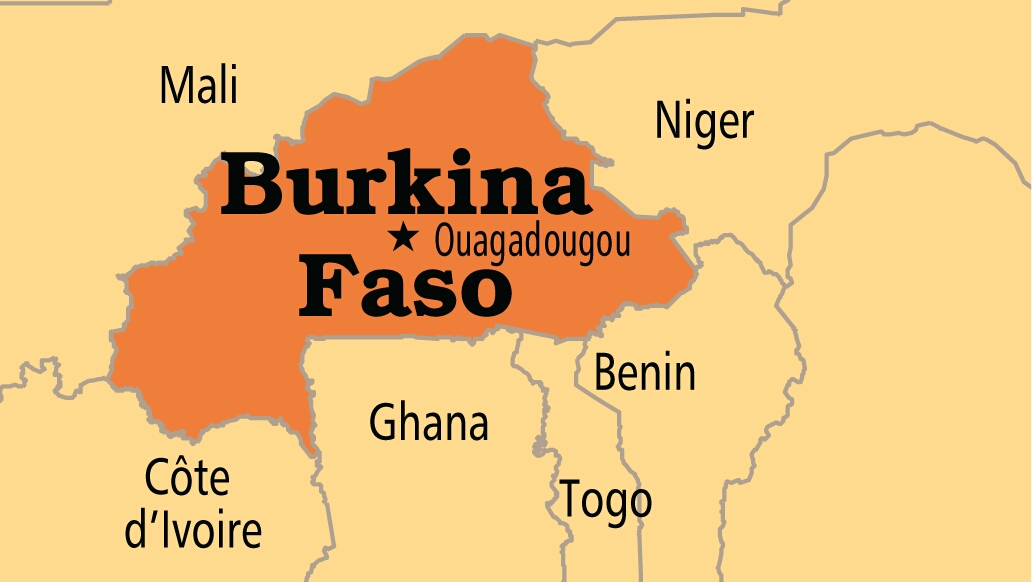
Poor governance of public affairs has been cited as one of the reasons for the two coups in Burkina Faso last year and for the severe insecurity that has gripped the country since 2015.
The popular uprising of 2014, which ended the 27-year reign of Blaise Compaoré, revealed the desire of citizens to rebuild their country on the principles of good governance and a public administration free from political influence. That aspiration was taken up again in 2015 by then-President Michel Kafando, who laid the foundations for a new law to depoliticize the government.
Eight years later, on March 16 of this year, the bill that reinforces political neutrality and meritocracy in public administration was finally approved. The country’s Transitional Legislative Assembly approved the bill, which prohibits practices detrimental to the proper functioning and stability of the State.
The law could serve as an example to other countries in the region whose public administrations have similar problems. Governance reforms are vital in most West African nations, where insecurity and growing coups are fueled by exclusion, injustice and socioeconomic inequality. Most of these problems stem from poor governance practices. The coup leaders in Mali, Guinea, Burkina Faso and recently Niger justified their actions alluding to the governance deficit.
A study requested by the transitional government of Burkina Faso in 2015 shows the damage caused by the politicization of the public administration. Cells of political parties or groups with regionalist leanings were active in the government, and wearing uniforms in the colors of political parties was common practice. Promotions and other favors were granted to certain officials based on political affiliation, while others could be sanctioned or even persecuted for belonging to the political opposition.
The influence of political parties on institutions such as the army, the civil service, and the judiciary contributed to the 1998 assassination of journalist Norbert Zongo, who was investigating cases involving people close to Compaoré. It has also resulted in patronage, favoritism, injustice, and corruption in government, deepened social inequalities, and prevented the equitable redistribution of national resources. The protest that followed Zongo’s assassination heralded the popular uprising of 2014.
This situation has also created fertile ground for violent extremist groups in rural areas of the country and has aroused popular support for the two military coups of 2022.
However, the drafting of the new law was an arduous process. The first version of the preliminary draft encountered resistance from political actors as early as 2015, in particular members of former President Roch Kaboré’s party, the Popular Movement for Progress. According to sources at the Institute for Security Studies, the party was concerned that the law would prevent them from awarding their members and supporters with government appointments.
Two other attempts to revive the process of finalizing the bill failed for the same reasons: first under Kaboré in 2017, then in April 2022, under the leadership of the coup leader, Lt. Col. Paul-Henri Damiba.
Following the September 2022 coup led by Captain Ibrahim Traoré, the new authorities committed to reducing the negative influence of politics on the functioning of the public administration. The bill was updated, approved by the Council of Ministers on November 30, 2022, and forwarded to the Transitional Legislative Assembly for approval.
ALSO READ: Burkina Faso, Mali and Guinea declare support for coup in Niger as soldiers arrest politicians
Civil society in Burkina Faso sees certain provisions of the new law as a step forward. Article 19, in particular, grants a number of key posts the status of technical posts in order to remove them from the political sphere. These include general secretaries of ministries, general managers of public and semi-public companies, general managers of public establishments, coordinators of national projects or programs, embassy staff, and general inspectors and technical inspectors of services.
However, other provisions have generated controversy. Political party members have expressed concern that they will be excluded from public office. Religious leaders fear restrictions on faith-based practices, such as the wearing of headscarves or other symbols in administrative offices. At a press conference on March 21, officials from the Ministry of Civil Service clarified the objectives of the law and reassured the public about the inclusive nature of the legislation.
Attention is now focused on the regulation of the law, which must establish the conditions and procedures for the appointment of technical posts and, above all, the effective execution of the legislation. The challenge for the transitional authority will be to ensure compliance in a country where the politicization of institutions and clientelism have been entrenched for decades.
Mr. Traoré’s government faces the difficult task of not only implementing the law, but also consolidating it in Burkina Faso’s political culture. To achieve this and ensure compliance by future authorities, the constitution must enshrine the principles of political neutrality and meritocracy in public administration.
Burkina Faso’s current political transition has provided an opportunity to introduce this important law, which is innovative compared to the reforms typically undertaken by countries in transition. Its effective application could improve the efficiency of the administration to serve citizens without discrimination. It could also help stabilize the country’s political and security situation. The usefulness of the new law will depend on how it is implemented.
Hassane Koné, Principal Investigator and Fahiraman Rodrigue Koné, Sahel Project Manager, Institute for Security Studies (ISS) Regional Office for West Africa, the Sahel Basin and Lake Chad
Research for the article is funded by Irish Aid and the Bosch Foundation.
(This article was first published by ISS Today, a syndication partner of Premium Times. We have your permission to republish.)
Read More Related News Here
Let hear it in the comment below if you do have an opinion on this; ANALYSIS: Burkina Faso makes ambitious move to depoliticize government