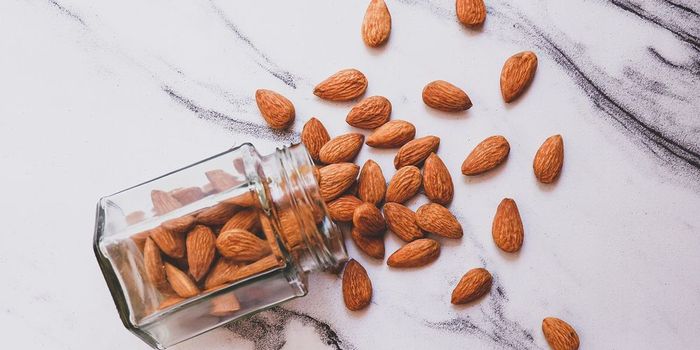
Nuts, such as almonds, walnuts, hazelnuts or cashews, are a concentrate of health and are recommended by all guidelines for a healthy and balanced diet. However, sometimes people give it up believing that it may cause weight gain. But is it really so? The research we are talking about today shows that eating nuts, and almonds in particular, not only does not make you fat but also improves heart health. Let’s try to understand better on the basis of a very recent scientific research published in the journal Obesity by an Australian team from the University of South Australia, Adelaide (Carter et al, Obesity, Aug 2023).
Almonds do not make you fat, the studyThe study involved 140 people, all overweight or obese and aged between 25 and 65. All study participants followed a calorie restriction diet for 3 months with the aim of losing weight and for the following 6 months a diet aimed at maintaining the body weight achieved. During these 9 months of intervention, half of the volunteers were asked to integrate between 30 and 50 grams of unsalted almonds, with peel, into their daily diet. While the other half ate a cereal and fruit bar as a snack. Well, at the end of the experiment all the volunteers had lost at least 7 kilos of weight with an improvement in lean mass, demonstrating that almonds do not cause weight gain and fat accumulation. Not only that, both groups, as a result of losing weight, saw improvements in various parameters such as fasting blood sugar, both diastolic and systolic blood pressure, total cholesterol, bad LDL cholesterol and triglycerides. Of note is the decrease in systolic blood pressure, averaging 4.9 mm Hg reduction for both groups. In fact, studies have shown that a 5 mm Hg reduction in systolic blood pressure decreases the risk of cardiovascular events by 10%. But it didn’t end here. Compared to the group that ate the cereal and fruit bar, the group that ate the almonds showed a further improvement in some indicators of cardiovascular health. In fact, the intake of almonds has brought about important improvements in some subfractions of triglycerides and bad cholesterol. In particular, both the smaller particles of triglycerides and bad LDL cholesterol were reduced. These particles, compared to larger particles, present a greater risk of leading to the development of atherosclerosis, thus increasing cardiovascular risk.ConclusionsNuts, like almonds, are a concentrate of proteins, fiber, minerals and unsaturated fatty acids, those beneficial for the heart and health. However, precisely the high fat content often leads, mistakenly, to think that nuts are not beneficial but, on the contrary, make you fat. Other research had already been conducted previously and had demonstrated the benefits of nuts. For example, it emerged that consuming at least 3 portions of nuts per week reduces the risk of metabolic syndrome and diabetes. Or even that including 30 grams of nuts a day in your diet reduces cardiovascular risk by 30%. The study we talked about today is the largest ever conducted and, for the first time, it was able to demonstrate clearly and unequivocally that the intake of 30-50 grams per day of nuts, almonds in particular, does not make you fat and does not increase the accumulation of fat, that nuts can be included in diets aimed at losing weight in case of obesity and that nuts improve heart health. In short, it is important to include a portion of nuts in our daily diet, perhaps as a mid-morning snack accompanied by a cup of green tea!