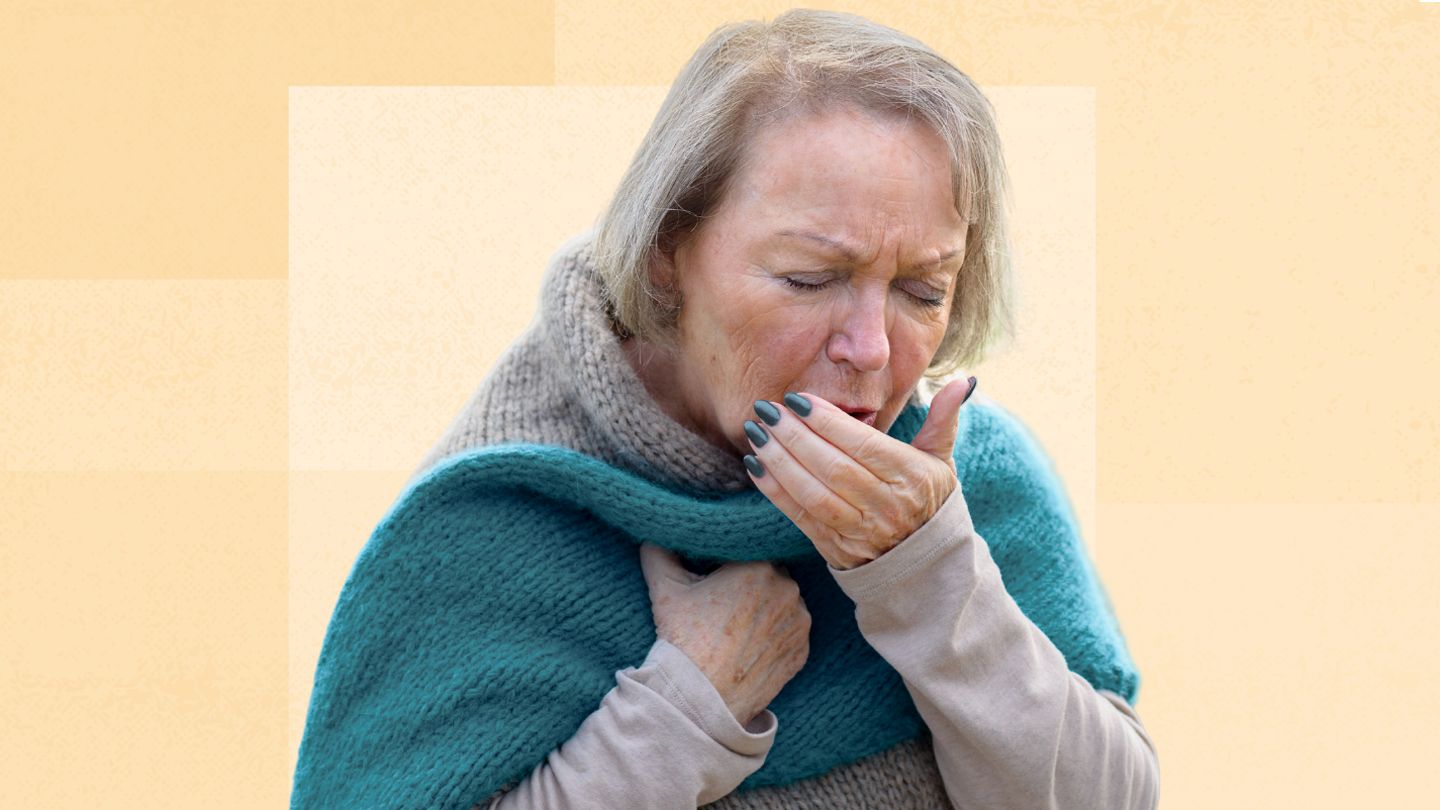
Symptoms of RSV in AdultsFor most healthy adults who get RSV, the virus causes symptoms resembling those of a cold or the flu: runny nose, nasal congestion, sore throat, and cough.A barking or wheezing cough, however, may be reason to worry about RSV. It may signal the infection is getting worse and has spread to the lower respiratory tract, causing bronchiolitis (an inflammation of the small airways in the lung) or pneumonia (an infection of the lungs).How Do Adults Get RSV?Like other respiratory infections, RSV is highly contagious and spreads via sneezing, coughing — even kissing. The airborne virus can enter the body through the eyes, nose, or mouth, says the Cleveland Clinic. The virus can also spread to people who touch contaminated surfaces or objects and then touch their face.RSV is usually contagious for three to eight days, but some infected infants and people with weakened immune systems can continue to spread the virus for as long as four weeks, according to the CDC.Who Is Most at Risk From RSV as an Adult?Adults 65 and over with a weakened immune system or underlying heart or lung disease are at the highest risk of having severe complications from RSV.“This is due to older adults having a lower respiratory reserve and less lung capacity,” says Inessa Gendlina, MD, PhD, an infectious diseases physician at Montefiore Health System and an assistant professor in the department of medicine at the Albert Einstein College of Medicine in New York City.Severe disease from RSV infection can also worsen existing symptoms of heart disease, asthma, or chronic obstructive pulmonary disease (COPD). The virus, Dr. Gendlina notes, is now known to have a high mortality rate for people with these conditions, particularly the frail elderly.Aditya Shah, MBBS, an infectious disease expert at Mayo Clinic in Rochester, Minnesota, says the impact of RSV infections on older adults will also depend on other underlying conditions, including diabetes, obesity, or kidney disease.“Outcomes are better in those patients that do not have these risk factors,” he says.What to Do if You Have Symptoms of RSV?If you’re sick with some type of respiratory infection and don’t know which kind, Dr. Shah says it’s best to get tested.While the symptoms of RSV can overlap with those of COVID-19 and the flu, there are several laboratory tests available to help with diagnosis.Your doctor can administer an antigen or PCR (polymerase chain reaction) test to identify or rule out RSV as the cause of your symptoms.If you can’t get to your doctor or another healthcare facility, you have a new option: The U.S. Food and Drug Administration (FDA) has authorized emergency use of a direct-to-consumer three-in-one home test by Labcorp that can determine whether you have the flu, COVID-19, or an RSV infection. You swab your nose to collect a sample, then FedEx it to a lab for PCR analysis.The kits can be purchased online or in stores, without a prescription. Test results are delivered in around one to two days through an online portal. You can then follow up with a healthcare provider.How to Treat RSV in AdultsThere is no treatment for a mild or moderate RSV. In most cases, doctors simply recommend drinking plenty of fluids, taking over-the-counter pain or fever medication, and resting. Symptoms should go away on their own in a week or two.The FDA had approved one drug to treat severe lung infections caused by RSV, an antiviral drug called ribavirin. The downside is it’s known to have several adverse side effects, including rash and chest pain.Gendlina says people who are severely immunocompromised — a blood stem-cell transplant recipient, for example — may be given oral or inhaled ribavirin, possibly in combination with intravenous immunoglobulin (antibodies from healthy people), to fight off the infection.How to Prevent RSV InfectionIf you are virus-free and want to stay that way, or are sick and want to avoid infecting others, the CDC suggests the following:Get an RSV vaccine if you are eligible. The Food and Drug Administration (FDA) recently approved the first-ever RSV vaccines for adults ages 60 and up: Arexvy, from GSK (GlaxoSmithKline), and Abrysvo, from Pfizer. Both are highly effective at preventing severe illness caused by RSV. Note that it is safe to get an RSV vaccine at the same time as other vaccines, such as the flu vaccine.Wash your hands often. If soap and water are not available, use an alcohol-based hand sanitizer that contains at least 60 percent alcohol.Avoid touching your eyes, nose, and mouth to prevent the spread of viruses from your hands.Cover your mouth and nose with a tissue when sneezing and coughing, or sneeze and cough into your elbow.Avoid close contact (within six feet) with others who have coughs, colds, or are sick with a known RSV infection.Stay home if you are sick.Don’t share cups, bottles, or any objects. RSV can live on such surfaces for hours (and be transmitted to your hands).If you are prone to sickness or have a weakened immune system, stay away from large crowds of people.Clean frequently used surfaces (such as door knobs and countertops) with a virus-killing disinfectant.
