
Tropical diseases could become relatively common in parts of the U.K. by 2060 without “decisive action” as temperatures rise, a government report has found.
Warmer weather could see populations of disease-carrying mosquitos grow to endemic levels, say experts with the country’s Health Security Agency.
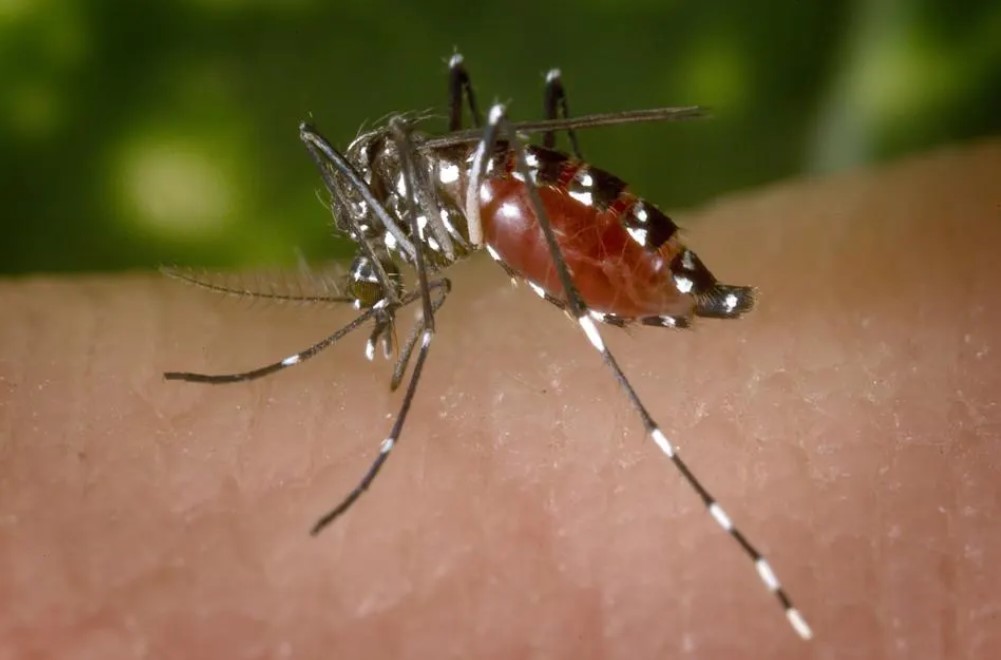
In a “worst case” scenario where temperatures rise by 4 degrees Celsius (39 degrees Fahrenheit) or more by the end of the century, Asian tiger mosquitos (Aedes albopictus) could become a common fixture in England in the 2040s and 2050s.
The mosquitos can carry and transmit viruses that cause dengue fever, chikungunya, and zika if they’ve bitten someone who is already infected.
Under this “high emission” scenario, London could see regular cases of dengue by 2060.
Although it often causes no or only mild symptoms, the disease can lead to serious illness and even death.
Heat-related deaths would also rise significantly and sharply in the country. They’d increase by one and a half times in the 2030s, and then by as many as 12 times by 2070.
Although the report details a “worst-case scenario,” the authors describe say it is a plausible one.
UKHSA Chief Scientific Officer Professor Isabel Oliver said in a statement that the report shows the impact climate change could have on the U.K. “if we do not take decisive action.”
“We can expect major impacts on physical and mental health, while our changing climate will also exacerbate existing health inequalities,” she said.
But it was not too late to prevent many of the potential health-related implications of a high emissions scenario in the country, she added.
“In the UK, many of the anticipated adverse impacts on health are still avoidable through mitigation measures, while others are preventable if the necessary adaptation measures are introduced.”
It was “critical,” she said, that policymakers used the evidence in the report to take action and develop interventions that protect public health.
Climate scientists and extreme heat researcher Dr Chloe Brimicombe from the University of Graz — who was not involved in the report — told the Science Media Centre that a 4-degree rise was “unlikely.” But she added the report should be used as a “positive reminder” of the importance of things like reducing air pollution and insulating homes.
“It is scary to imagine a world where mosquitoes reach the U.K., but it doesn’t have to be, when we have the ambition to act on climate change we can protect our and future generations’ health,” she said.
But it was also true that “the physical and mental health of the U.K. is already impacted by climate change,” she added, with “things like overheating buildings even affecting newborn babies and repeated flooding causing stress on households.”
Published on Monday, the report coincides with the United Nations climate change conference COP28, held this year in the oil-rich United Arab Emirates.
The event has spawned controversy, with COP28 president Sultan Al Jaber earlier this month claiming there was “no science” to support a phase-out of fossil fuels, which are responsible for more than three-quarters of global greenhouse gas emissions, according to the UN.
A draft agreement published Monday no longer includes a commitment to phase out this source of energy.