
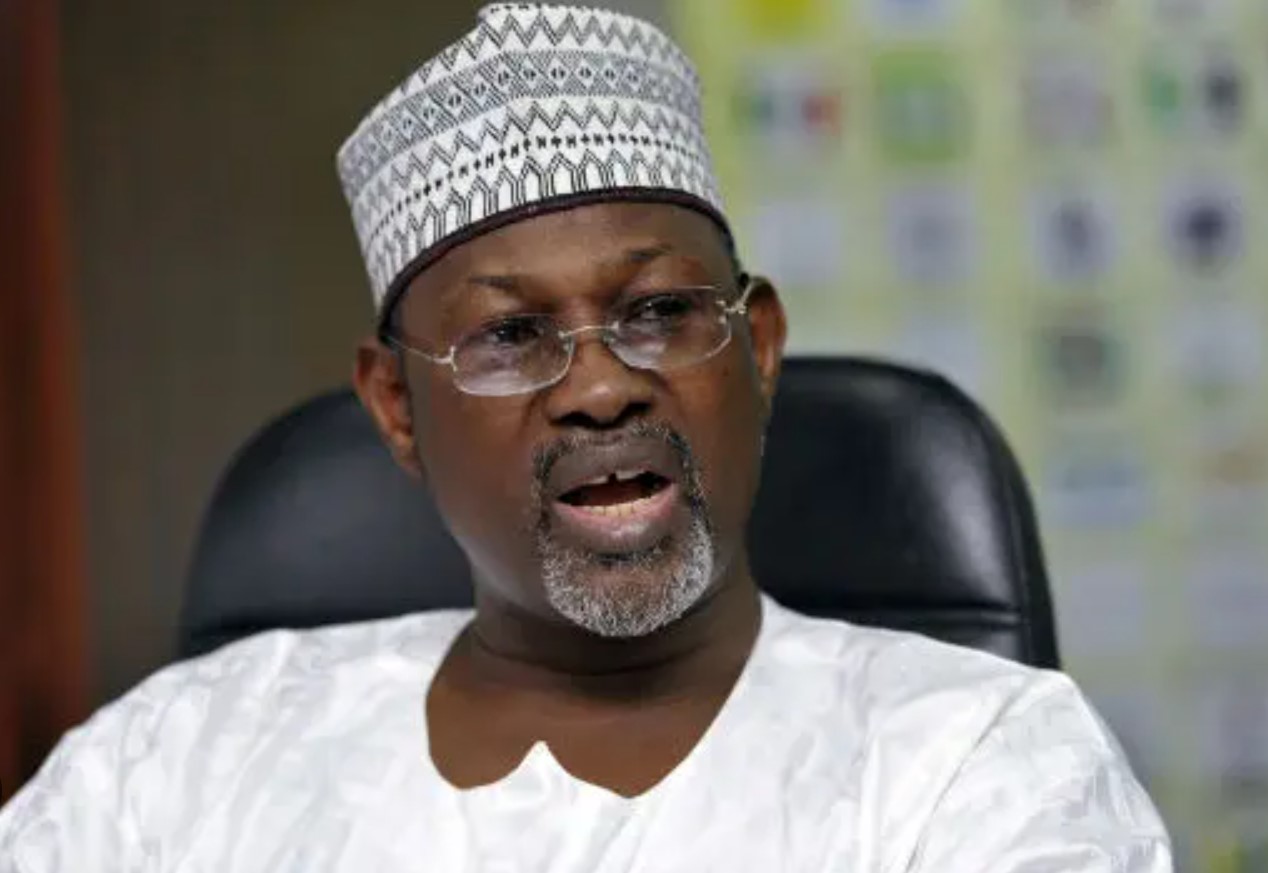
Attahiru Jega, the former chairman of the Independent National Electoral Commission (INEC), has accused some INEC officials of compromising the outcome of the last general election. According to Mr. Jega, who is also a professor of political science at Bayero University, Kano, the officials who compromised the election results were able to do so because they were appointed based on political negotiations rather than merit.
Mr. Jega made this revelation while speaking as a guest lecturer at a two-day retreat for senators in Akwa Ibom. His lecture was titled “Electoral Reform and Democratic Consolidation in Nigeria: Review of the Electoral Act 2022 (Areas for Future Legislative Action)”.
During his speech, Mr. Jega emphasized the need for thorough vetting of candidates nominated for election positions, as he believes that the 2023 elections could be adversely affected if people in positions of power continue to nominate and influence unvetted partisan candidates to compromise the integrity of elections.
Appointment of the president of INEC
In his recommendation on electoral reforms, the former INEC chairman said that for transparent elections to be held, the president should not be involved in the process of appointing the electoral commission chairman or resident electoral commissioners.
Jega recommended that a joint committee of the National Assembly be responsible for shortlisting, selecting, and confirming candidates for the position of INEC chairman and resident electoral commissioners.
put on screen
He also said Senate confirmation of electoral appointees should be strict and not the usual “bow and go.”
“On second thought, and for obvious reasons, I will recommend that this responsibility be given to a joint committee of the National Assembly, with criteria of transparency, non-partisanship, and participation of interested parties in the process. Applicants/nominees for these appointments must be subject to public scrutiny regarding knowledge, skills, good character, and non-partisanship.
“Guidelines should be provided for filing petitions against any candidate during this process. In any case, the Senate selection process should be more serious and rigorous. Furthermore, there should no longer be the condescending “bow and leave.”
Jega also recommended that the federal government make INEC completely independent to hire and fire its officials independently without government interference.
“Professionalize lower-level administrative appointments, including headship of INEC state offices. In this regard, the appointment of resident electoral commissioners should be taken away from the president and handed over to the INEC Commission, with powers to hire and fire.
“Once the appointment of the President and National Commissioners is sanitized, infused with public scrutiny for integrity and non-partisanship, then the Commission should be entrusted with the hiring and firing of competent and trained personnel for administrative functions both in the headquarters and in the state offices of INEC. Therefore, there will be clear lines of authority and directives, which would avoid the type of harmful situations we have seen, in which the RECs pander to their partisan political bosses who nominated them for their positions and ignore the legal directives of the Commission. .
Political parties
Jega also said that the registration and monitoring of the activities of political parties should be removed from INEC and entrusted to another federal agency.
“The delimitation of electoral boundaries and electoral districts should be reallocated and entrusted to the National Boundaries Commission, or any other agency that may be created. “The recording and monitoring of activities of political parties should also be taken away from INEC and entrusted to another federal body/agency.”
The former INEC president stated that it is necessary to review the parties and candidates competing for the presidential and gubernatorial elections.
He said: “There is a need to review the way each “Dick and Harry” party/candidate competes for the presidency, and even the governorship, which makes the cost of elections relatively high.
“It is necessary to establish a legal threshold that political parties and candidates must cross, beyond mere registration as a political party, before they can compete for the presidency or even gubernatorial elections. There are models of this in many electoral jurisdictions, from which Nigeria can learn and adapt to our context.”