
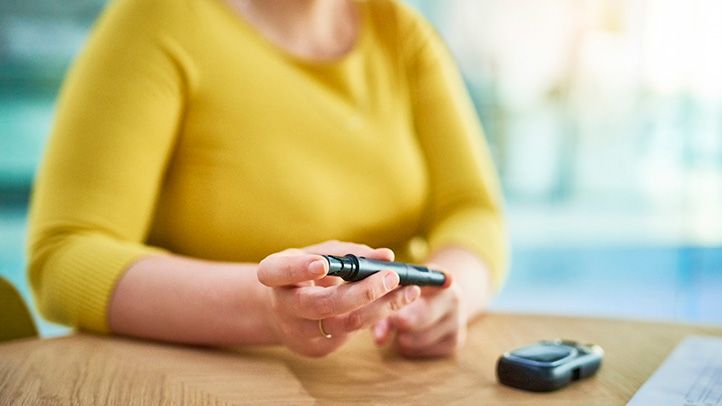
Blood sugar (glucose) control is crucial when you’re living with type 2 diabetes. Dips and spikes can not only make you feel cranky and sluggish, but they can also wreak havoc on your personal health. (No wonder your primary care doctor was on you about your last A1C checkup.)The most serious effects of blood sugar swings are a higher risk for diabetes-related health complications such as stroke, heart disease, and nerve damage (neuropathy).For the record, the American Diabetes Association (ADA) notes that you have diabetes if one of the following applies to you:Your blood glucose after fasting (and before a meal) is 126 milligrams per deciliter (mg/dl) or higher.Your blood glucose two hours after eating a meal is 200 mg/dl or higher.Your hemoglobin A1C (a two- to three-month average measure of how much glucose attaches to the hemoglobin in your red blood cells) is 6.5 percent or higher.One tricky part with type 2 diabetes is that you may not feel it when blood sugar levels are too high, according to the ADA. It feels different for everyone. “Not everyone will have the same symptoms, and some individuals will have no symptoms at all,” says Lori Zanini, RD, CDE, a Los Angeles–based and dietitian and author of The Diabetes Cookbook and Meal Plan for the Newly Diagnosed.RELATED: The Best and Worst Foods to Eat in a Type 2 Diabetes DietBecause blood sugar management is so important to your overall health with type 2 diabetes, you need to take action if you think your levels may be out of control, even if you’re feeling totally fine.“Symptoms of uncontrolled diabetes may not appear until prolonged hyperglycemia (high blood sugar) has been present,” says Mary Ann Emanuele, MD, an endocrinologist, professor, and medical director of inpatient diabetes at Loyola University Medical Center in Maywood, Illinois. She adds that if your healthcare team determines your glucose isn’t well controlled, adjusting your medication with their help can make a difference.RELATED: When Type 2 Diabetes Treatment Fails, What’s Next?‘Controlled’ Means Different Things to Different PeopleThere’s no one-size-fits-all recommendation for blood sugar control.The ADA says that a “reasonable” goal for many nonpregnant adults is to aim for an A1C level of less than 7 percent. Yet some patients may be given a more stringent goal by their healthcare providers, such as 6.5 percent, if that’s reachable without harmful side effects, including hypoglycemia.On the other hand, if you are elderly, managing other health complications, or reliant on insulin, you may be given less stringent goals. “It really becomes more important to just keep [levels] in the same place,” says Rahil Bandukwala, DO, an endocrinologist at MemorialCare South County Kidney and Endocrine Center in Laguna Hills, California. “Keeping A1C between 7.5 and 8.5 may be very reasonable for such a patient,” Dr. Bandukwala adds, echoing the ADA’s recommendations.Because elderly people are more likely to have blood sugar that swings too far downward, with fewer warning signs, managing their glucose too tightly can put them at greater risk for hypoglycemia, says Bandukwala. When you have low blood sugar, you’re at a higher risk for becoming dizzy and falling or passing out, notes the ADA.RELATED: 10 Warning Signs of Low Blood SugarHow (and When) to Check Your Blood Sugar LevelsAs Dr. Emanuele says, glucose monitoring can be an important tool to help you get your blood sugar under control. Typically, you would do it yourself using a glucose meter or glucometer, which analyzes a drop of blood that you draw by sticking your finger with a lancet and placing the blood on a disposable test strip that you insert into the meter. Your blood sugar goals are set by you and your doctor, but blood glucose for an adult without diabetes is below 100 mg/dl before meals and at fasting; and less than 140 mg/dl two hours after a meal, notes the ADA.Some people will check their blood sugar daily or multiple times a day, sometimes using a continuous monitor that is worn on the body — particularly those who have type 1 diabetes or who have type 2 but take insulin. Yet how frequently a person should monitor their blood sugar is based on a number of factors, including (but not limited to) whether they’re on insulin, whether they’re taking oral medication, and how well their blood sugar is controlled and how old they are.“It’s an individual discussion with each patient, but in general I tell my patients with type 2 diabetes whose blood sugar is controlled that they don’t need to check it every day,” says Bandukwala. “If they have a glucometer and they want to check it, then I will tell them they can do a paired reading once a week, which means a fasting (before eating) reading and then another reading one to two hours after a meal (postprandial).” Checking too often can lead to unwarranted panic over daily fluctuations, as well as unnecessary pain from too-frequent lancet pricks, he adds.The American Academy of Family Physicians is among the organizations advising that daily glucose self-testing has no benefit in patients with type 2 diabetes who are not on insulin or medications associated with hypoglycemia.RELATED: 10 Ways to Better Control Blood Sugar After EatingMeanwhile, keep an eye out for these nine key warning signs and symptoms that blood sugar is too high — and talk to your doctor about whether you need to adjust your management plan.