
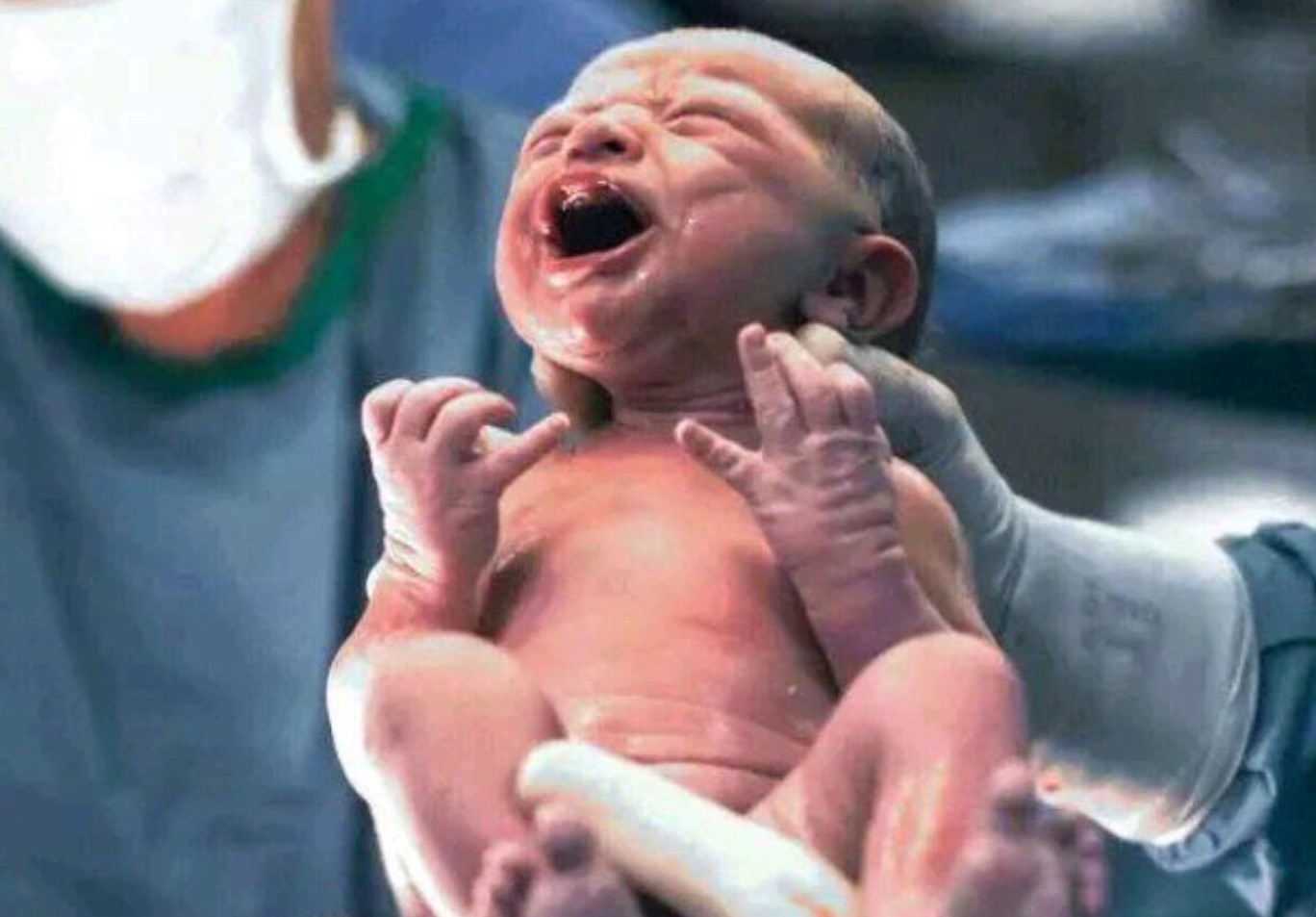
The phenomenon of newborn infants crying upon their arrival into the world has long intrigued both medical and scientific communities. This universal occurrence marks a significant moment during childbirth and prompts us to delve into the reasons behind this instinctive response.
In the medical and scientific realms, it is widely acknowledged that most newborn infants will emit their first cries within the initial moments of life. This inaugural cry carries essential messages, and in this discussion, we shall explore three primary factors contributing to this phenomenon.
Firstly, a newborn’s first cry serves as a poignant declaration of life’s commencement. These infants transition from the warmth and comfort of their mother’s womb, where conditions are consistent and cozy, to a starkly different, colder environment outside. To help these fragile beings maintain their body temperature, they should be promptly wrapped in warm clothes.
Furthermore, scientific studies have suggested that the labor and delivery process can be a challenging and even painful experience for the baby. The physical pressures and discomfort associated with this transition may contribute to their initial cries. Thus, the crying often observed in newborns may be their way of expressing the physical toll of childbirth.
Moreover, a baby’s inaugural cry signifies that their lungs and immune system are functioning as expected. This cry represents a crucial milestone, indicating that the infant’s lungs are strong enough to facilitate independent breathing.
It’s important for parents not to overly stressed if their newborn doesn’t cry immediately after birth, as this is typically not a cause for alarm. Most births result in healthy infants, and a brief period of crying upon arrival is quite common and natural.
In summary, the act of a newborn crying at birth is a multifaceted phenomenon with significant implications. It symbolizes the commencement of life in a new environment, expresses the challenges faced during childbirth, and demonstrates the healthy development of essential bodily systems.