
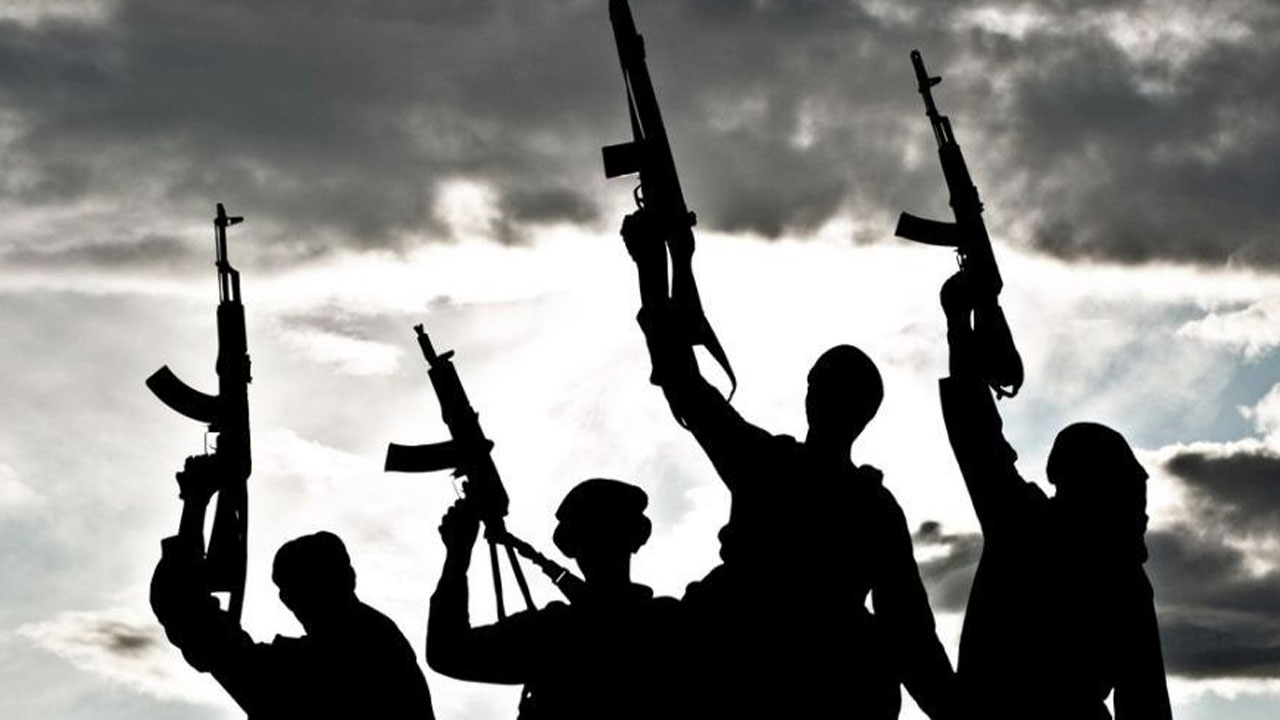
Women are increasingly involved in banditry-related arms trafficking in northwestern Nigeria. Between December 2022 and February 2023, police arrested several arms dealers in the Nigerian state of Zamfara for allegedly catering arms and ammunition to the bandits.
Banditry, a compound crime that includes armed robbery, kidnapping, murder, rape and illegal possession of firearms, is Nigeria’s most pressing security. challenge.
Several news reports of illegal arms movements and sales in northwestern Nigeria over the past three years implicated women traffickers. In October 2021, a 30-year-old woman who specialized in supplying weapons to bandits in the states of Zamfara, Sokoto, Kebbi, Kaduna, Katsina and Niger was arrested with 991 rounds of AK-47 ammunition. She was smuggling contraband from Dabagi Village in Sokoto State to a notorious bandit kingpin. responsible for terrorizing Zamfara and neighboring states.
In March 2022, Nigerian police arrested a 38-year-old woman in connection with smuggling weapons and ammunition from Plateau State to various bandit camps in Kaduna, Katsina and Zamfara. Eight locally made AK revolvers, submachine guns, and 400 rounds of AK-47 ammunition were recovered from the suspect.
Nigerian states where bandits are active. [PHOTO CREDIT: ISS]An estimated 30,000 bandits in groups ranging from 10 to more than 1,000 fighters operate in northwestern Nigeria. According to the Armed Conflict Location & Event Data (ACLED) project, attacks by these groups increased by 731% between 2018 and 2022 (from 124 to 1,031 incidents). There were around 13,485 banditry-related deaths between 2010 and May 2023. ACLED’s data is based on local sources and media reports, which means many incidents may go unrecognized.
Banditry is invading Kaduna, Katsina, Kebbi, Niger, Sokoto and Zamfara states and is spreading rapidly into parts of north-central Nigeria and south-western Niger. A combination of factors makes northwestern Nigeria susceptible to attack. These include mismanaged security resources, conflicts between herders and farmers, illegal gold mining, diminishing rural livelihoods, mismanagement of Nigeria’s international borders, weak law enforcement, and security intelligence failures.
State officials say the main enablers of banditry are porous borders and arms trafficking. As early as 2019, the then Nigerian information minister, Lai Mohammed, saying 95% of the weapons used for terrorism and kidnapping are trafficked across the country’s borders, emanating borders, emanating from Libya and other war-torn sub-Saharan African states.
The recent increase in women’s involvement in arms trafficking must be seen in the context of the economic downturn in northwestern Nigeria, which is disproportionately affecting women, says Umaima Abdurrahman, a gender activist in Kaduna state. She told the ENACT project that poverty is a major driver of women’s links to criminal activities such as drug and arms trafficking.
The most recent Global Multidimensional Poverty Index (MPI) shows that 80 percent of the people in northwestern Nigeria are poor. Although the MPI does not disaggregate by gender, women bear the burden of effort of poverty in Nigeria. Most women in the rural north of the country depend on subsistence agriculture for food and income and make up the majority of people living in poverty in rural communities.
Credit constraints also limit the economic potential of women in the Northwest. Around 70 per cent of women are likely to be excluded from access to financial services and the formal economy. Poverty among women is also rooted in the low rates of girls enrolling in school: just 47 percent receive Elementary education in the Northwest.
Women have limited livelihood options, receive lower wages (if at all), and are often trapped in intergenerational cycles of poverty. Ms Abdurrahman says bandits take advantage of this poverty, luring women into trafficking arms for money or other valuable materials.
According to Larai Garba Talbu, a journalist from Sokoto state, banditry is dominated by men, and the few women involved are mostly friends or associates of the gangsters with whom they could share the ransom money.
Bandits co-opt women in their criminal activities by copying those of Boko Haram. methods in northeastern Nigeria. As police and soldiers uncover smuggling operations and routes, terrorists recruit women as gun couriers because they are less likely to arouse suspicion. Women hide AK-47s under their veils or hide IEDs on their backs like babies.
The increasing involvement of women in arms trafficking is a challenge that security officers can solve through strategic intelligence gathering. Because women are rarely perceived to be involved in organized crime, especially as leaders, traffickers, or recruiters, they are more likely to go undetected by law enforcement. Organized criminals exploit this gap in intelligence surveillance and investigation.
In his inaugural address on May 29, President Bola Ahmed Tinubu saying security would be the top priority of his administration. He promised to invest more in security personnel by providing better training, equipment, salary and firepower. While these promises are commendable, the dynamics of insecurity are changing rapidly and addressing the gender dimensions of banditry requires a holistic approach.
Women law enforcement and security officers should be recruited, trained and resourced to assist in intelligence gathering in local communities. These officers must register women at checkpoints and engage with those arrested for their involvement in organized crime.
Civil society groups and community leaders should sensitize women in affected communities to the personal and widespread harm of associating with bandits and arms dealers.
And most important is the need for the government to address the gender disparity in education and the impact of poverty, which make women vulnerable to recruitment by Nigerian armed groups.
Oluwole Ojewale, Coordinator of the Regional Organized Crime Observatory ENACT – Central Africa, Institute for Security Studies (ISS) and Mahmud Malami Sadiq, Independent Researcher, Sokoto, Nigeria
ENACT It is funded by the European Union and implemented by the Institute for Security Studies in collaboration with INTERPOL and the Global Initiative against Transnational Organized Crime.
(This article was first published by ISS Today, a syndication partner of Premium Times. We have your permission to republish.)
Read More Related News Here
Let hear it in the comment below if you do have an opinion on this; Why are Nigerian bandits recruiting women for arms trafficking?