
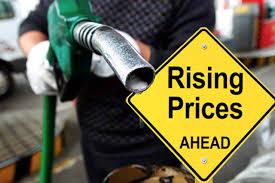
It has been three months since President Bola Tinubu announced the withdrawal of petroleum subsidy, and Nigerians are still struggling with the over 400% increase in petrol prices. The government promised palliatives, but they are yet to be delivered. Unfortunately, the increase in the international crude oil price could further raise the cost of petrol at the filling stations, despite President Tinubu’s assurance that the price of PMS would not go up. As of now, the crude oil price in the international market has reached $94 per barrel, the highest in the past 10 months. Market observers predict that the price could cross the $100 mark as demand increases during winter.
In the past, this increment would have generated excitement because it would mean more revenue for the Nigerian government; however, the increment in crude oil price means Nigerians may have to pay more for fuel.
Last month, President Tinubu had promised that prices would be maintained by “addressing the inefficiencies within the midstream and downstream petroleum subsectors to maintain prices where they are without having to resort to a reversal of the administration’s policy in the petroleum industry.”
During a meeting with certain members of the House of Representatives on Friday, Mele Kyari, the Group Chief Executive Officer of NNPC Limited, stated that NNPC Retail aims to acquire a substantial portion of the downstream sector’s market shares. The goal is to gain control of the downstream market.
It would be recalled that NNPC Retail had in December acquired the retail outlets of Oando Limited.
The deal according to Kyari means that the NNPC Retail now has 30 percent of the market and is able to regulate prices through the market share. He explained that other petroleum marketers would be forced to maintain prices because NNPC Retail won’t increase prices.
“Some weeks ago in Lagos, There was a small queue because one company increased their price by N7. As simple as this, everybody rushed to our filling stations, and a row developed. This is the security that the PIA guarantees.
“That Nigerians will have choices and they will not be exploited. We will be the market balancer. He said that we will create stability in the market and that Nigerians will not be exploited,” he said.
However, Nigerians are still concerned about the increment despite the assurance by the President and the oil chief, particularly with the deregulation of the sector.
An economist, Dr Babatunde Adeniran says an increment may be inevitable considering the factor of demand and supply which is playing out in the international market.
“Yes. It is inevitable because they (marketers) adjust prices depending on the market realities, i.e, forces of demand and supply,” Adeniran says while responding to a question on the chance of a price hike.
In August, President Tinubu promised to invest N100 billion in Compressed Natural Gas (CNG) buses to reduce the impact of subsidy removal. According to President Buhari, the Nigerian government has set aside N100 billion to purchase 3,000 twenty-seater buses powered by Compressed Natural Gas for deployment in all the states over the next nine months. Adeniran has called on the government to subsidize the CNG kits, claiming that it would be the best alternative energy source for the masses since it is relatively cheaper and cleaner. Nigeria has the capacity to meet the demand for CNG and the government can channel the gas that is currently being flared into CNG, which would be more productive.