
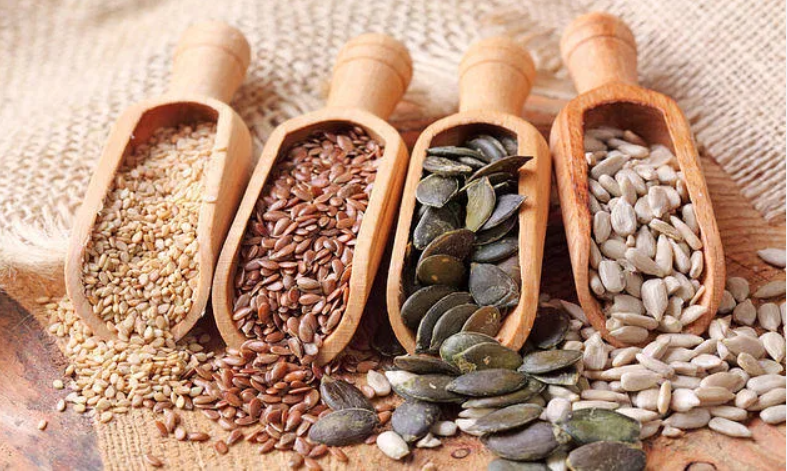
Seeds are the product of the ripened ovule, after the embryo sac is fertilized by sperm from pollen, forming a zygote.
Seeds have been around for millions of years, serving as the foundation of plant life. But it’s only recently that we’ve begun to truly appreciate their incredible nutritional punch. From fiber and healthy fats to vitamins and minerals, seeds are a concentrated source of nutrients that can do wonders for our health.
Let’s start with fiber. The majority of Americans are not eating enough of it. Experts recommend 25 grams for women and 38 grams for men, yet the average intake is just 17 grams. The good news is that seeds can be a great solution to closing this gap as they are fantastic fiber sources. Why does fiber matter? Eating enough of it can reduce your risk of colon cancer, enrich the gut microbiome, and support blood sugar balance.
Seeds also stand out for their omega-3 fatty acid content—a nutrient known for its anti-inflammatory and anti-anxiety properties. And if you’re looking to increase your protein intake, seeds can help with that too, particularly for vegans and vegetarians who need plant-based options. Plus, they’re allergy-friendly, with only sesame seeds falling within the top nine allergens. Here are healtiest seeds that are good for the body;
Hemp Seeds
Hemp seeds come from the cannabis sativa plant, they don’t contain any CBD or THC. Rich in healthy fats, hemp seeds have an optimal ratio (3:1) of omega-6 to omega-3 fatty acids. Maintaining a low ratio of omega-6 to omega-3 is important to prevent the development of chronic diseases, as high amounts of omega-6 promote inflammation and cardiovascular disease. The traditional Western diet typically has a high ratio of omega-6 to omega-3 at 15:1. In contrast, a healthy ratio is considered to be 3:1 to 5:1. A 3-tablespoon serving contains 10 grams of complete protein, phosphorus, magnesium, thiamine, and 100% of your daily value of manganese.
Sesame Seeds
A staple in Asian and Middle Eastern cuisines, sesame seeds come in three varieties: white, black, and golden brown. Sesame seeds are a good source of vitamins B1, B3, and B6. Vitamin B6 is essential for the metabolism of carbohydrates, fats, and proteins. Lignans, a component of sesame seeds, are known to have anti-inflammatory properties and anti-cancer effects.Whether ground up in the form of tahini or sprinkled atop tofu, sesame seeds provide a subtle nutty flavor that will take your dish to the next level.
Chia Seeds
chia seeds are a powerhouse of nutrients. In just a 2-tablespoon serving, you will get 9 grams of fiber, 4 grams of protein, and a substantial amount of micronutrients including iron, magnesium, phosphorus, and zinc. A plant-based source of omega-3 fatty acids, chia seeds can support your heart health by decreasing total cholesterol, triglycerides, and LDL (bad) cholesterol while increasing HDL (good) cholesterol, according to a 2021 meta-analysis. Chia seeds have also been shown to lower blood pressure in people with type 2 diabetes.
Quinoa
quinoa is actually a seed, believe it or not! Adding quinoa to your diet can support your heart health by lowering risk for cardiovascular disease factors including triglycerides, total cholesterol, LDL cholesterol, insulin blood levels, and waist circumference according to a 2020 meta-analysis. With 8 grams of protein per 1 cup cooked serving, quinoa is a great source of plant-based protein. Including quinoa in a vegan diet helps address the common concern of protein intake, which can be a challenge for some vegans. Additionally, it is safe to consume for those who have celiac disease.
Quinoa is a healthy carbohydrate source to add to a salad or bowl-you can even get creative by making quinoa-stuffed peppers or black bean burgers.