
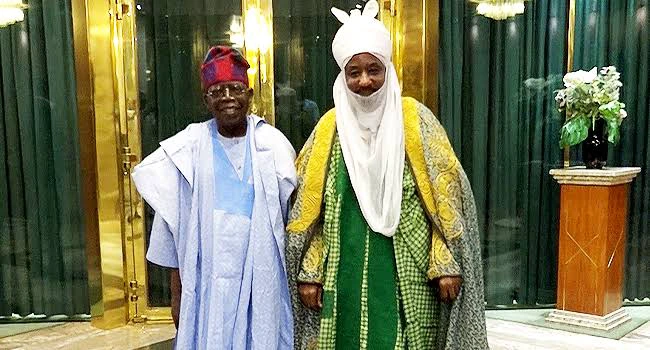
In a virtual religious event on February 11, former Emir of Kano, Muhammadu Sanusi, spoke out about Nigeria’s economic challenges.

According to The Nation, he made it clear that placing the blame solely on President Bola Tinubu for the hardship would be unfair. Instead, he pointed to the past administration’s failed economic policies led by Muhammadu Buhari as a significant contributor to the current crisis.
Sanusi, a former governor of the Central Bank of Nigeria, warned that the economic difficulties faced by Nigerians are just the beginning and could worsen without the right decisions. He emphasized that he had consistently warned about the impending crisis due to the mismanagement of monetary policy over the past eight years.
He drew parallels with economic challenges in other countries such as Uganda, Zimbabwe, Germany, and Venezuela. Furthermore, he revealed that the previous administration under Buhari dismissed his appeals for corrective measures, attributing them to political statements.
He stressed,
“If I am to be fair and just to President Bola Tinubu, he is not to blame for the current hardship. For eight years, we were living a fake lifestyle with huge debt from foreign and domestic debts.”
“The Central Bank of Nigeria owes over N30 trillion, which resulted in debt service surpassing 100 percent. I can’t join other Nigerians criticizing Tinubu for the current economic hardship.”
“I am not saying he is a saint free from wrongdoing, but in this current economic situation, President Tinubu is not to be blamed. I will also speak if I see any wrong economic policy of the Tinubu administration in the future.”
Sanusi criticized the Central Bank for excessive money printing, which led to the depreciation of the naira.
He urged people to endure the hardship and encouraged those with the means to assist the less privileged. He also appealed to individuals to align their lifestyles with their earnings in these challenging times, highlighting the prevalence of sycophancy and corruption in currency trading as consequences of a poorly managed economy