
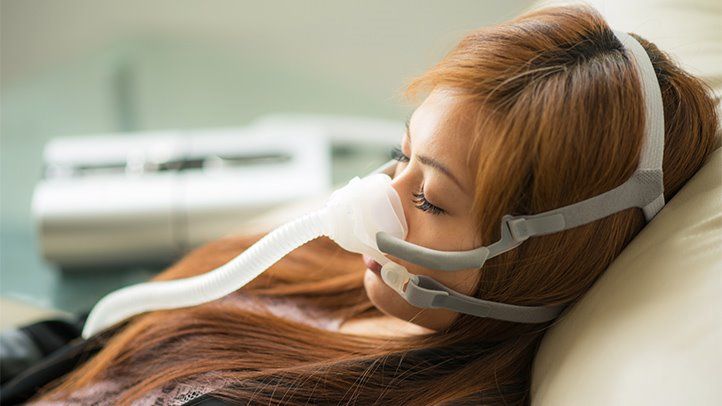
The most common treatment for sleep apnea is the use of a continuous positive airway pressure (CPAP) machine. This device gently forces pressurized air into your airway (to keep it open) via a tube that’s attached to a face mask, which you wear over your nose and mouth (or in some cases just your nostrils) while you sleep. Your doctor will likely also recommend that you continue to make healthy lifestyle changes in tandem with using the CPAP machine.Although CPAP machines are the most common treatments for sleep apnea, some people dislike them, find them cumbersome or uncomfortable, or are unable to sleep well while using the apparatus.“About one-third love it, one-third think it’s so-so, and one-third hate it and think it’s the devil,” says Robson Capasso, MD, a professor of otolaryngology and head and neck surgery at Stanford University School of Medicine in California.Common complaints from patients include:“The mask hurts the bridge of my nose.”“It makes my mouth dry.”“It leaks on the sides.”“It makes me feel claustrophobic.”If your doctor has prescribed a CPAP machine to help you manage sleep apnea and you are having problems with it, let your doctor know. A different type of face mask may solve the problem. In other cases, using a humidifier along with a CPAP machine can help with mouth dryness.If used correctly and well tolerated, a CPAP machine can effectively manage sleep apnea and is one of the most effective solutions available. But there are other types of breathing machines that can be more effective depending on the type of sleep apnea you have, as well as how well you tolerate a CPAP. Alternatives include the following:Auto-CPAP Machines These devices automatically adjust the pressure while you sleep.Bilevel Positive Airway Pressure Machines These units deliver more pressure when you inhale and less pressure when you exhale. These devices, which can be particularly helpful in strengthening the weak breathing pattern in individuals with central sleep apnea, can be set to automatically deliver air if the machine detects that you haven’t taken a breath after a set number of seconds.Adaptive Servo-Ventilation This breathing machine is similar to a CPAP in that it delivers positive air pressure to your airways, but it’s a smart machine, so it learns your normal breathing pattern during sleep and stores that information so that the device can then use air pressure to normalize your breathing and prevent pauses in airflow while you sleep.