
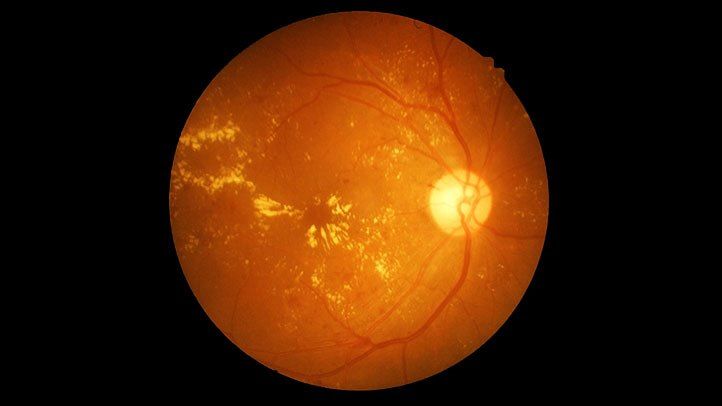
Dry macular degeneration can’t be cured, but certain nutritional and lifestyle changes can keep it from getting worse. AMD occurs less frequently in people who exercise, eat healthfully, and don’t smoke.According to the American Academy of Ophthalmology (AAO), foods rich in vitamins C and E, zinc, lutein, zeaxanthin, and omega-3 fatty acids are good for eye health. These nutrients are linked to a lower risk for AMD later in life. Recommended foods include citrus fruits, dark-green leafy vegetables, whole grains, fatty fish, vegetable oils, and nuts.The AAO also notes that people who have AMD or are at risk for it can benefit from a low-glycemic-index diet. The glycemic index ranks how quickly and by how much foods raise blood sugar. A low-glycemic-index diet tends to be high in nonstarchy vegetables and whole or minimally processed grains, and low in processed foods, such as chips and commercially baked goods.SupplementsA daily combination of certain vitamins and nutritional supplements, now sold as AREDS 2, was shown to be effective in delaying the progression of intermediate AMD to advanced AMD by about 25 percent in two studies from the National Eye Institute. These dietary supplements contain high amounts of substances that occur naturally in the macula.The ingredients in a daily dose of AREDS 2 (often split into two softgels) are as follows:500 milligrams (mg) of vitamin C400 international units (IU) of vitamin E25 to 80 mg zinc as zinc oxide2 mg copper as cupric oxide10 mg lutein2 mg zeaxanthinYour ophthalmologist can let you know if taking AREDS 2 supplements might be beneficial in treating your dry AMD. The supplements have not been shown to prevent early AMD from progressing to intermediate AMD.Injections for Geographic AtrophyIn early 2023, the U.S. Food and Drug Administration (FDA) approved the drug pegcetacoplan (Syfovre) for the treatment of geographic atrophy.Pegcetacoplan is injected directly into the eye every 25 to 60 days. In studies, the drug reduced the growth of lesions in the retina, thereby protecting a person’s remaining vision. There was no indication that the injections improved patients’ vision.A second injectable drug for geographic atrophy, avacincaptad pegol (Izervay), was approved in August 2023. In clinical trials, monthly in-eye injections of avacincaptad pegol significantly slowed geographic atrophy progression for most study participants, and caused side effects in fewer than 5 percent.Low-Vision RehabilitationOnce vision loss occurs with dry AMD, it can be helpful to work with a specialist trained in low-vision rehabilitation. You can learn about techniques and devices — such as magnifiers, electronics that convert text to speech, and useful apps — that can make navigating the world a little easier.Implantable Miniature TelescopesA select group of people with advanced dry macular degeneration in both eyes, who meet certain specific requirements, may have an option to improve their vision by implanting a telescopic lens in one eye, according to the Mayo Clinic. These implantable miniature telescopes (IMTs) resemble a very small plastic tube and work by magnifying and projecting images over the still healthy areas of the retina. An eye surgeon can implant the IMT in an outpatient procedure.The eye with the IMT is then used for central vision, while the nonimplanted eye provides peripheral vision. Post-surgical therapy is needed to retrain the brain to use each eye in this way, explains the AAO.