
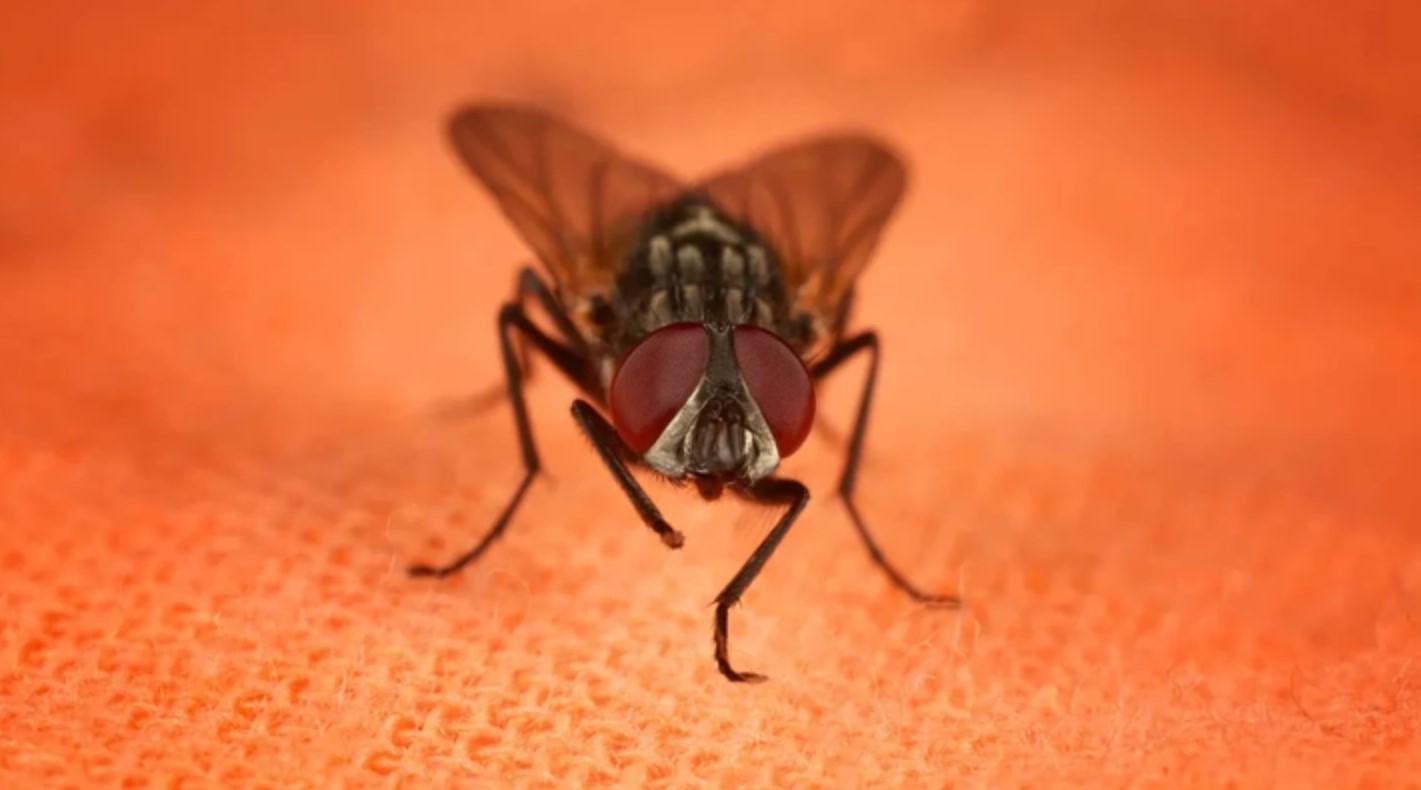
A new insect repellent acts on taste, pain, and smell receptors to deter flies.
Register for free to listen to this article
Thank you. Listen to this article using the player above. ✖
Want to listen to this article for FREE?
Complete the form below to unlock access to ALL audio articles.
When using chemicals to control pests, it is important to use both insecticides and repellents, but the development of repellents that keep pests away has been delayed due to a lack of knowledge about the mechanism of insect repellent (escape) behavior. This time, Associate Professor Takaaki Sogabe and Specially Appointed Assistant Professor Shoma Sato of the National Institute for Physiological Sciences/Center for Life Creation Exploration, National Institutes of Natural Sciences, discovered that a TRP channel stimulant acts as an insect repellent, and investigated its mechanism of action in the nervous system. and revealed it at the molecular level. The results of this research will be published online in the journal Frontiers in Molecular Neuroscience.
Damage to crops caused by agricultural pests and health damage caused by sanitary pests such as mosquitoes that transmit infectious diseases are serious problems even today. Insecticides and repellents that keep pests away are used to control pests using chemicals. While insecticides are fast-acting and have high extermination effects, there are concerns about their impact on the ecosystem and the human body, and it is also known that repeated use can cause pests to develop drug resistance. The use of repellents can avoid these problems, but due to the lack of knowledge about the mechanism of insect repellent (escape) behavior, there are few effective agents, and the options are currently extremely limited. This research focused on the TRP channel, which acts as a sensor for various senses, and found that its stimulant can be used as an insect repellent.
Focusing on the TRPA1 channel that senses painful stimuli such as wasabi
TRP channels are sensor molecules that sense various stimuli in the environment, such as heat, mechanical force, and chemicals, and are active in all animals, including humans. In insects in particular, TRPA1 is important for sensing high temperatures and components of spices such as wasabi and escaping from these stimuli (Figure 1). Based on this, the research group thought that “drugs that stimulate TRPA1 induce escape behavior in insects, meaning that TRPA1 stimulators function as insect repellents.” This research focused on 2-methylthiazoline (2MT), a volatile substance that is also used as a food additive and is known as a TRPA1 stimulator in mice, and verified its repellent effect using Drosophila melanogaster.
Discovered that 2MT acts as a powerful repellent for Drosophila melanogaster
First, prepare bait mixed with 2MT and regular bait, When we measured whether flies escaped from food containing 2MT, we observed very strong repellent behavior.(Figure 2). Therefore, in order to verify whether this repellent behavior is caused by the action of TRPA1, we created mutant flies in which TRPA1 does not function and observed their behavior toward 2MT. As a result, no repellent behavior was observed in TRPA1 mutant flies. from this result, It has become clear that TRPA1 is important for avoidance behavior from 2MT.
Want more breaking news?
Subscribe to Technology Networks’ daily newsletter, delivering breaking science news straight to your inbox every day.
However, at low concentrations of 2MT, TRPA1 mutant flies exhibited repellent behavior similar to normal flies (Figure 2). This result suggests that there are factors other than TRPA1 that repel 2MT when the concentration of 2MT is low. As a result of detailed examination, it was revealed that in olfactory mutant flies, which can barely detect odors, repellency is completely lost at low concentrations (Figure 2). From these results,Olfactory sensors are important for avoidance behavior from low concentrations of 2MTIt was found that flies perceive 2MT with different sensory sensor molecules depending on the concentration.
2MT acts on taste, pain, and smell, causing avoidance behavior
Next, the research group investigated which sense originates from TRPA1’s 2MT sensing. Since TRPA1 is present in nerve cells that detect taste, pain, and smell, we genetically engineered flies in which TRPA1 was deleted only in each type of nerve cell and observed their repellent behavior. As a result, repellency decreased in the absence of TRPA1 in bitter and pain-sensing nerves (Figure 3). These results revealed that flies perceive 2MT as bitterness and pain via TRPA1 and engage in repellent behavior. On the other hand, deletion of TRPA1 in the olfactory nerve did not change the aversion to 2MT. This suggests that sensors other than TRPA1 act in the olfactory nerve to avoid low concentrations of 2MT. based on the above results,It has been revealed that at high concentrations, 2MT stimulates taste and pain sensations through TRPA1, and at low concentrations, it stimulates the sense of smell through another olfactory sensor, thereby causing Drosophila’s repellent behavior.The question of what kind of sensor the olfactory nerve uses to sense low-concentration 2MT will be a future issue.
Furthermore, we revealed that 2MT directly stimulates and activates TRPA1 in flies, and also revealed the amino acids required for its activation. The amino acid sequence of TRPA1, which 2MT acts on, is widely conserved in other insect pests, so it is highly likely that TRPA1 activation by 2MT occurs in insects other than flies.