
The Association of Local Governments of Nigeria (ALGON) has complained about the exclusion of the operation of Nigeria Sovereign Wealth despite owning 17.8 percent of the National Sovereign Investment Authority (NSIA).
The association, appearing before an ad hoc House committee investigating the NSIA on Tuesday, said local governments have not been swayed by its operation.
ALGON president Alabi Kolade said NSIA management had refused to consult the association on the operation of the funds.
He indicated that most of the funds’ investments in health and education are at the tertiary level.
“Their activities are carried out in secret to the exclusion of local governments. And I have facts before me. They should allow us to get an idea and talk more about what they have presented,” she said.
NSIA property
The NSIA was created by an Act of the National Assembly signed into law by President Goodluck Jonathan in 2011. The federal government owns a 45.8 percent stake in the NSIA, while the states own 38.2 percent, the local governments own 17.8 percent and FCT has 0.16 percent. penny.
Over the past 10 years, the federation has invested more than $1.75 billion for NSIA to manage as investment manager.
The NSIA has the following core funds: Stabilization Fund, Future Generations Fund and Nigeria Infrastructure Fund.
The NSIA is also mandated to manage third-party funds, such as the Presidential Funds for Infrastructure Development, the FGN Stabilization Fund, the presidential fertilizer initiative, and others.
‘Their projects are benefiting the states’
Kolade said most NSIA projects benefit states and the federal government, while local governments are left out.
“None of these projects, as far as we know, can be seen or felt in local government. You’ve spoken well about partnering with communities, but my question is how can you partner with communities without local governments?
“They have spoken well of the provision of health, but what is within the powers of the local government is primary health care. Your investment is for state government hospitals and not for local government hospitals.
“You have spoken well of the schools, but our own jurisdiction is the primary schools, but we have not seen a single school. You’ve talked about 13,500 affordable homes, but who? Who would be the beneficiary,” she said.
He advocated that local government should be involved as they are a significant part of NSIA ownership.
Local governments are appendages of states – NGF
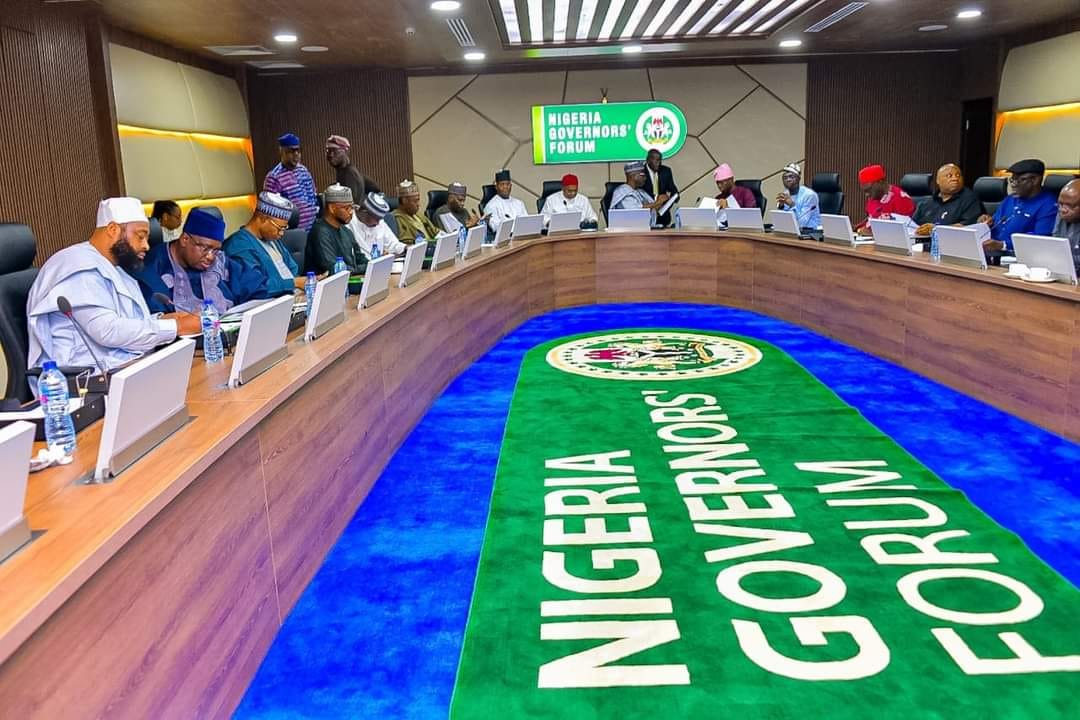
However, the position of the ALGON president was questioned by a Nigerian Governors Forum (NGF) representative, Shittu Lateef, who stated that NSIA had already briefed the governors “and they have no problem with the association”.
Mr. Lateef, who represented NGF Director General Asishana Okauru, added that local governments remain an appendage of states, therefore state governments were reported on behalf of local governments.
Talking about the location of the projects, Lateef said that the projects are located in the local governments, therefore “ALGON cannot present the argument of the beneficiaries”.
ALSO READ: Foreign countries must repay stolen funds with interest: CIPC
“Nigeria has a federal system and we have two federative units in this country, the federal and the states that the constitution has made very clear. The local government is not a federal unit as of today, it could be tomorrow if the constitution is modified. But as of today, local government is an appendage of the states,” he stated.
He added that “as far as the NGF is concerned, let me start with the property and I think you alluded to that before. States and local governments own 54 percent. If you look at the structure, you’ll see that the states and local governments are the true owners of the NSIA because we are the majority shareholders.
“A few times last year we asked the NSIA to make a presentation to the states and the finance minister at the time led the delegation and they made a presentation. I can tell you that we are satisfied with the presentation and we have no problem with the NSIA,” he said.
We have increased our assets by $600 million—NSIA CEO
In his presentation, NSIA Managing Director/CEO Aminu Sodiq-Umar informed the committee that the organization has increased its assets by more than $600 million in the past 10 years of operation.
He noted that assets increased from $1.76 billion to more than $2.27 billion.
Committee chair Ademorin Kuye (APC, Lagos) raised questions about the number of investments the NSIA made but which resulted in losses.
Umar-Sodiq said the authority has been able to manage the margin by ensuring it makes more profit than loss.
“If you’re managing a portfolio of growth investments, of course, you’ll have your losers and your wins. I think the point is that you manage your volatility and your correlation and you are substantially managing your gain to your loss. That is the nature of the investment business.”
He added that the NSIA law requires that the fund cannot afford to be short term but rather think long term when investing.
During the course of the session, Mr. Kuye made a motion that the committee go into executive session with the NSIA to discuss the authority’s strategies.
Read More Related News Here
Let hear it in the comment below if you do have an opinion on this; Nigerian Governors Forum, LGs disagree on SWF operation