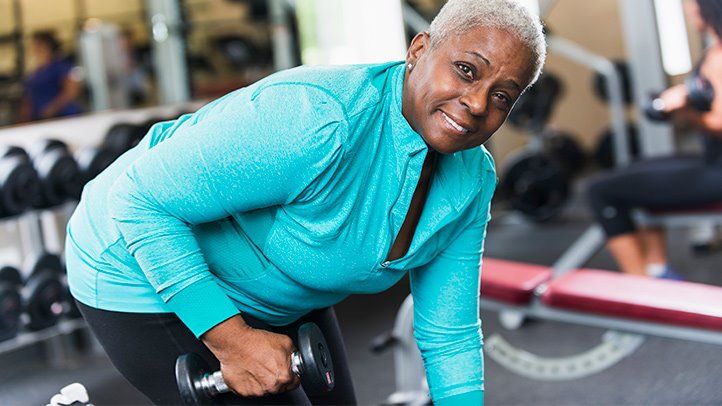
5 Benefits of Strength Training for DiabetesFor people with diabetes, regular strength training can:1. Help you use insulin more effectively. Insulin is a hormone that allows blood sugar (glucose) to enter your cells, where it’s used for energy (or stored for later). Pumping your muscles helps push glucose into them; regular strength training helps your body become more efficient at transporting glucose from your bloodstream to your muscles.The more efficient your muscles are at using glucose, the less insulin you need. “Because strength training sensitizes muscles to insulin, they require less insulin to bring your blood sugar down,” explains Tamara Hannon, MD, an endocrinologist with Indiana University Health in Indianapolis.2. Lower your blood sugar. In addition to helping your body be more efficient at transporting insulin to your muscles, strength training also allows your muscles to absorb more glucose. That means that after you exercise, your muscles will continue to use glucose and your blood sugar may be lower for several hours, Dr. Hannon says.3. Build muscle that can lead to weight loss. “The more you keep your muscles exercising, the more calories you’ll burn,” Hannon says. Strength training can also increase the rate at which you burn calories even when you’re not exercising. That’s because strength training builds muscle, and muscle requires more calories than fat just to maintain itself, according to a research review from 2021.But, adds Hannon, “Exercise alone doesn’t typically lead to weight loss. You also have to reduce calorie intake.”4. Lower the risk for heart disease. As you may know, heart disease is a common complication of type 2 diabetes. But a regular exercise routine that includes strength training can help lower a number of risk factors related to heart disease, including obesity, high blood pressure, and high cholesterol, according to the American Heart Association. A sedentary lifestyle only increases the risk of these conditions, making exercise an efficient way to lower your risk of multiple health problems.5. Help strengthen your bones. High blood sugar can mean more glucose attaches to the protein in bones (collagen), weakening their structure, according to research. “People with diabetes are at increased risk for fractures,” Hannon says. “They may also have other complications, such as neuropathy (numbness) in the legs and feet, meaning they’re more prone to falls.”Strength-training exercises can help improve your bone strength as well as your balance and mobility, all of which lessens the chance that you’ll fall.How to Start Strength Training When You Have DiabetesIf you haven’t been active or if you have heart disease, high blood pressure, or other complications of diabetes, talk with your doctor before starting an exercise program.Then consider working with a healthcare practitioner or certified fitness instructor who can help you design a strengthening workout that would be best for you, Kemmis says.You might also look for classes that combine resistance and aerobic exercise.When you’re ready to get started, you may want to begin your strength-training routine by lifting small weights and doing exercises like squats, biceps curls, and crunches. Start slowly to avoid injury and build up gradually from there, Kemmis says. As you build strength, you can increase:The intensity of your workoutsThe number of setsThe frequency of your training“Start the progression by increasing the weight or resistance, then the number of sets, and, finally, the days [of exercise] per week,” Kemmis suggests. Unless your doctor instructs you otherwise, your ultimate goal should be to train two to three times a week and complete three sets of 8 to 12 repetitions of each exercise to the point of muscle fatigue.A safety tip: If you’re unable to breathe evenly, back off on the intensity of your resistance training, Kemmis says.“Remember, a well-rounded exercise program should include strength training and aerobic exercise,” she adds. “This will likely provide better benefits to blood glucose control than either exercise alone.”
